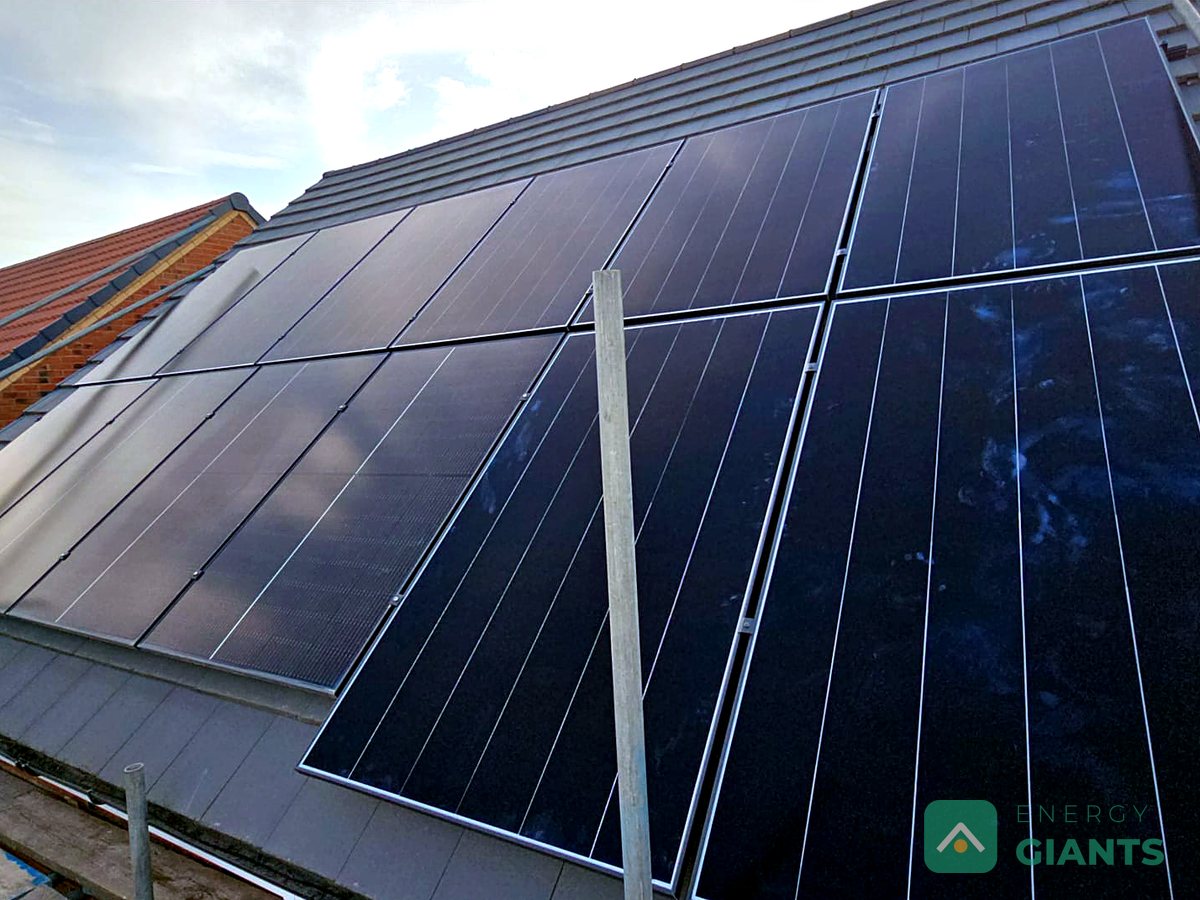
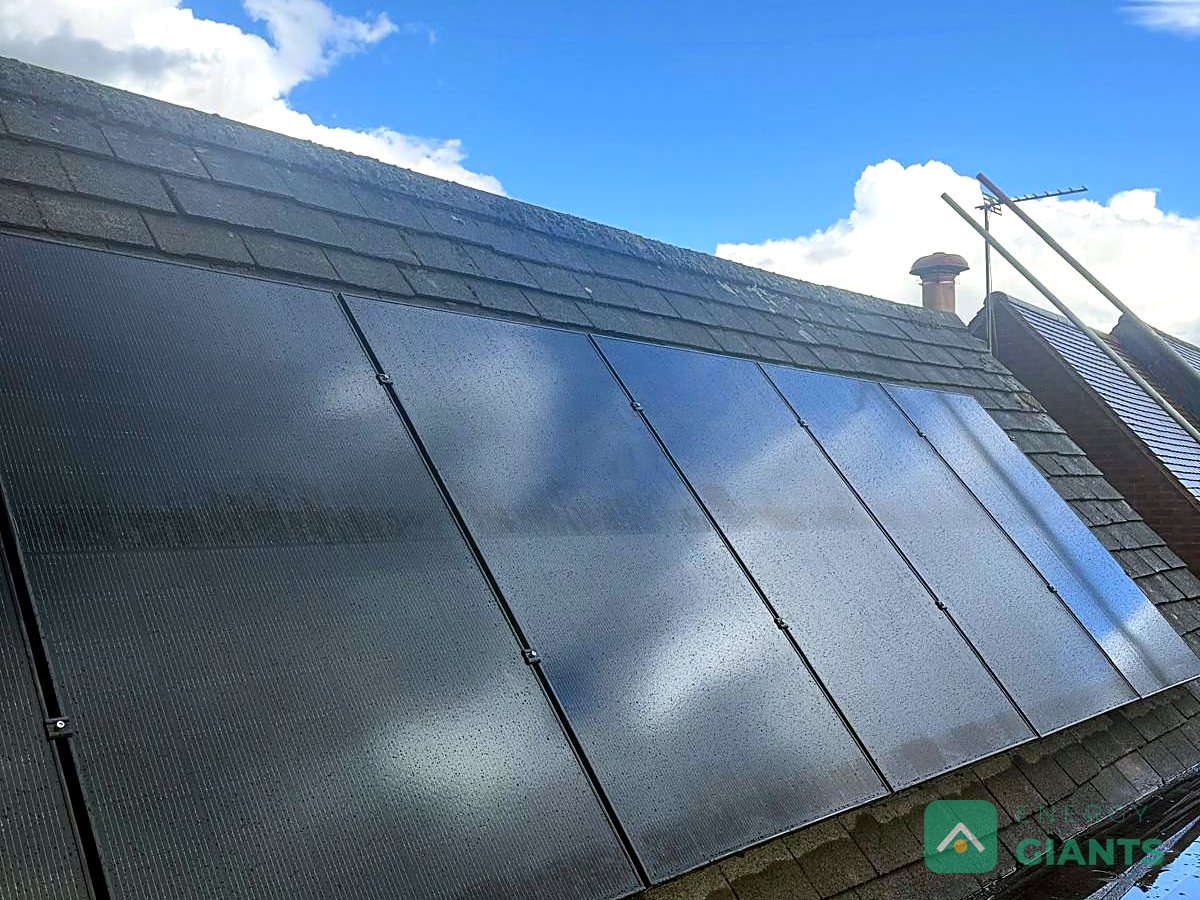
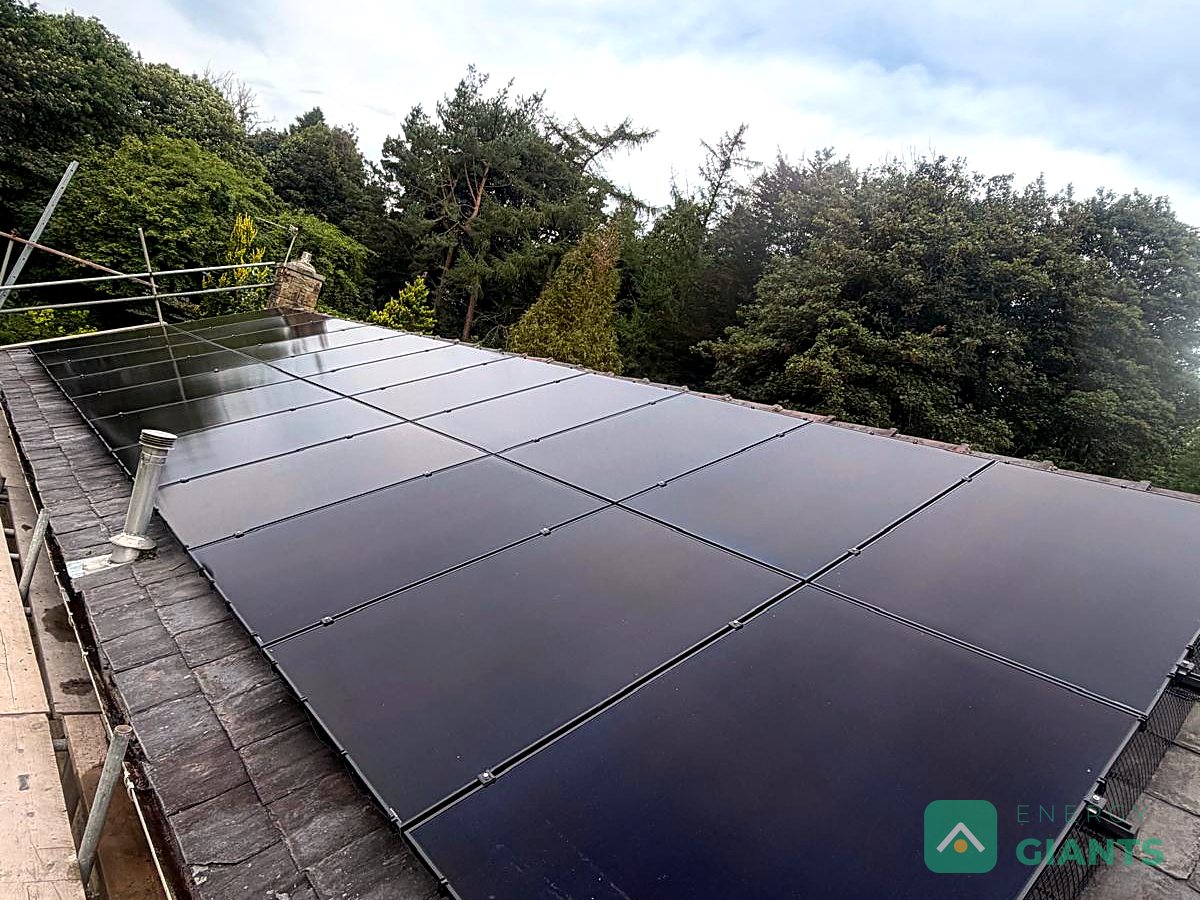
A battery does not make electricity. It moves it. It stores the surplus your panels make in the middle of the day so you can use it after dark, instead of selling it cheap at noon and buying it back dear at seven.
On a summer weekday a four kilowatt array makes far more than a house uses at 1pm. Without storage that surplus goes to the grid for a few pence a unit.
Cooking, washing, lights, television, the car on charge. Demand climbs after work, exactly when generation has stopped, and every unit is bought at the full import rate.
It fills at lunchtime and empties in the evening. On a well sized system that turns a quarter of your electricity coming from your own roof into three quarters, which is what the Somerset Avenue design did.1
Most enquiries fall into one of three situations, and the design is different for each.
A hybrid inverter runs the panels and the battery as one system, DC coupled, one app. The most efficient route and the one we fit most, as at Somerset Avenue.
Usually possible. Either an AC coupled battery with its own inverter alongside what you have, or a swap to a hybrid inverter if the original is near the end of its life. The three routes, and what decides it.
It charges from the grid overnight on a cheap off peak tariff and runs the house through the expensive hours. It works where a roof is unsuitable, and it still qualifies for 0% VAT.2
The products we install
The batteries we fit, and the panels they pair with. Every one has its own page or a case study behind it.





We install four battery ranges and we know all of them inside out, rather than a catalogue we half know.
Solar inverter, lithium iron phosphate battery, DC car charger and AI energy manager in one modular stack: 6 kWh or 9 kWh modules, up to 54 kWh, IP66, ten year warranty. We are registered Sigenergy installers and it is the system we recommend first, especially if the car or a heat pump is coming. Also: SigenStor Neo with backup built in. Why we added Sigenergy.
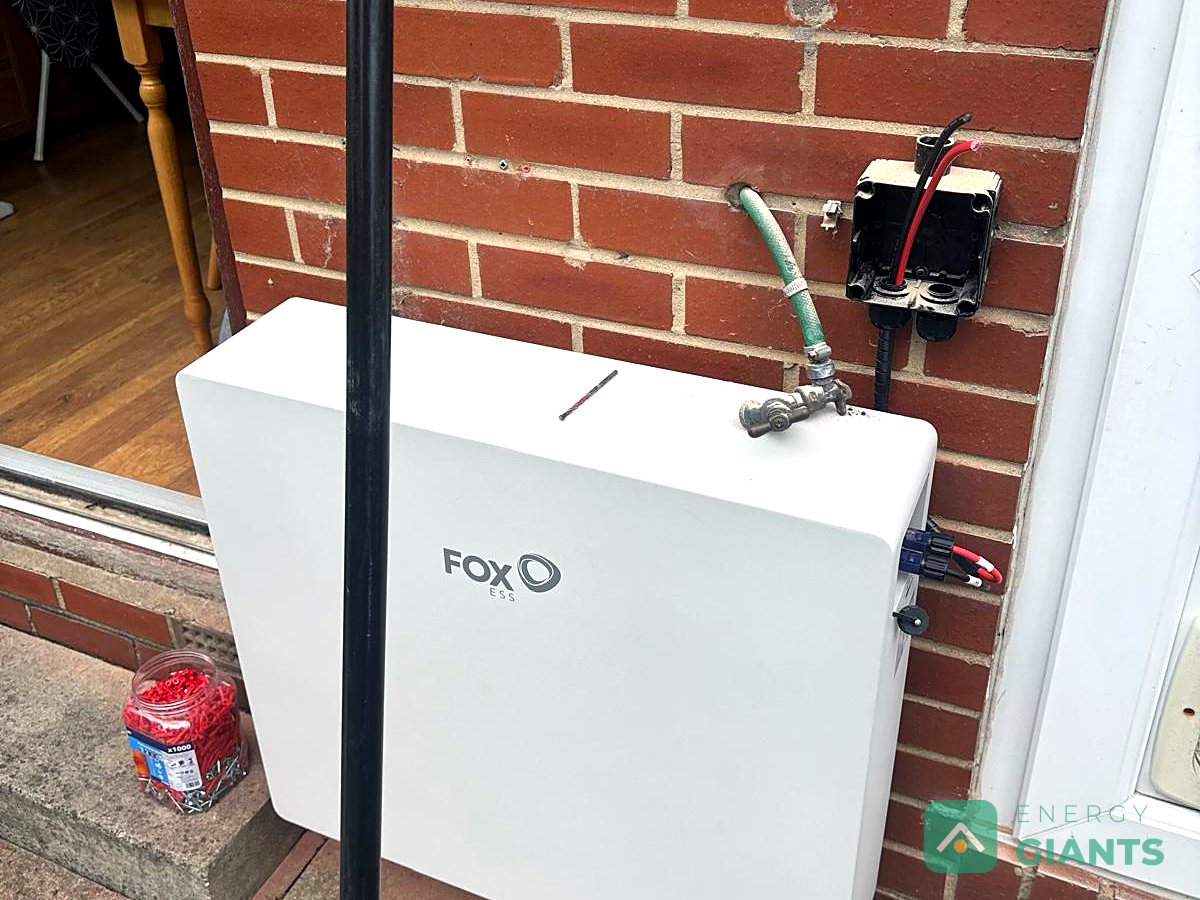
11.52 kWh lithium iron phosphate, floor or wall mounted, IP65 so it can live in a garage or outside, and stackable to 46 kWh if you grow into it. Pairs with the Fox H1 hybrid inverter. Ten year product warranty. This is the battery at Somerset Avenue.
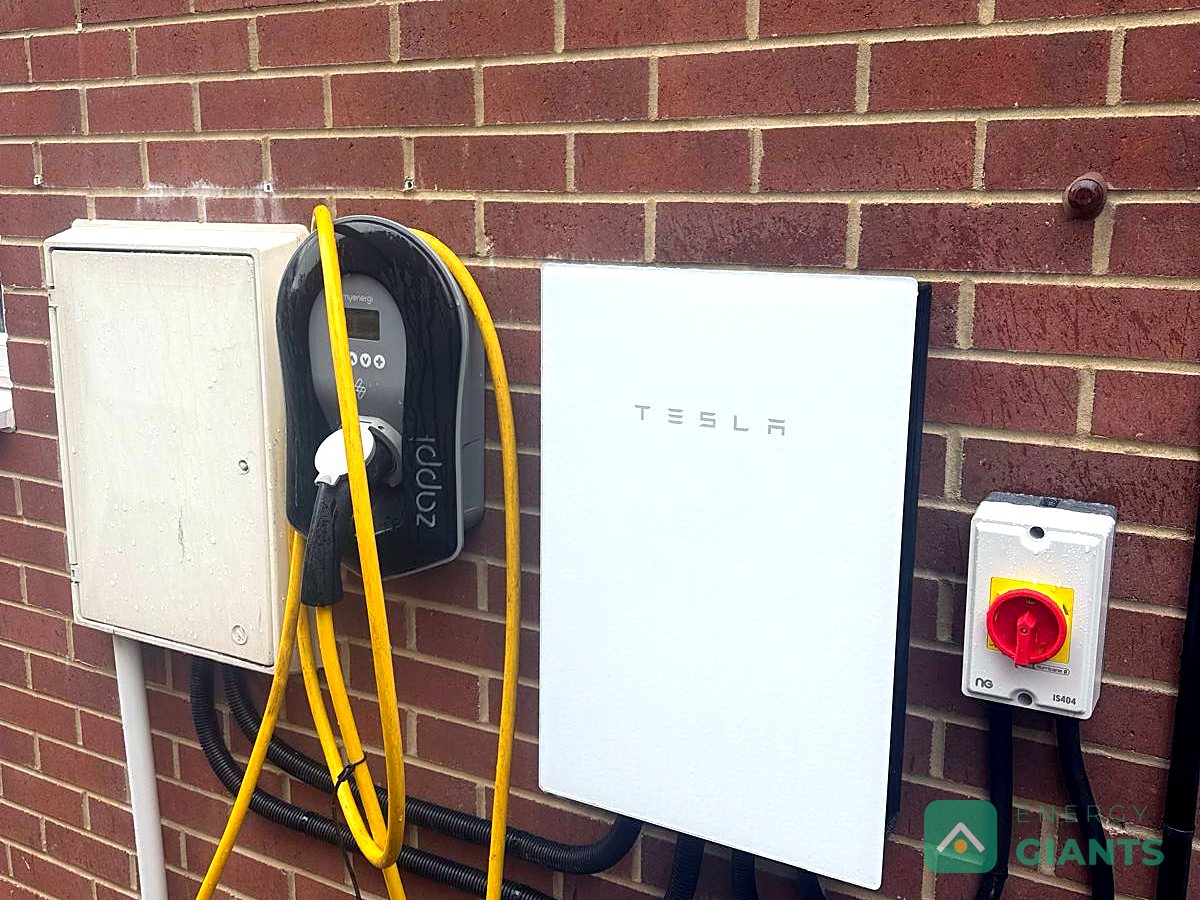
13.5 kWh with the solar inverter built in, so it suits new installs as well as retrofits, and it can keep essential circuits running in a power cut when fitted with the Tesla Gateway. Ten year warranty. See two of them installed near Aberystwyth. Why we fit Powerwall 3.
5.12 kWh lithium iron phosphate modules that wall mount or stack, one hour charge and discharge, 8,000 cycles, IP65, ten year warranty supported in the UK. The one to choose if you want to start small and add 5 kWh at a time. Why we added Duracell Energy.
We are MCS certified for battery storage and solar PV. When your system is finished we register it on the MCS Installation Database and you get an MCS certificate for it. Every installation gets an electrical installation certificate and a notification to the network operator.
Every solar and battery installation comes with a two year insurance backed workmanship guarantee through Bluedrop Services, underwritten by Financial & Legal Insurance Company Ltd, so the guarantee holds even if the installer did not. On top of that sit the manufacturers’ warranties: up to 30 years on panel performance, ten years on the inverters and batteries we fit.
Almost everyone gets this wrong in the same direction. The question is not how big the array is. It is how many units the house uses between sunset and sunrise, and how much of that you want to cover.
It is on any annual statement. A typical three bedroom house uses 2,700 to 3,500 kWh a year; homes with an EV or a heat pump use far more.
For most households between half and two thirds of that is used after the sun has gone. Divide by 365 and you have your evening figure in kWh.
A 6 to 8 kWh evening gap points at a 10 to 12 kWh battery, because you only use about 90% of nominal capacity and winter days do not fill it. Bigger than the gap is money spent on capacity you rarely cycle.
We do this properly at the survey with your real usage, not a rule of thumb, and we tell you if a smaller battery is the better buy. The full sizing method, with the worked example.
With new panels, added to old ones, and on their own. Fox ESS, Tesla and Hanchu, from Lancashire to Lincolnshire.
Every export rate above 15p a unit in the April 2026 Which? table requires solar and a battery, and the best overnight import rates are built around charging a battery or a car off peak. The battery is what turns a solar system into something that works with the tariff rather than against it. The rates, and what each one requires.3
In a power cut a standard grid tied battery shuts down with the grid, by design, to protect the engineers working on the line. Backup needs a system designed for it: the Sigen Gateway (built into SigenStor Neo), the Tesla Gateway, or an emergency power supply circuit on the Fox system. It costs more and it is worth asking for at the survey if it matters to you, rather than finding out in a storm.
In person, from our Clitheroe head office or our Manchester and London offices. Roof, existing inverter if you have one, consumer unit, where the battery can go, and your real usage.
A performance estimate with the battery in it, so the self sufficiency figure on the quote is the one we expect. Kit itemised, warranties stated, price fixed.
Usually a day for a battery alone, one to two with panels. Electrical certificate, network operator notified, app set up before we leave.
Often done together
Measures planned together cost less in surveys, access and disruption, and work better once they are in.
It depends on capacity and whether it goes in with panels or on its own. We publish indicative ranges, with VAT at 0%, on our solar and battery cost guide, and a fixed price after the survey.
The batteries we fit carry ten year product warranties, and the cycle life for the exact battery on your quote is given in the manufacturer’s own specification. Cycling once a day, a well sized battery is still doing its job well beyond the warranty.
Usually. It depends on your existing inverter and how old it is. There are three routes, AC coupled, a hybrid inverter swap, or connecting to a hybrid inverter you already have, and we tell you which at the survey.
Not unless it is designed to. A standard grid tied battery switches off with the grid for safety. Backup needs a gateway or an emergency power supply circuit, which we can fit if you ask for it.
A two year insurance backed workmanship guarantee through Bluedrop Services on the installation, plus the manufacturer’s ten year product warranty on the battery and inverter. You get the guarantee certificate in your handover pack.
No. A home battery is not development that needs consent. We do notify the electricity network operator, which is part of the job.
The Fox EP12 Plus is 710 by 640 by 185 mm and about 98 kg, floor or wall mounted, and it is IP65 rated so a garage, utility room or an outside wall all work. The Powerwall 3 is a similar footprint on a wall.
Book a free survey and we will size a battery against your real usage, with the figures on the quote, and tell you honestly if it is not worth it.
Size it against your evenings, not your roof. The ten minute method.
The three retrofit routes, and the six things that decide which applies.
Every rate above 15p has one thing in common: a battery.
Notes. 1. Self sufficiency figures are from the performance estimate for the Somerset Avenue installation, 25.5% without storage and 78.0% with 10.36 kWh of usable battery capacity, on an assumed 3,500 kWh a year of use; estimates, not a guarantee. 2. Home battery storage is zero rated for VAT in Great Britain, including batteries installed on their own, under the energy saving materials relief. 3. Export rates as published by Which? in April 2026 and summarised in our tariff article; rates change and conditions apply, check current terms with the supplier.
Occasional news on retrofit funding, insulation, solar and home energy. Unsubscribe at any time. Privacy policy