


Case study · Solar and battery · Birstall, Batley
A roof facing due south.
The kind we like best.
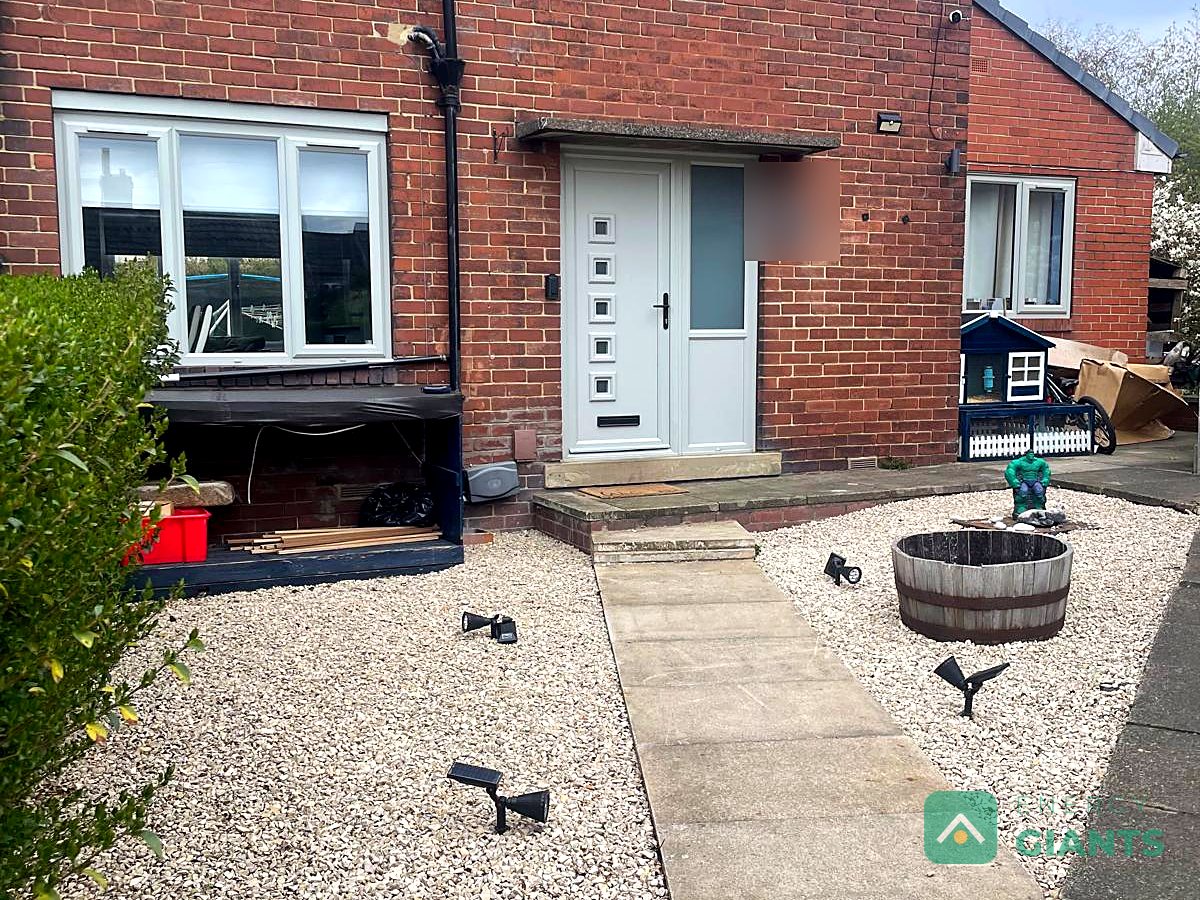
This brick semi in Birstall has the roof every solar installer hopes for: facing due south, a good pitch, and nothing in the way. Ten panels went on in a day, with the inverter and battery tucked into the brick outbuilding out of the way. Commissioned at the end of April 2026.
 Ten Aiko panels with a Fox ESS hybrid inverter and battery, designed and installed by Energy Giants.
The job in numbers
4.75kWp
Ten Aiko panels
475 W each, all black, in a single row facing due south at 32 degrees.1
888kWh
Per kWp, per year
About as good as it gets in West Yorkshire. No shading at all on this roof.1
63%
Of the home’s power
Estimated share of the home’s electricity from the roof and battery. Without the battery it would be 22%.1
0
Kit in the house
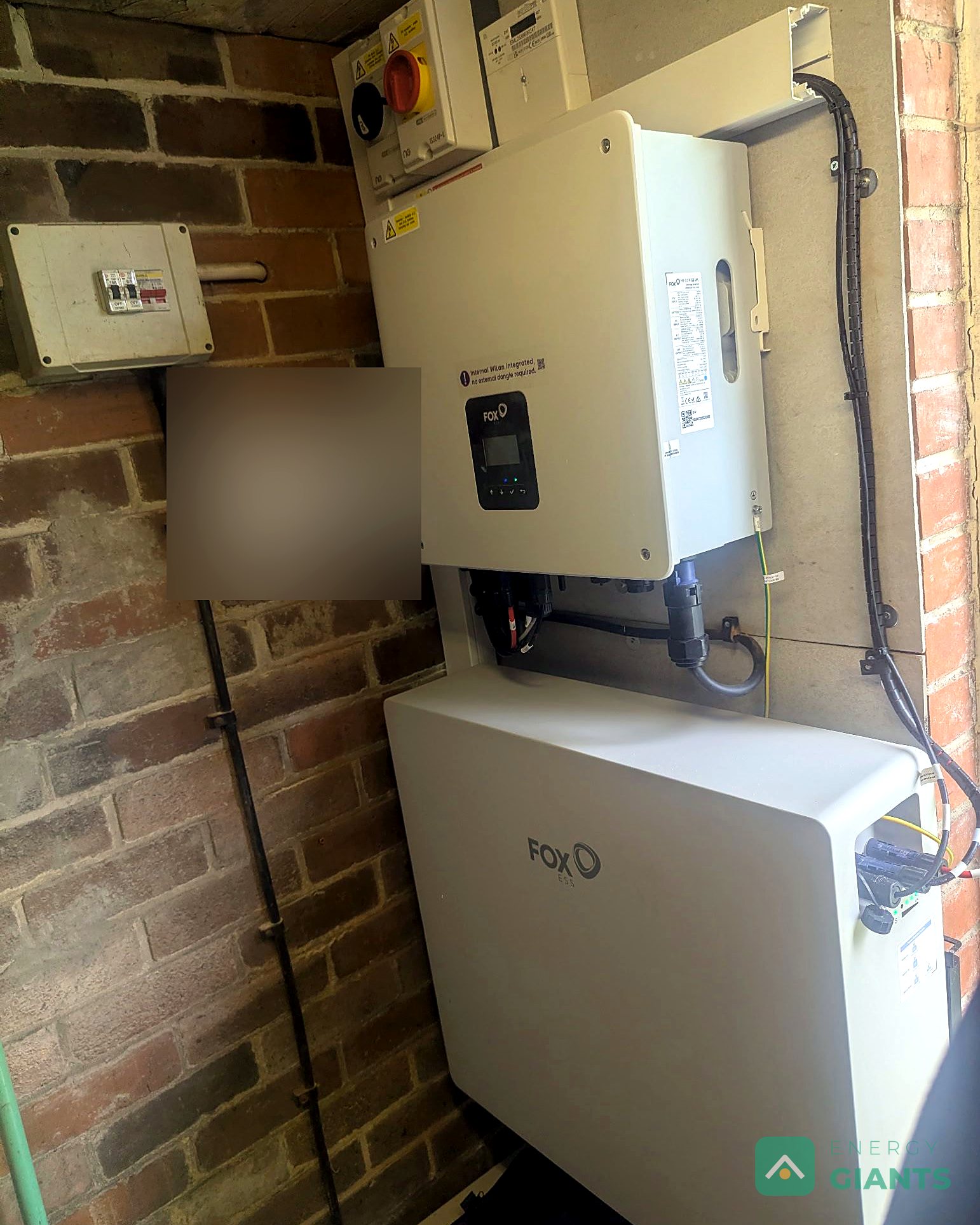
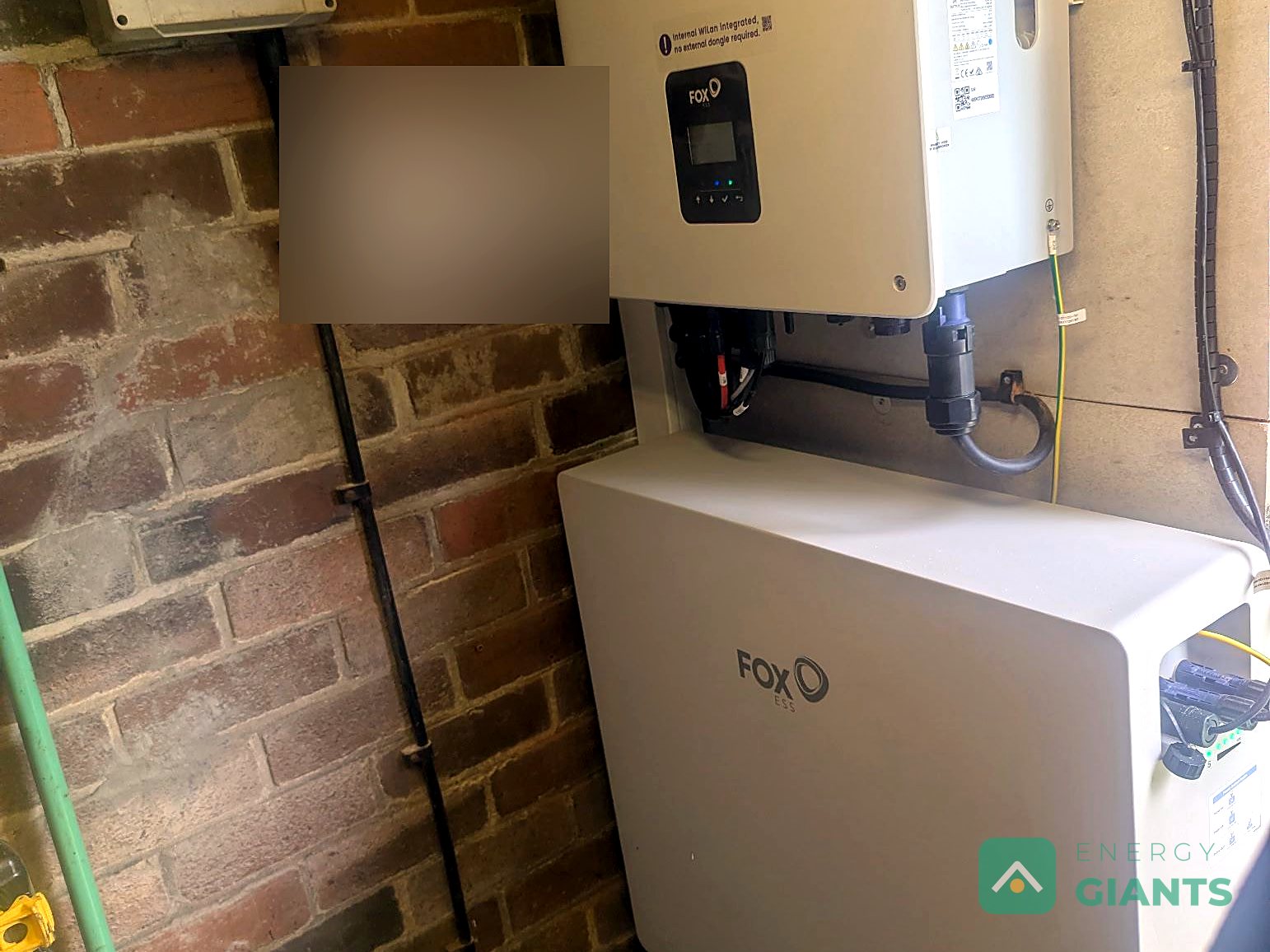
The inverter and battery live in the brick outbuilding, so nothing takes up room indoors.
The job
When the roof is right, the job is simple.
Some roofs need clever design. This one didn’t. It faces due south, it’s pitched at 32 degrees, and there are no trees, chimneys or neighbours casting shade across it. That’s close to ideal for solar in this part of the country.
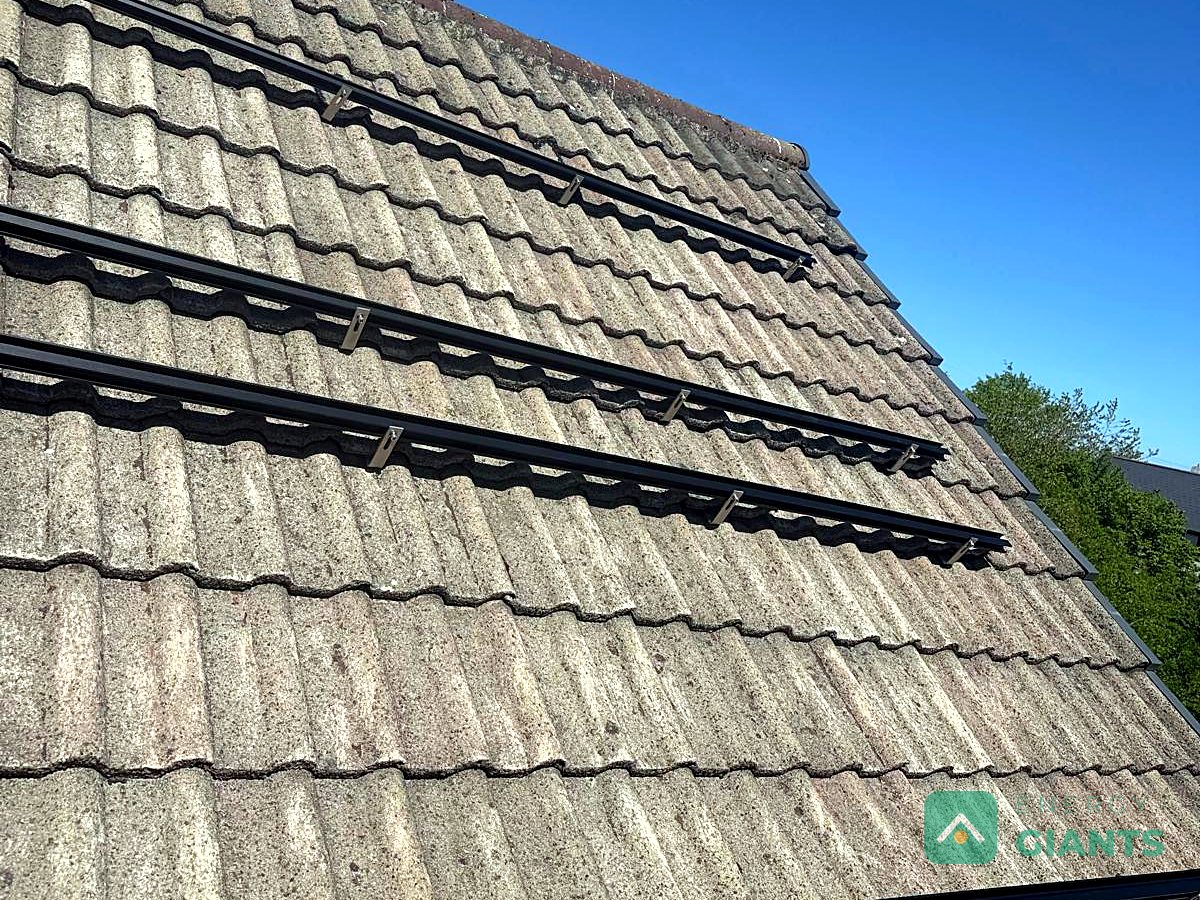
Before anything went up we checked the roof could take it. The rafters were well within their limits for the extra weight and the wind, so there was no strengthening to do. Ten panels went on rails fixed to the tiles, all in one neat row.
The household uses a fair bit of electricity, about 5,000 kWh a year. Panels alone would only cover about a fifth of that, because so much of the power arrives in the middle of the day. The battery changes that. It fills up while the sun is out and runs the house through the evening, taking the share of electricity from the roof to nearly two thirds.
The inverter and battery went into the brick outbuilding behind the house. It keeps the kit dry, out of sight, and out of the living space.
How it works
What the panels make, and where it goes.
How this system works, in four pictures. The numbers are the estimates from the design for this house.1
Where the power goes, over a year
Top bar: every kWh the panels make in a year, split by where it ends up. Bottom bar: every kWh the house uses, split by where it comes from.
Where the solar goes 4,218 kWh a year
- 1,097 kWh used in the home as it is made 26%
- 2,067 kWh stored in the battery, used later 49%
- 1,054 kWh sent to the grid and paid for 25%
Where the home’s electricity comes from 5,000 kWh a year
- 1,097 kWh straight from the panels 22%
- 2,067 kWh from the battery 41%
- 1,836 kWh still bought from the grid 37%
Which way the panels face
The panels point straight at the midday sun. That’s why this roof makes more per panel than most.
- Main roof 4.75 kWp, 32° pitch
- South east to south west, the sunniest arc
How it fits together
One Fox ESS hybrid inverter runs the panels and the battery together.
- Panels on the roof10 Aiko panels, 4.75 kWp, due south
- InverterFox ESS H1, 3.68 kW hybrid
- BatteryFox ESS EP12, 10.36 kWh usable
- Your homeLights, kettle, EV, heat pump
- The gridPaid for what the house doesn’t use
What it saves
About £960 a year, at today’s prices.
That’s the solar the house uses instead of buying from the grid, plus what it’s paid for the rest. Worked out at today’s prices, with no guesses about prices going up.3
On the day
On the day.
What was installed
The specification.
| Property | Two storey brick semi in Birstall, Batley, with a concrete tiled roof |
|---|---|
| Panels | Ten Aiko 475 W all black panels, 4.75 kWp |
| Layout | One row facing due south at 32 degrees, fixed above the tiles, no shading1 |
| Structure | Rafters checked before install and well within limits, no strengthening needed |
| Inverter | Fox ESS H1, 3.68 kW hybrid, in the outbuilding |
| Battery | Fox ESS EP12, 11.52 kWh, 10.36 kWh usable, in the outbuilding |
| Grid | Northern Powergrid told about the system when it was switched on2 |
| Dates | Surveyed 14 April 2026, installed 29 April, commissioned 30 April 20262 |
| Investment | Between £7,500 and £9,500 for a system of this size and specification, VAT at 0%4 |
Questions people ask
Questions about south facing roofs.
Is a south facing roof really that much better?
It makes the most per panel. This roof is expected to make 888 kWh for every kWp of panels each year. A roof facing east or west would make less, though it would spread the power over more of the day.
Do I need a battery if my roof faces south?
You don’t need one, but it makes a big difference if you use most of your electricity in the evening. Here it takes the share of the home’s power from the roof from 22% to 63%.
Can the battery go outside the house?
Yes, in a garage, outbuilding or on an outside wall, depending on the battery. We check the spot during the survey so it stays dry, ventilated and easy to reach.
Keep reading
More like this.
Similar jobs
Got a roof like this one?
Book a survey and we’ll tell you what it will make, whether a battery is worth it, and where the kit can go.
Notes on the figures
- Generation, self consumption and the share of the home’s power are from the performance estimate in the quote for this house: 4,218 kWh a year from a due south roof at 32 degrees with no shading, and an assumed 5,000 kWh a year of household use. They are estimates, not a guarantee.
- Dates and grid are from the project file: survey photographs 14 April 2026, roof work 29 April 2026, commissioning and notification to Northern Powergrid 30 April 2026. The structural check found 47 by 125 mm rafters at 400 mm centres spanning 2.6 m against 3.09 m permitted.
- Savings are worked out at today’s prices with no assumed price rises: solar used in the home is valued at 26.32p per kWh, the Ofgem price cap unit rate for 1 October to 31 December 2026 (GB average, Direct Debit), and exported electricity at 12.0p per kWh, the Outgoing Octopus Fixed rate from 1 March 2026. Your tariff, usage and export deal will change the figure. Standing charges are not affected by solar.
- The investment figure is an indicative range for a system of this size and specification; we do not publish the price a customer paid. Case study presented in line with section 5.3.3 of the Renewable Energy Consumer Code. The homeowner is not named, at our discretion.