BB7 9
Covered from our HQ at The Former Ambulance Station in Clitheroe, ten minutes up the A671. Not a regional office running subcontractors from another county. Independently audited and MCS certified for solar PV and battery storage.
Every roof
Surveyed in person before anyone quotes a number. Never estimated from an aerial image.
Sigenergy registered
Registered Sigenergy installers, plus Tesla, Fox and Aiko. A short list we know properly rather than a catalogue we half know.
The hill to the south
Whalley sits at the foot of Whalley Nab, a large wooded hill on the far side of the River Calder. It is the defining feature of the village and it is the single most important thing about solar here.
High ground to the west costs you the end of the afternoon. High ground to the south is different, and worse. It takes light out of the middle of the day, which is exactly when a roof does most of its work, and the effect gets steadily worse through autumn as the sun drops lower. In December the Nab is throwing shade across parts of the village for a meaningful share of the useful hours.
Trees compound it. The Nab is wooded, and woodland grows.
Nearest the river
Most affected
Property down towards the Calder, The Sands and the Abbey sits closest to the Nab and lowest in the valley. Worth a proper seasonal shading assessment rather than a summer glance, because a roof that looks clear in July can be losing the middle of a December day.
Up the north side
Much better placed
The further up the northern side of the village you go, the more the Nab drops below the horizon line. Property on the higher ground towards Clitheroe Road and Wiswell often has a clear southern aspect and is straightforward.
Billington, Barrow, Read
A different question entirely
The surrounding villages are out of the Nab's influence and are governed by the ordinary considerations: orientation, roof plane, chimney stacks and whether anyone is home during the day.
None of this rules solar out in Whalley. It means the array wants designing around the shading rather than in spite of it, and it means a generation estimate produced from an aerial image is close to worthless here. Ask what shading factor was applied and where it came from.
Limestone, sandstone and heavy roofs
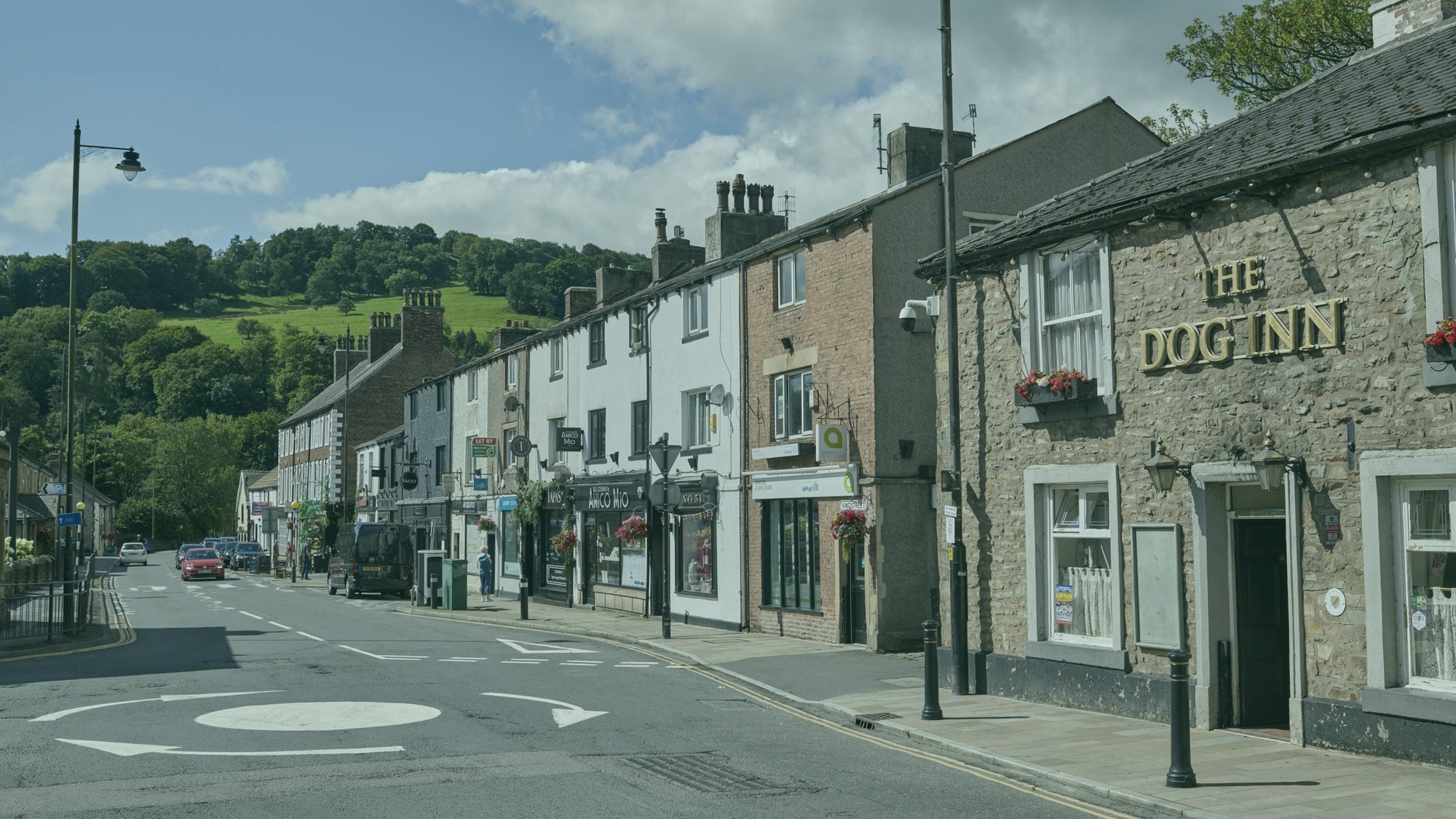
Whalley is surrounded by hills that supplied both limestone and sandstone, and much of the older village is built out of them. The abbey ruins, the parish church with its three scheduled high crosses in the churchyard, and a good deal of the housing along King Street all come from the same ground.
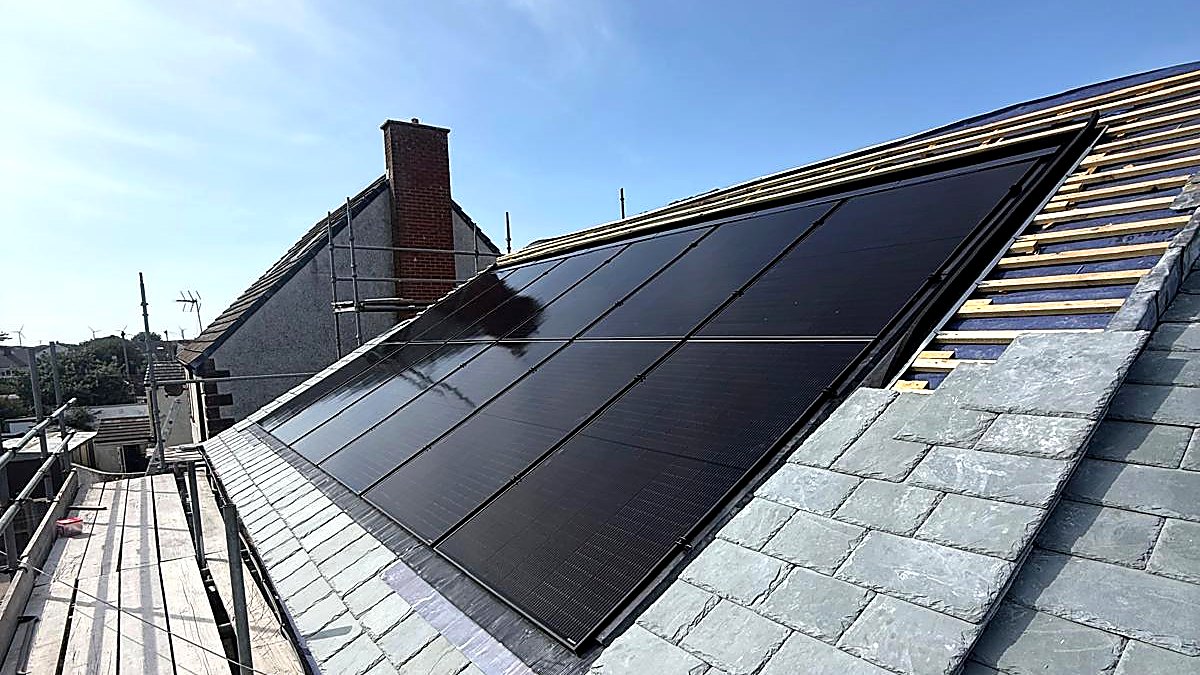
Those roofs are structurally robust, because they were built to carry heavy natural coverings. What they need is a mounting system that suits the covering. Stone slate and heavy natural slate behave differently to a modern concrete interlocking tile, and getting it wrong does not show up at commissioning. It shows up as a damp patch three winters later.
The new build estates, and why they are the best solar in the village
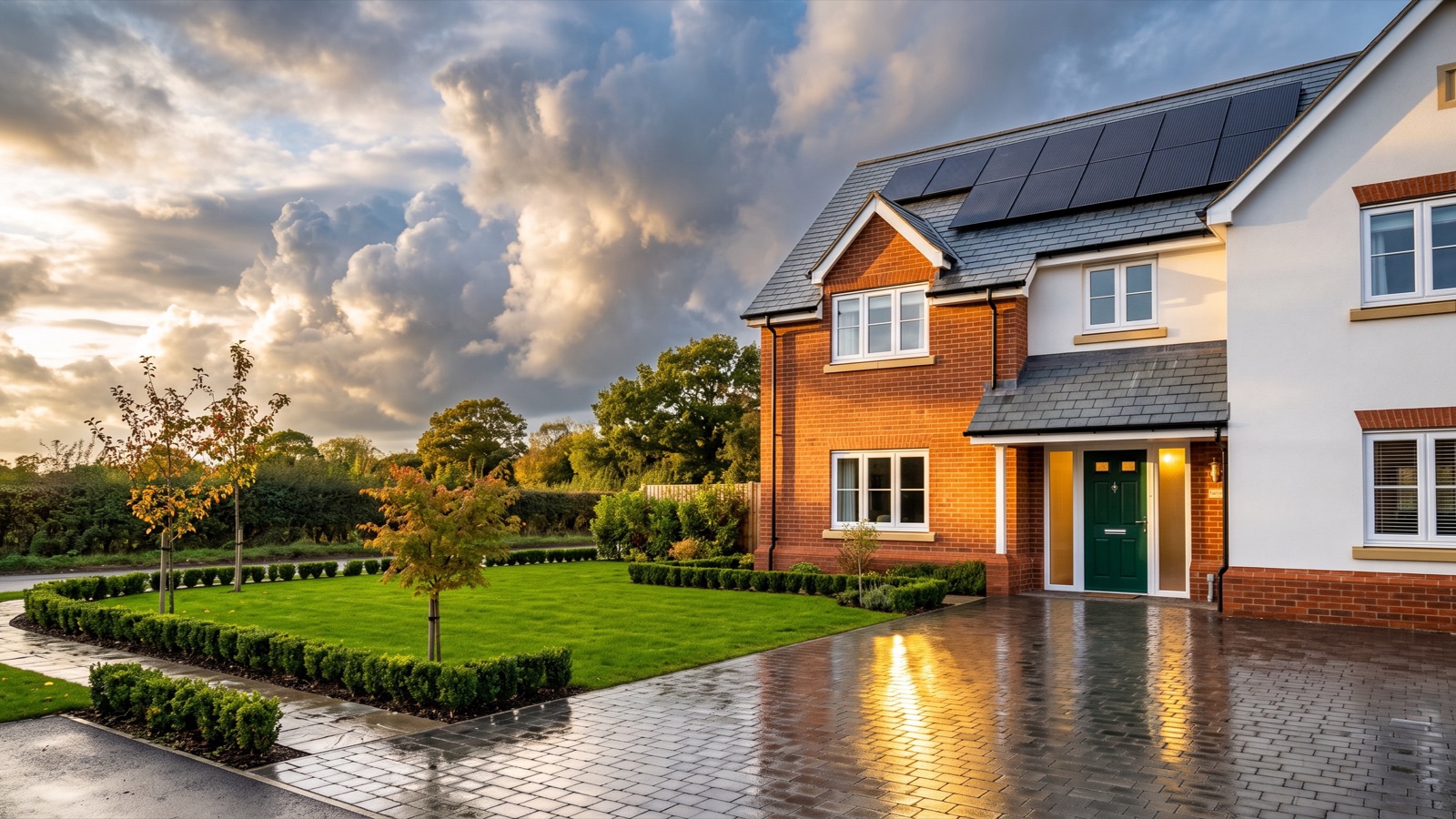
Whalley has roughly doubled in twenty years. Calderstones on part of the old hospital land, Abbey Farm, Whalley Manor, Lawsonsteads, and more recently the developments at Billington and Barrow a mile or so out. It is a village with a Victorian core and a very large modern edge.
Those modern roofs are, technically, the easiest solar anywhere round here.
The roof
Built for it, more or less
Trussed rafter construction, concrete interlocking tile, and a pitch usually between thirty and thirty five degrees, which is close to ideal in this country. No stone slate to work around, no chimney stacks on the party walls, and no conservation area to negotiate.
The catch
Estate layouts follow the road
Whether your main roof plane faces south or north was decided by which side of the close you bought on. Modern design also likes hips, dormers and projecting gables, which chops one large roof into three or four small ones. A house that looks like it has plenty of roof often takes fewer panels than expected.
The opportunity
Panels already up, and no battery
Newer homes frequently come with a developer fitted array. It is usually sized to satisfy building regulations rather than to suit the household, and it almost never comes with storage. That is a very different starting point to an empty roof.
If your house came with solar
This applies to a lot of the newer property in and around Whalley, and it is the most overlooked situation in the village.
A developer fitted array is generally the smallest system that gets the plot through building control. It works, and it is genuinely worth having. But it was designed against a compliance target rather than against your electricity bill, and it was specified before anybody knew who was going to live there or what time they got home.
Two things usually follow. There is often usable roof left over, so the array can be extended. And there is almost never a battery, which means the whole of your midday generation goes back to the grid at a modest rate while the house is empty, and you buy it back at teatime for considerably more.
Whether storage can be added comes down to the inverter the developer specified, and that is a question with a straightforward answer. A photograph of the label tells us most of it.
The commuter question
Whalley is on the Ribble Valley Line, which makes it a comfortable commute to Blackburn and onward to Manchester. A lot of the village leaves in the morning and comes back at teatime.
Which means the house is empty for most of the hours the roof is generating. Panels peak around one in the afternoon when nobody is in. The household peaks at seven when the panels have stopped. Without storage most of that summer surplus goes to the grid and gets bought back at a considerably higher rate the same evening.
It is the strongest argument for a battery there is, and it is a question about your week rather than your roof. If a quote arrives without anyone having asked what time you get home, it was sized off a price list.
Two local things that catch people out
The Whalley conservation area
Designated in October 1991 and covering much of the village core, including the character area between King Street and the viaduct that takes in the Abbey and the parish church. Solar on a house is normally permitted development, but that permission narrows inside a conservation area. In practice rear facing panels are usually still fine and panels on a slope facing a highway usually are not. Whalley Abbey and the three high crosses in St Mary's churchyard are scheduled monuments, and the viaduct is listed, so anything in their setting needs care.
Listed buildings are a separate process
Listed building consent is not the same thing as planning permission and you may need both. There is a lot of listed and historically significant fabric in a small village here. It is not automatically a refusal, but it is worth establishing at survey rather than after somebody has designed a layout, and we check it as part of the job.
Where we work
Across BB7 9 and the Calder valley
If you are not on this list, ask anyway. Most of it is inside fifteen minutes of our HQ.
- Whalley
- Billington
- Wiswell
- Barrow
- Read
- Simonstone
- Langho
- Old Langho
- Sabden
- Pendleton
- Copster Green
- Mellor Brook
- Great Harwood
- Nethertown
- Calderstones
Your network operator is Electricity North West
Any installation has to be notified to them before connection. We handle it as part of the job rather than leaving it with you.
Shading assessment, not a satellite guess
With the Nab to the south, a generation figure produced from an aerial image is close to worthless in this village. Ask any installer what shading factor was applied and where it came from.
Does it actually work here?
Yes, and the gap between here and the south of England is smaller than people assume, because panels run on daylight rather than heat or direct sunshine. A bright overcast day still generates usefully.
Whalley is simply a village where the design matters more than usual. Get the array laid out around the Nab rather than in spite of it and the result is a perfectly good system. Ignore it, quote from a satellite image, and the customer finds out in November.
What it pays back around here
We do not put a price on a house we have not surveyed. What we can show is what a properly designed system returns, using the same assumptions as our cost page: a typical household, current tariffs, and nothing counted for export payments.
£590 to £800
a year saved on a typical semi with 9 panels and a battery. Panels alone on the same roof, £300 to £410 a year, before any export income.
0% VAT
on panels, batteries and the installation until 31 March 2027, whichever route you take. No grant application, it simply comes off the quote.
64% to 78%
of a household’s electricity designed to come from its own roof and battery on our two most recent domestic jobs. The case studies below show the working.
Indicative ranges by house type, and where the figures come from, are on what solar costs in Lancashire. The number that matters is the one on your survey.
Recent jobs, with the figures
Real roofs, real kit, and the assumptions shown. Every case study says what the system was designed to cover and why.
All case studies, filterable by property type, product and area.
Read before you commit
Get a free assessment
Free, no obligation
Three things and we can tell you whether it is worth pursuing.
Your address
So we can look at the roof, which way it faces and what might shade it.
Your annual electricity use
On any annual statement, in units. A rough figure is fine.
Roughly when you are home
The single biggest factor in how much of your generation you keep.
That is enough for a straight answer. If your roof is not right for it, we will say so. We would rather tell you now than sell you something that disappoints you in February.
Common questions
Does Whalley Nab affect my roof?
Possibly. The Nab is a large wooded hill directly south of the village across the Calder, and high ground to the south removes light from the middle of the day rather than the ends of it. Property nearest the river is most affected. Property further up the north side of the village often has a clear southern aspect.
Do I need planning permission in the conservation area?
The Whalley conservation area was designated in October 1991. Solar is normally permitted development but that narrows inside one. Rear facing panels are usually still fine, panels on a slope facing a highway usually are not, and listed buildings need separate listed building consent.
Can you fit panels on Whalley stone properties?
Yes. The village is built from local limestone and sandstone and those roofs were made to carry heavy natural coverings. The constraint is the mounting system, which has to suit the covering rather than a modern concrete tile.
I commute on the Ribble Valley Line. Is solar still worth it?
Yes, but it changes the design. An empty house during generating hours exports most of its summer surplus and buys it back dear at teatime. That is the strongest case there is for storage.
My new build already has solar. Is there any point adding to it?
Often, yes. A developer fitted array is usually sized to meet building regulations rather than to suit the household, and it rarely comes with a battery. There is frequently usable roof left over, and adding storage stops your midday generation going back to the grid while the house is empty. Send us a photo of the inverter label and we can tell you what is possible.
Who notifies the network operator?
We do. Electricity North West covers Whalley and the wider Ribble Valley, and it happens before connection as part of the job.
Will my installation be registered with MCS?
Yes. When your solar panels or battery are finished we register the installation on the MCS Installation Database and you get an MCS certificate for it. Keep the certificate with your house paperwork. It is useful if you sell.
How far is Whalley from your HQ?
About ten minutes up the A671 from Clitheroe. Close enough that a survey is a normal part of the day rather than a trip.