40 min
From Princess Avenue, Clitheroe, down the M6 to Leyland and Chorley. Every roof is surveyed in person before anyone quotes a number. We are independently assessed and MCS certified for solar PV and battery storage.
3,000+
Homes built at Buckshaw Village on the old Royal Ordnance site since the 2000s. A different job from a first install on an older house, and we explain why below.
Sigenergy registered
Registered Sigenergy installers, plus Tesla, Fox and Aiko. A short list we know properly rather than a catalogue we half know.
What Chorley and Leyland roofs are actually like
Leyland is a works town, Chorley is a market town with moorland behind it, and Buckshaw is a new one built between them. The roofs are as different as the histories, and so is the right design for each.
Leyland: Moss Side, Seven Stars, Broadfield, Worden
The Leyland Motors estates
Leyland grew around the vehicle works, and most of the town’s housing is the inter-war and post-war semis and bungalows built for its workforce. Simple hipped and gabled roofs, concrete tile, flat ground, and estates laid out with space between the houses. On a good orientation these are the easiest solar roofs in Central Lancashire, and there are a great many of them.
Chorley: town centre, Astley Village, Euxton, Clayton-le-Woods
Market town terraces and the suburbs
Stone and brick Victorian terraces around the centre, with the same single slope orientation question as any terrace, then rings of 1930s semis and later estates at Astley Village, Euxton and Clayton-le-Woods. Nothing exotic, which is the point: the design questions are orientation, chimney shading and the size of the roof plane, and all three are settled at survey.
Buckshaw Village, PR7 7
Buckshaw Village
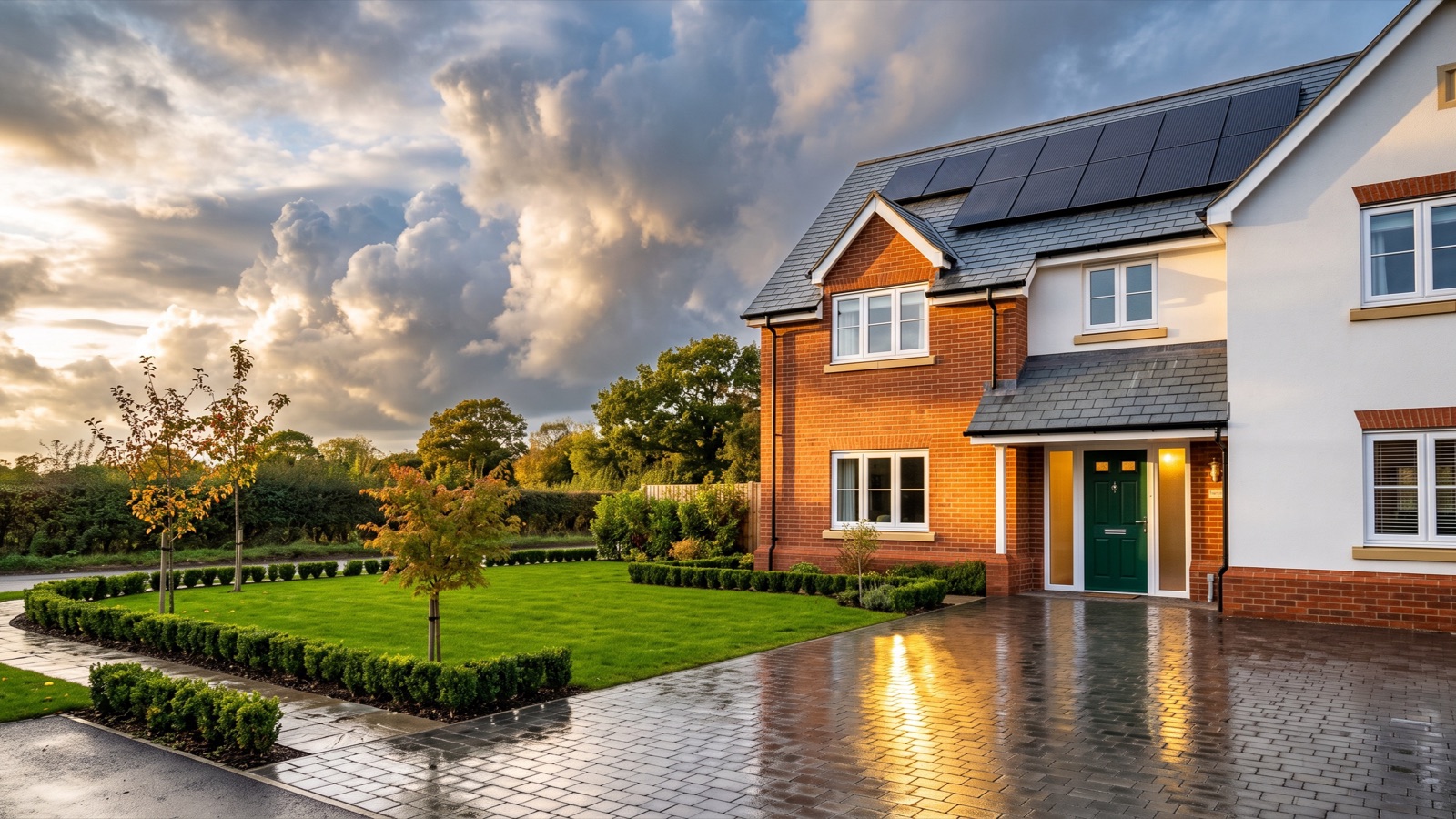
More than 3,000 homes on the decontaminated site of the Royal Ordnance Factory, built by national developers from the 2000s onwards. Modern trussed roofs and concrete tile, easy to work on. Two things to check first: whether the house already has a small developer fitted array, and whether the estate’s management scheme has anything to say about external alterations. Both change the design. Neither is a reason not to proceed.
Three local things that catch people out
Conservation areas and Article 4 in the villages
Chorley borough has nine conservation areas, and parts of Croston and Withnell Fold carry Article 4 Directions that remove the usual permitted development rights. South Ribble has eight, and in some of them permitted development is more restricted than the national default. The towns themselves are largely unaffected. It is the villages — Croston, Eccleston, Withnell Fold and the older cores — where a rear facing array that would be fine in Leyland needs a planning conversation first. We check the designation as part of the survey rather than leaving you to discover it.
The moors east of Chorley
Rivington, Anglezarke and Healey Nab rise steeply on the eastern side of the borough. Properties in Adlington, Heath Charnock and up towards Rivington lose the sun earlier in the afternoon than the same house would in Leyland, and the exposure changes the fixing calculation. It rarely rules solar out. It changes the design, the numbers, and occasionally which slope is worth using.
Developer arrays and covenants on the new estates
A share of Buckshaw and the newer Euxton and Farington developments came with two to four panels fitted to satisfy building regulations rather than to run a house. They generate, but the inverter and export arrangement need checking before anything is added, and it is not unusual for the better answer to be replacing the small original system. Newer estates also sometimes carry management scheme rules on external changes. Neither is a problem we have not met before, and both are worth knowing about before the design rather than after it.
Where we work
Across Chorley, Leyland and the villages
If you are not on this list, ask anyway. The M6 puts most of it within forty minutes of our HQ.
- Leyland
- Farington
- Moss Side
- Seven Stars
- Broadfield
- Lostock Hall
- Buckshaw Village
- Euxton
- Clayton-le-Woods
- Whittle-le-Woods
- Chorley
- Astley Village
- Adlington
- Heath Charnock
- Coppull
- Charnock Richard
- Eccleston
- Croston
- Heskin
- Withnell
- Brinscall
- Rivington
Your network operator is Electricity North West
Any installation has to be notified to them before connection. We handle it as part of the job rather than leaving it with you.
Three councils, one local plan
Preston, South Ribble and Chorley share the Central Lancashire Local Plan, so the strategic planning is joined up even though the conservation area maps are not. Which council your house falls under decides which map applies, and Leyland and Chorley are in different ones.
Does it actually work here?
Yes. Leyland and the western side of Chorley are flat, low and open, with none of the hillside problems that shape installs in the Ribble Valley or east of Chorley towards the moors. On the right orientation this is straightforward country for solar, and a bright overcast day still generates usefully because panels run on daylight rather than heat.
What decides it, as everywhere, is which way the roof faces, what shades it, and when the house is occupied. A Leyland semi with a south facing hip and nobody home until six is a different case from the same house with someone in all day, and the battery conversation follows from that.
What it pays back around here
We do not put a price on a house we have not surveyed. What we can show is what a properly designed system returns, using the same assumptions as our cost page: a typical household, current tariffs, and nothing counted for export payments.
£590 to £800
a year saved on a typical semi with 9 panels and a battery. Panels alone on the same roof, £300 to £410 a year, before any export income.
0% VAT
on panels, batteries and the installation until 31 March 2027, whichever route you take. No grant application, it simply comes off the quote.
64% to 78%
of a household’s electricity designed to come from its own roof and battery on our two most recent domestic jobs. The case studies below show the working.
Indicative ranges by house type, and where the figures come from, are on what solar costs in Lancashire. The number that matters is the one on your survey.
Recent jobs, with the figures
Real roofs, real kit, and the assumptions shown. Every case study says what the system was designed to cover and why.
All case studies, filterable by property type, product and area.
Read before you commit
Get a free assessment
Free, no obligation
Three things and we can tell you whether it is worth pursuing.
Your address
So we can look at the roof, which way it faces, and which estate it is on.
Your annual electricity use
On any annual statement, in units. A rough figure is fine.
Roughly when you are home
The single biggest factor in how much of your generation you keep.
That is enough for a straight answer. If your roof is not right for it, we will say so. We would rather tell you now than sell you something that disappoints you in February.
Common questions
Do I need planning permission for solar panels in Chorley or Leyland?
Usually not. Solar on a house is normally permitted development. The exceptions are the conservation areas, particularly Croston and Withnell Fold in Chorley borough where Article 4 Directions apply, and some of South Ribble’s eight conservation areas where permitted development is more restricted. We check the designation before anything is designed.
My house on Buckshaw Village already has a few panels. Can you add to them?
Usually, but the developer’s inverter and export arrangement decide how, and the estate’s management scheme may have a view on external changes. Sometimes it is cheaper and better to replace the small original system than to add to it. We check what is there at the survey.
Is a Leyland semi a good solar roof?
On the right orientation, one of the best in Central Lancashire. Simple hipped roofs, concrete tile, flat ground and space between the houses. A hipped roof splits the array across two or three slopes, so the design is about balancing them rather than filling one big south face.
Does living near the moors east of Chorley matter?
It changes the numbers rather than the answer. Properties towards Rivington and Adlington lose the sun earlier in the afternoon and are more exposed, so the shading analysis and the fixing specification both matter more. The survey tells you what it costs you.
Who notifies the network operator?
We do. For Chorley, Leyland and South Ribble that is Electricity North West, and it happens before connection as part of the job.
Why does the MCS certificate matter?
We register your finished system with MCS and you get its certificate. For solar PV, energy suppliers usually ask for it before they pay you for the electricity you send back to the grid under the Smart Export Guarantee. It is also useful if you sell.
How long does an installation take?
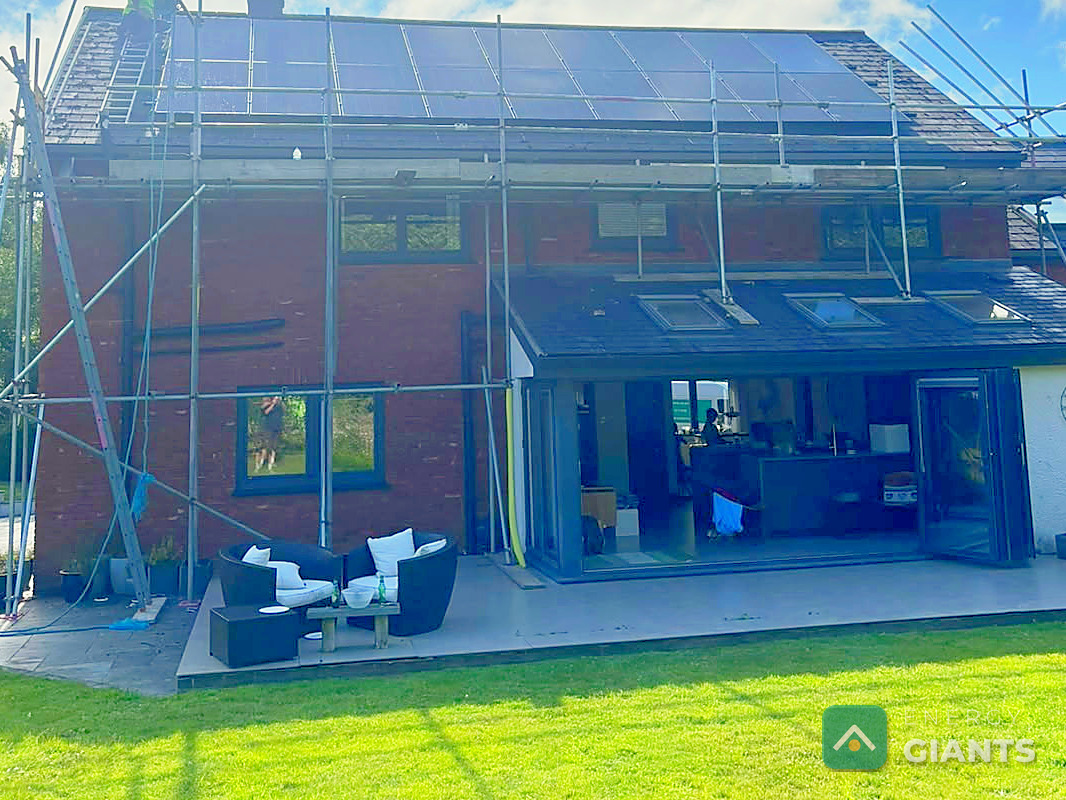
One to two days on site for a typical Leyland or Chorley house once the scaffold is up. Buckshaw homes with an existing array can take a little longer if the original system is being replaced.