BB7
Based at The Former Ambulance Station, Princess Avenue, Clitheroe BB7 2AL. Not a regional office running subcontractors from another county. We are MCS certified for solar PV and battery storage.
Every roof
Surveyed in person before anyone quotes a number. Never estimated from an aerial image.
Sigenergy registered
Registered Sigenergy installers, plus Tesla, Fox and Aiko. A short list we know properly rather than a catalogue we half know.
What Ribble Valley roofs are actually like
Most solar advice online is written for a generic UK house, which in practice means a 1990s estate semi somewhere in the Midlands. Not much use here.
Town centre
Georgian and Victorian stone
Steep pitches built to shed water off stone or Welsh slate, small roof planes, chimney stacks at both ends. Structurally almost always fine, because they were built to carry something far heavier than an array. The constraint is usable area and shading, not weight.
Low Moor, Salthill, Henthorn
Post war and estate housing
Quietly the best solar roofs in the area. Shallower pitch, simple rectangular planes, interlocking concrete tile, and estates laid out with space around them so shading is rarely the problem it is in town.
Waddington, Bashall, Chatburn
Farmhouses and barn conversions
The biggest opportunity and the longest process. Large roof area, often stone slate, frequently listed or inside the Forest of Bowland, and usually on a single phase supply that shapes what is possible.
Three local things that catch people out
Conservation areas
Clitheroe town centre is a conservation area, as are Whalley, Slaidburn and Bolton-by-Bowland among others. Solar on a house is normally permitted development, but that permission narrows inside a conservation area. In practice, rear facing panels are usually still fine and panels on a roof slope facing a highway usually are not. If your only usable plane faces the street, that is a planning conversation before it is a solar one, and it is worth having early rather than after somebody has designed a layout.
The Forest of Bowland National Landscape
A large part of the Ribble Valley sits inside it. Additional restrictions apply, particularly on prominent elevations, and listed building consent is a separate process to planning permission if the property is listed. None of this is automatically a no. It changes what is possible and where, and we check it as part of the survey rather than leaving you to discover it later.
Stone slate fixings
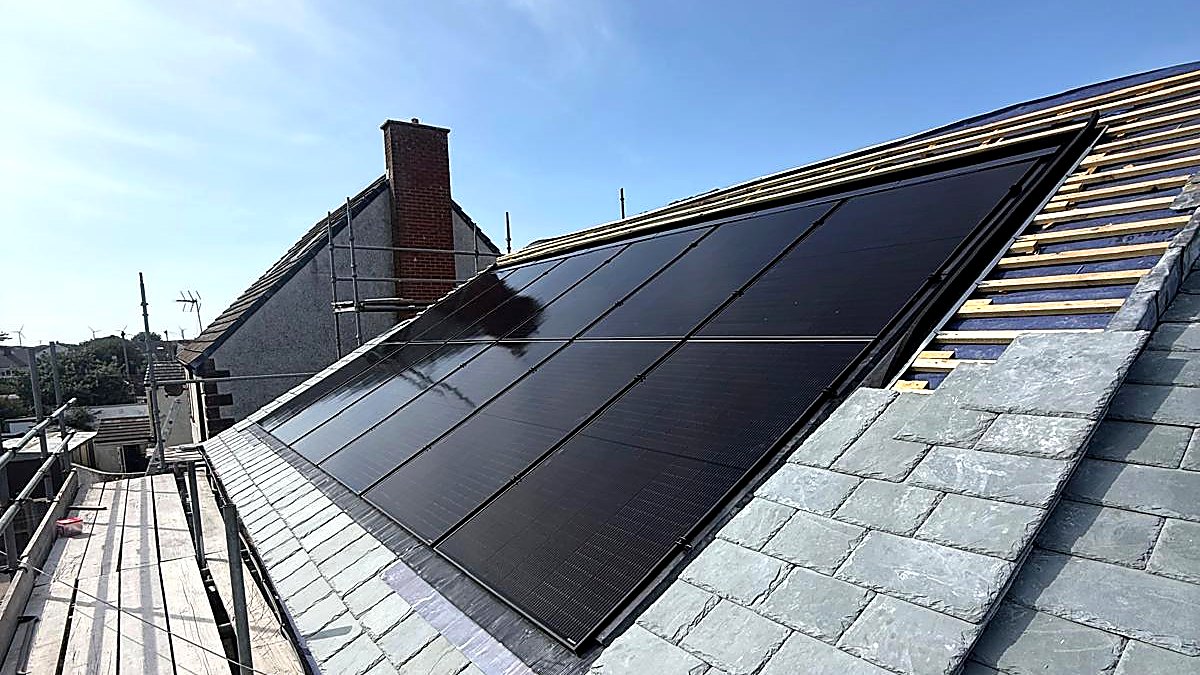
The one almost nobody writes about. Stone slate is heavy, irregular, and needs a different mounting approach to a modern concrete interlocking tile. Get it wrong and you do not find out at commissioning. You find out as a damp patch three winters later. If you are getting quotes on a stone roof anywhere in the valley, ask specifically what mounting system is proposed and why.
Where we work
Across BB7 and the wider valley
If you are not on this list, ask anyway. Most of it is inside twenty minutes of our HQ.
- Clitheroe
- Whalley
- Waddington
- Chatburn
- Barrow
- Wiswell
- Sabden
- Read
- Simonstone
- Langho
- Billington
- Longridge
- Ribchester
- Hurst Green
- Bolton-by-Bowland
- Downham
- Gisburn
- Slaidburn
- Chipping
- Dunsop Bridge
Your network operator is Electricity North West
Any installation has to be notified to them before connection. We handle it as part of the job rather than leaving it with you.
Rural supplies need checking early
Single phase supplies with long service cables are common out towards Bowland and can put a ceiling on what is possible. Better established at survey than at design.
Does it actually work here?
Yes, and the gap between the Ribble Valley and the south of England is smaller than people assume, because panels run on daylight rather than heat or direct sunshine. A bright overcast day still generates usefully.
What matters far more than the county you are in is what shades the roof, which way it faces, and when the house is occupied. A chimney stack costs you more than moving two hundred miles south would gain you, and valley properties have the additional issue of a hillside bringing sunset forward by an hour.
What it pays back around here
We do not put a price on a house we have not surveyed. What we can show is what a properly designed system returns, using the same assumptions as our cost page: a typical household, current tariffs, and nothing counted for export payments.
£590 to £800
a year saved on a typical semi with 9 panels and a battery. Panels alone on the same roof, £300 to £410 a year, before any export income.
0% VAT
on panels, batteries and the installation until 31 March 2027, whichever route you take. No grant application, it simply comes off the quote.
64% to 78%
of a household’s electricity designed to come from its own roof and battery on our two most recent domestic jobs. The case studies below show the working.
Indicative ranges by house type, and where the figures come from, are on what solar costs in Lancashire. The number that matters is the one on your survey.
Recent jobs, with the figures
Real roofs, real kit, and the assumptions shown. Every case study says what the system was designed to cover and why.
All case studies, filterable by property type, product and area.
Read before you commit
Get a free assessment
Free, no obligation
Three things and we can tell you whether it is worth pursuing.
Your address
So we can look at the roof, which way it faces and what might shade it.
Your annual electricity use
On any annual statement, in units. A rough figure is fine.
Roughly when you are home
The single biggest factor in how much of your generation you keep.
That is enough for a straight answer. If your roof is not right for it, we will say so. We would rather tell you now than sell you something that disappoints you in February.
Common questions
Do I need planning permission in a conservation area?
Solar is normally permitted development, but that narrows inside a conservation area. Clitheroe town centre, Whalley, Slaidburn and Bolton-by-Bowland are all conservation areas. Rear facing panels are usually still fine. Panels on a slope facing a highway usually are not.
Can you fit panels on a stone slate roof?
Yes, with the right mounting system. Stone slate is heavy and irregular and needs a different approach to a concrete tile. It is one of the clearest lines between a competent installer and a cheap one.
Does the Forest of Bowland affect what I can do?
Additional restrictions apply, particularly on prominent elevations, and listed building consent is separate from planning permission. Not automatically a refusal, but it shapes where panels can go.
Who notifies the network operator?
We do. For Clitheroe and the Ribble Valley that is Electricity North West, and it happens before connection as part of the job.
Will I get an MCS certificate?
Yes. When your solar or battery system is finished we register it with MCS and you get an MCS certificate for it. For solar PV, energy suppliers usually ask for that certificate before they pay you for the electricity you send back to the grid under the Smart Export Guarantee.
Will my roof take the weight?
Almost always. Older Ribble Valley roofs were built to carry stone slate, which is far heavier than an array. Some non standard prefabricated post war construction types need a structural check first.
How long does an installation take?
A typical domestic install is one to two days on site once the scaffold is up. Farm buildings and larger arrays take longer, and rural properties sometimes need grid work agreeing first.