


Case study · Battery storage · Tingley, Wakefield
Ten year old solar panels.
A brand new battery.
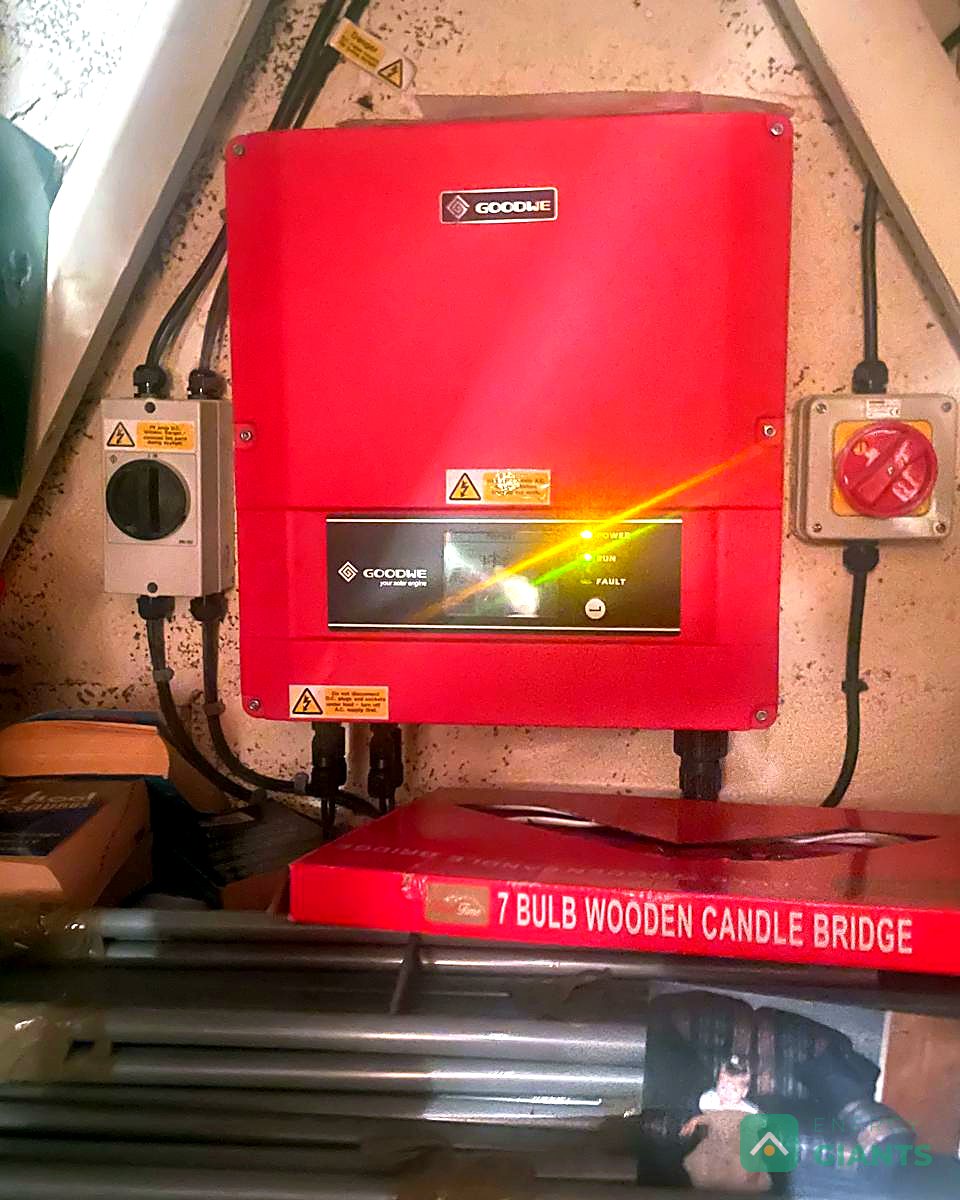
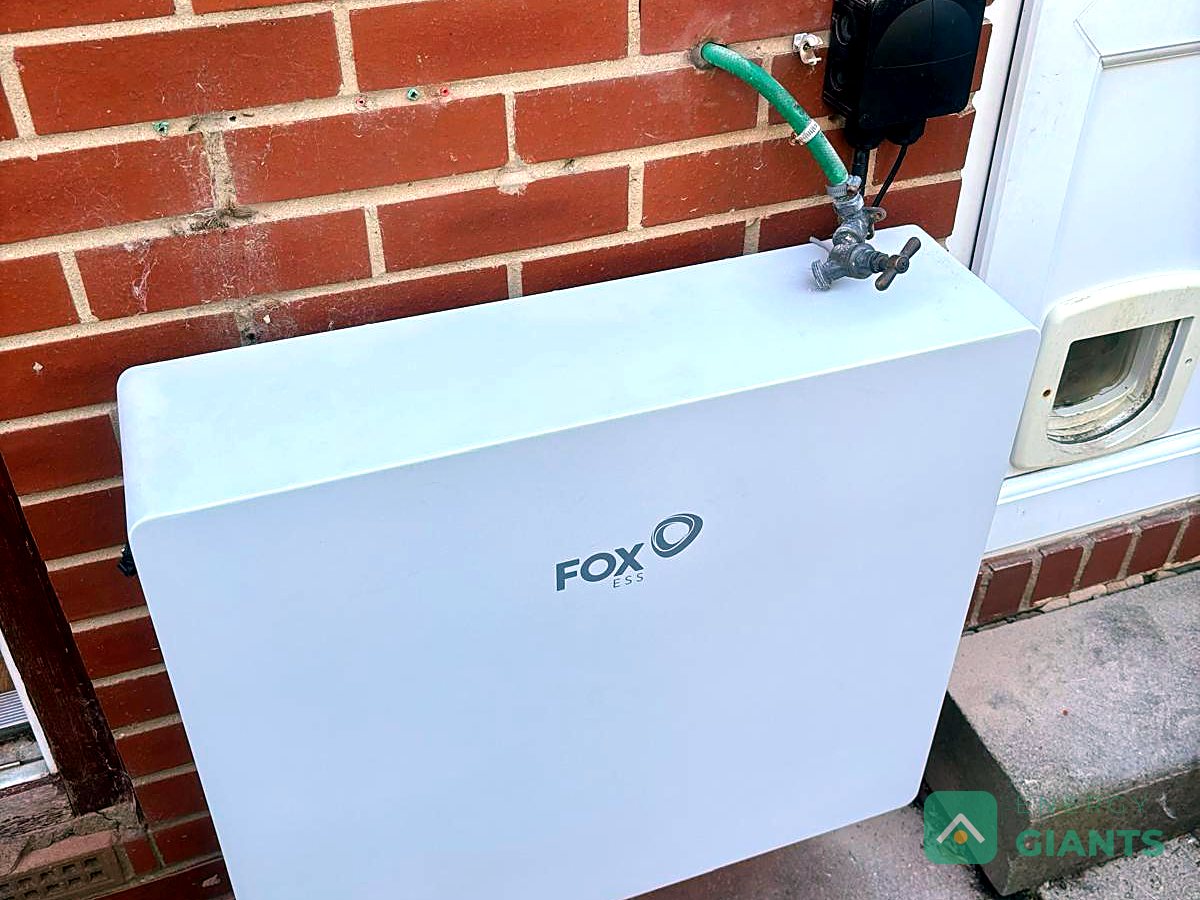
This house in Tingley has had solar panels since 2016, fitted by another installer. They still work well, but without a battery most of what they make on a sunny day goes to the grid. We swapped the old inverter for a modern hybrid one and added a battery beside the back door. One day on site, in May 2026.
The job in numbers
2016
When the panels went on
A 4 kW system from another installer. The panels stayed exactly where they were.1
10.36kWh
Usable storage
A Fox ESS battery, enough to run most homes through a typical evening.1
1day
On site
Old inverter out of the loft, new hybrid inverter in, battery on the wall, commissioned.2
£1.48
Each time it fills from the roof
The value of a full battery of solar used in the evening instead of exported, at today’s prices.3
The job
Most solar homes don’t need new panels. They need somewhere to put the power.
Thousands of homes had solar panels fitted in the 2010s, before home batteries were common. The panels keep working for decades, but the pattern is always the same: lots of power in the middle of the day when nobody’s using much, and nothing in the evening when everyone is.
The fix is a battery. On this job the old inverter in the loft had to come out, because it couldn’t talk to a battery. We replaced it with a Fox ESS hybrid inverter, which runs the existing panels and manages the battery in one box.
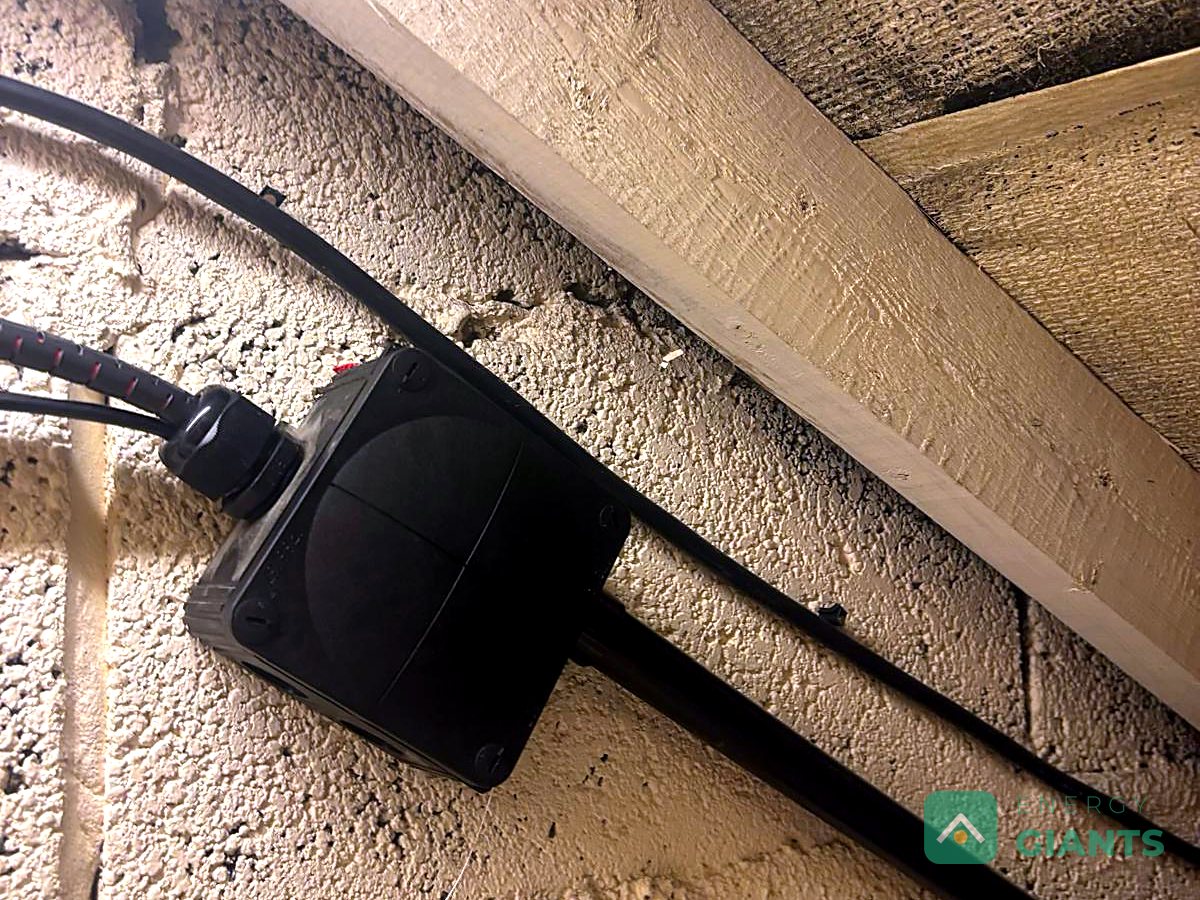
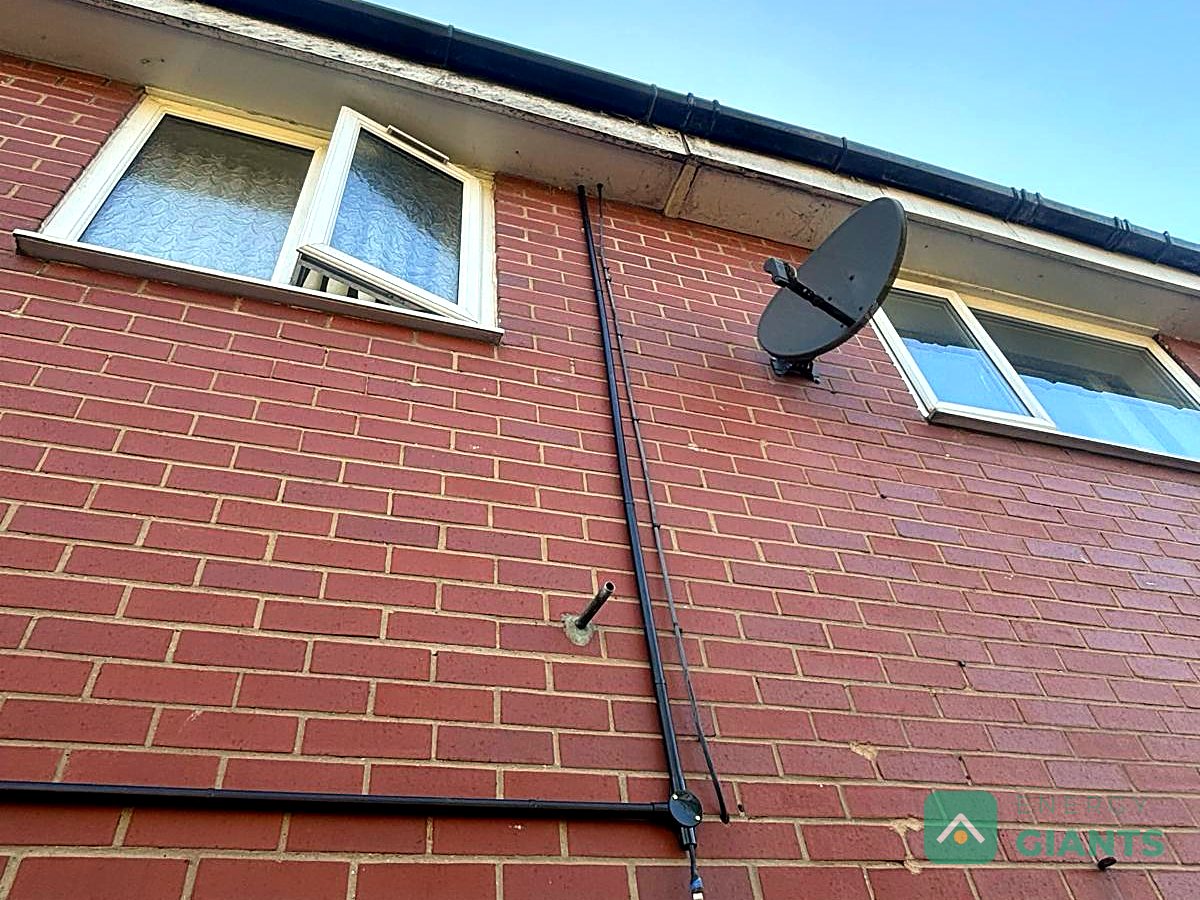
The battery went on the back wall, beside the door, where it’s easy to get to and out of the living space. The cable runs neatly down the wall from the loft. The whole thing was done in a single day, with the panels on the roof untouched.
The result: on a sunny day, solar that used to be sold to the grid for a few pence now runs the house in the evening instead of electricity bought at full price.
How it works
What changes when you add a battery.
The panels make the same amount of power as before. What changes is where it goes.
A sunny day, before and after
An illustration, not a measurement. On a sunny day most homes with panels but no battery export the majority of what they make.
A sunny day before panels only
- Used while the sun is up
- Most of it exported for a few pence, then bought back at full price in the evening
A sunny day now panels and battery
- Used while the sun is up
- Stored, then used in the evening
- Only what’s left over goes to the grid
How it fits together
The new hybrid inverter replaced the old one, and now runs the original panels and the battery together.
- Panels on the roofExisting 4 kW panels from 2016
- InverterFox ESS H1, 3.68 kW hybrid, replacing the old inverter
- BatteryFox ESS EP12, 10.36 kWh usable
- Your homeLights, kettle, EV, heat pump
- The gridOnly the surplus goes out
What it saves
What a full battery is worth.
A battery doesn’t make electricity. It saves money by moving it: from the middle of the day to the evening, or from cheap overnight rates to the expensive part of the day. Here’s what one full battery is worth, at today’s prices.3
On the day
On the day.
What was installed
The specification.
| Property | Two storey red brick house in Tingley, Wakefield |
|---|---|
| Existing | A 4.00 kWp solar system fitted in 2016 by another installer, panels left in place |
| Removed | The original inverter in the loft |
| Inverter | Fox ESS H1, 3.68 kW hybrid |
| Battery | Fox ESS EP12, 11.52 kWh, 10.36 kWh usable, on the rear wall |
| Grid | Northern Powergrid told and confirmed2 |
| Dates | Installed 29 May 2026, commissioned 2 June 20262 |
| Investment | Between £4,500 and £6,500 for a battery and hybrid inverter added to existing panels, VAT at 0%4 |
Questions people ask
Questions about adding a battery.
Can I add a battery to my existing solar panels?
Almost always. Sometimes the old inverter can stay and the battery connects alongside it. Often, as here, it’s better to swap the old inverter for a hybrid one that runs the panels and the battery together.
Do my old panels need replacing?
Usually not. Panels last decades. We check the system at survey and only suggest replacing anything that’s actually faulty or unsafe.
How much will a battery save me?
It depends on how much solar you currently export and how you use electricity. On this job, every full battery of solar used in the evening instead of exported is worth about £1.48 at today’s prices. We work it out properly from your usage at survey.
Keep reading
More like this.
Similar jobs
Got panels but no battery?
We’ll look at what you’ve got and tell you what a battery would be worth for the way you use electricity.
Notes on the figures
- System details are from the project file: the existing 4.00 kWp system was commissioned in October 2016 by another installer; the Fox ESS battery is 11.52 kWh nominal with 10.36 kWh usable at 90% depth of discharge. The before and after day is an illustration of the typical pattern, not a measurement from this house.
- Dates and grid are from the project file: installation 29 May 2026, commissioning 2 June 2026, confirmation from Northern Powergrid dated 10 June 2026.
- Battery values are worked out at today’s prices with no assumed price rises. Electricity used from the battery instead of the grid is valued at 26.32p per kWh, the Ofgem price cap unit rate for 1 October to 31 December 2026 (GB average, Direct Debit). Overnight charging is valued at 8p per kWh, the Intelligent Octopus Go off peak rate from 1 October 2026. Solar that would otherwise be exported is valued at 12p per kWh, the Outgoing Octopus Fixed rate from 1 March 2026. The figures ignore small charging losses. Your tariff and habits will change the result. A full battery of solar used instead of exported: 10.36 kWh at 26.32p less 12p, about £1.48. A full battery charged overnight and used in the day: 10.36 kWh at 26.32p less 8p, about £1.90.
- The investment figure is an indicative range for a system of this size and specification; we do not publish the price a customer paid. Case study presented in line with section 5.3.3 of the Renewable Energy Consumer Code. The homeowner is not named, at our discretion.