


Case study · Tesla Powerwall 3 · Yaxley, Peterborough
A busy household.
A battery that keeps up.
This home in Yaxley, near Peterborough, uses a lot of electricity, well over twice what Ofgem counts as a typical home. Ten panels on the south east roof make a real dent in that, and a Tesla Powerwall 3 makes sure almost none of it is wasted. Installed and commissioned in a single day in May 2026.

 Ten Aiko panels and a Tesla Powerwall 3 with Backup Gateway, designed, installed and commissioned by Energy Giants.
The job in numbers
5.4kWp
Ten Aiko panels
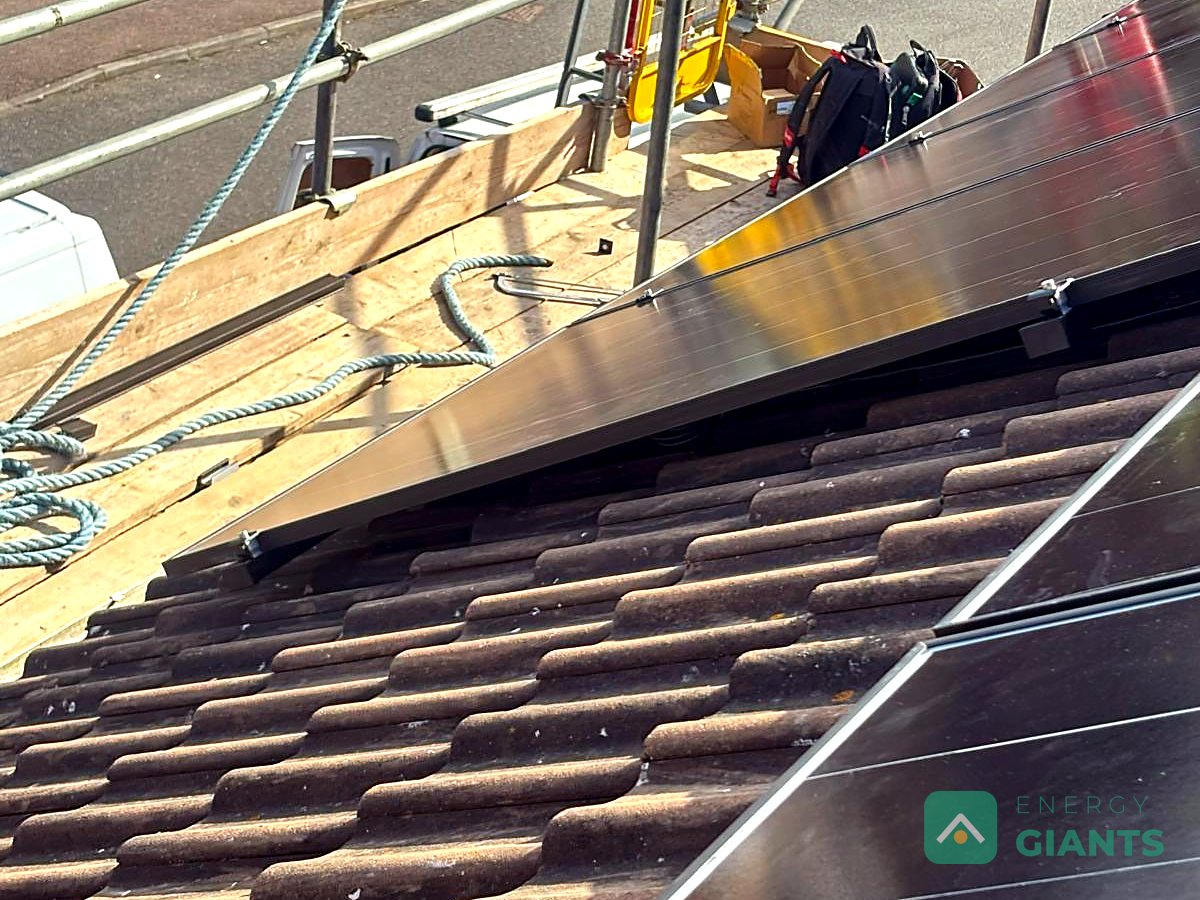
540 W each, all black, facing south east at 36 degrees.1
95%
Of the solar used at home
Estimated. With a big household demand and a big battery, very little goes to waste.1
62%
Of the home’s power
Estimated share from the roof and battery. Without the battery it would be 34%.1
1day
Install and commission
Panels, Powerwall, Backup Gateway and a trenched cable, all on 20 May 2026.2
The job
When a house uses a lot, nothing goes to waste.
Most homes export a good share of their solar, because the panels make more than the house needs in the middle of the day. This one is different. It uses about 7,450 kWh a year, so the house soaks up most of what the roof makes as it’s made.
That’s why the Powerwall matters here. It catches the rest and carries it into the evening. Between them, the house is expected to use 95% of everything the panels make, and to get nearly two thirds of its electricity from the roof and the battery.
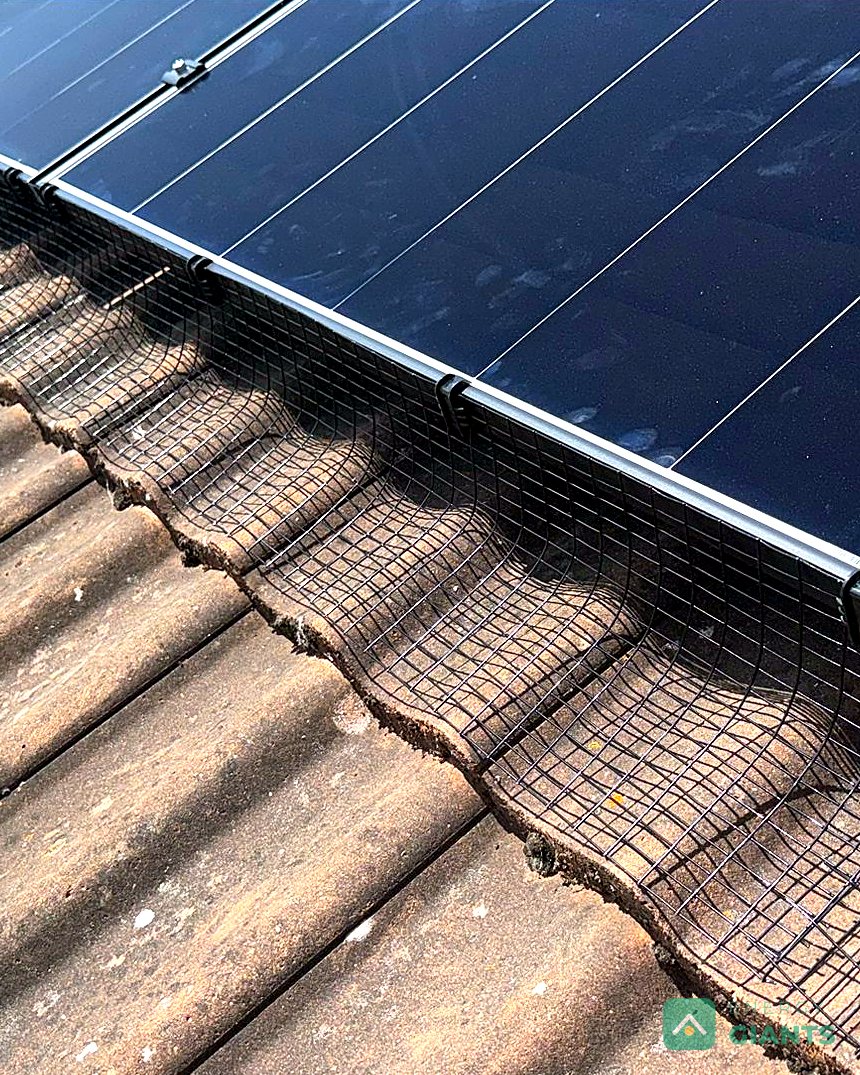
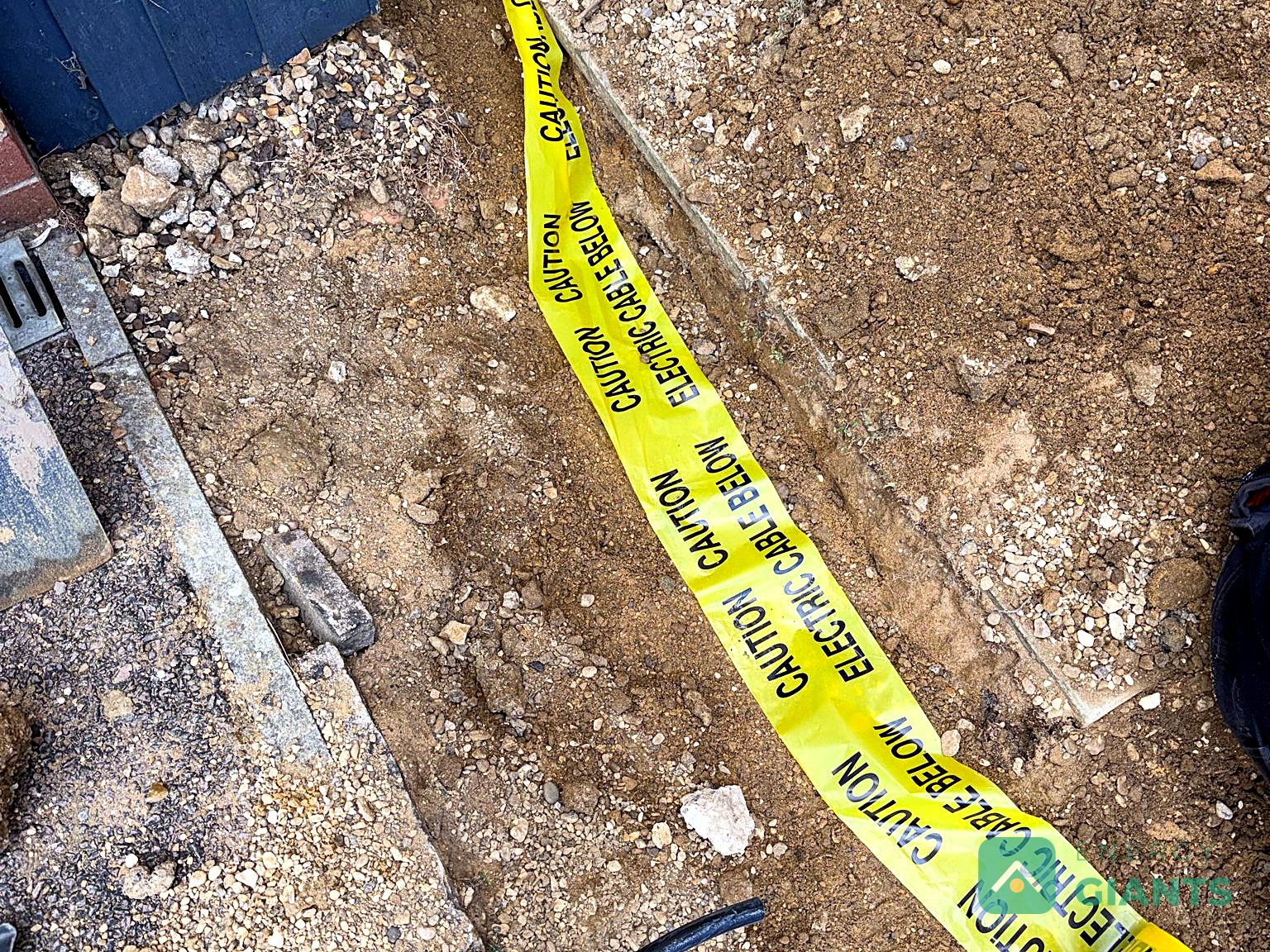
The roof faces south east, so the panels start early and are strongest from mid morning. We fitted bird mesh round the array so pigeons can’t nest underneath, and trenched a cable in the ground rather than running it round the outside of the house.
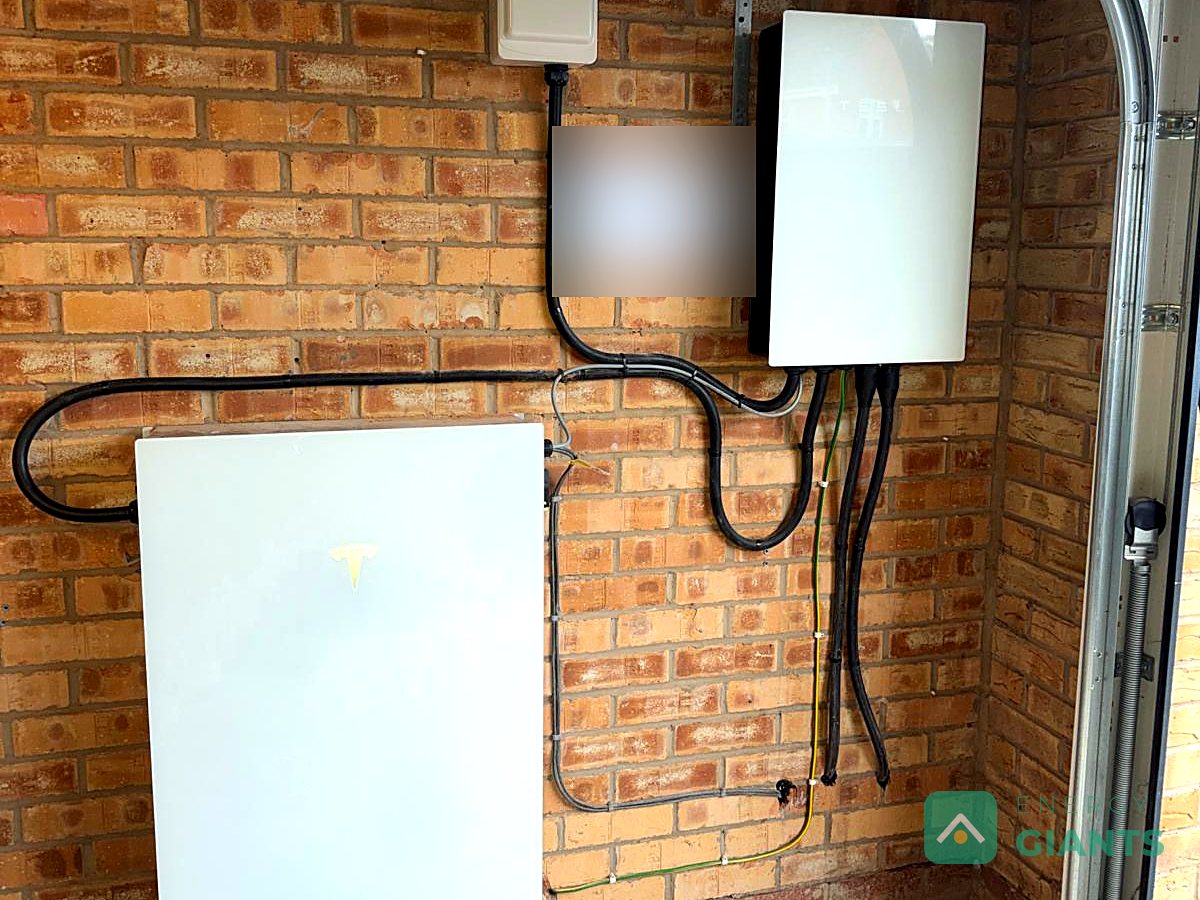
The Powerwall 3 is both the battery and the solar inverter, with a Tesla Backup Gateway beside it. It was all installed and commissioned in a single day.
How it works
What the panels make, and where it goes.
How this system works, in four pictures. The numbers are the estimates from the design for this house.1
Where the power goes, over a year
Top bar: every kWh the panels make in a year. Almost all of it is used in the house. Bottom bar: every kWh the house uses, and where it comes from.
Where the solar goes 4,859 kWh a year
- 2,537 kWh used in the home as it is made 52%
- 2,064 kWh stored in the battery, used later 42%
- 258 kWh sent to the grid and paid for 5%
Where the home’s electricity comes from 7,453 kWh a year
- 2,537 kWh straight from the panels 34%
- 2,064 kWh from the battery 28%
- 2,852 kWh still bought from the grid 38%
Which way the panels face
South east: strongest from mid morning to early afternoon.
- Main roof 5.4 kWp, 36° pitch
- South east to south west, the sunniest arc
How it fits together
The Powerwall 3 is the inverter and the battery. The Backup Gateway sits beside it.
- Panels on the roof10 Aiko panels, 5.4 kWp
- InverterBuilt into the Powerwall 3
- BatteryTesla Powerwall 3, 13.5 kWh
- Your homeLights, kettle, EV, heat pump
- The gridExport up to 5 kW agreed
What it saves
About £1,240 a year, at today’s prices.
Because this house uses so much of its own solar, nearly all the saving comes from electricity it no longer buys. Worked out at today’s prices, with no guesses about prices going up.3
On the day
On the day.
What was installed
The specification.
| Property | Brick house on a modern estate in Yaxley, Peterborough, with a concrete tiled roof |
|---|---|
| Panels | Ten Aiko 540 W all black panels, 5.4 kWp |
| Layout | One roof facing south east at 36 degrees, fixed above the tiles1 |
| Inverter and battery | Tesla Powerwall 3, 13.5 kWh, with built in solar inverter |
| Extras | Tesla Backup Gateway, new earth rod, trenched cable, bird mesh, surge protection |
| Grid | Approved by UK Power Networks before install, export up to 5 kW2 |
| Dates | Installed and commissioned 20 May 2026, bird mesh fitted 22 May2 |
| Investment | Between £10,500 and £13,000 for a system of this size and specification, VAT at 0%4 |
Questions people ask
Questions about bigger households.
We use a lot of electricity. Is a battery worth it?
Usually more so. A high use household uses more solar as it’s made, and a battery covers much of the evening. Here the house is expected to use 95% of what the panels make.
Why fit bird mesh?
Pigeons like the sheltered gap under panels. Mesh round the edge keeps them out, which protects the cables and the roof, and stops the mess.
Can the Powerwall charge from the grid overnight too?
Yes, on a tariff with cheap overnight rates it can top up at night as well as from the roof. We set it up to suit your tariff at handover.
Keep reading
More like this.
Other Tesla jobs
Big household, big bill?
That’s where solar and a battery work hardest. We’ll size them to what you really use.
Notes on the figures
- Generation, self consumption and the share of the home’s power are from the performance estimate in the quote: 4,859 kWh a year from a south east roof at 36 degrees, an assumed 7,453 kWh a year of household use, and 13.5 kWh of storage. They are estimates, not a guarantee. Ofgem’s typical domestic consumption value for a medium electricity user is 2,700 kWh a year.
- Dates and grid are from the project file: approval from UK Power Networks with 5 kW export, installation and commissioning 20 May 2026, bird mesh fitted 22 May 2026.
- Savings are worked out at today’s prices with no assumed price rises: solar used in the home is valued at 26.32p per kWh, the Ofgem price cap unit rate for 1 October to 31 December 2026 (GB average, Direct Debit), and exported electricity at 12.0p per kWh, the Outgoing Octopus Fixed rate from 1 March 2026. Your tariff, usage and export deal will change the figure. Standing charges are not affected by solar.
- The investment figure is an indicative range for a system of this size and specification; we do not publish the price a customer paid. Case study presented in line with section 5.3.3 of the Renewable Energy Consumer Code. The homeowner is not named, at our discretion.