

Case study · Tesla Powerwall 3 · Great Harwood, Lancashire
A slate roof, old stone and tall trees.
Still a 10 kW system.
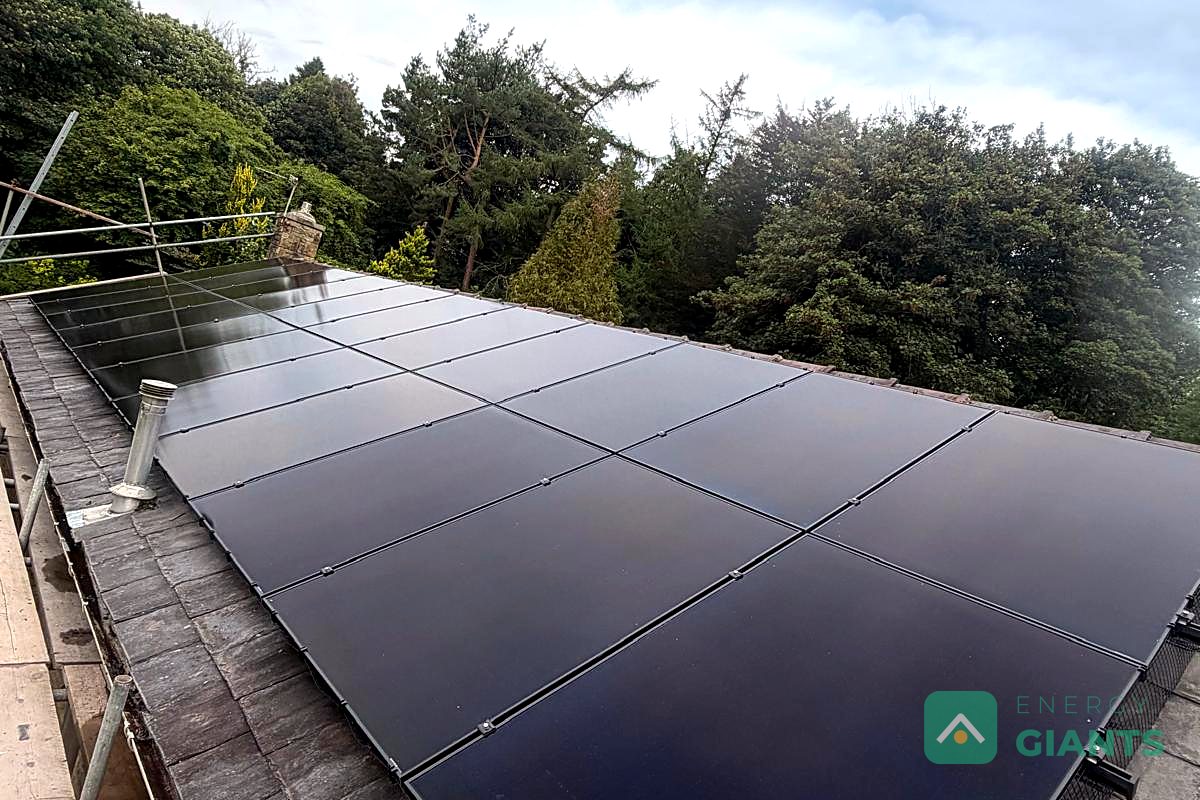
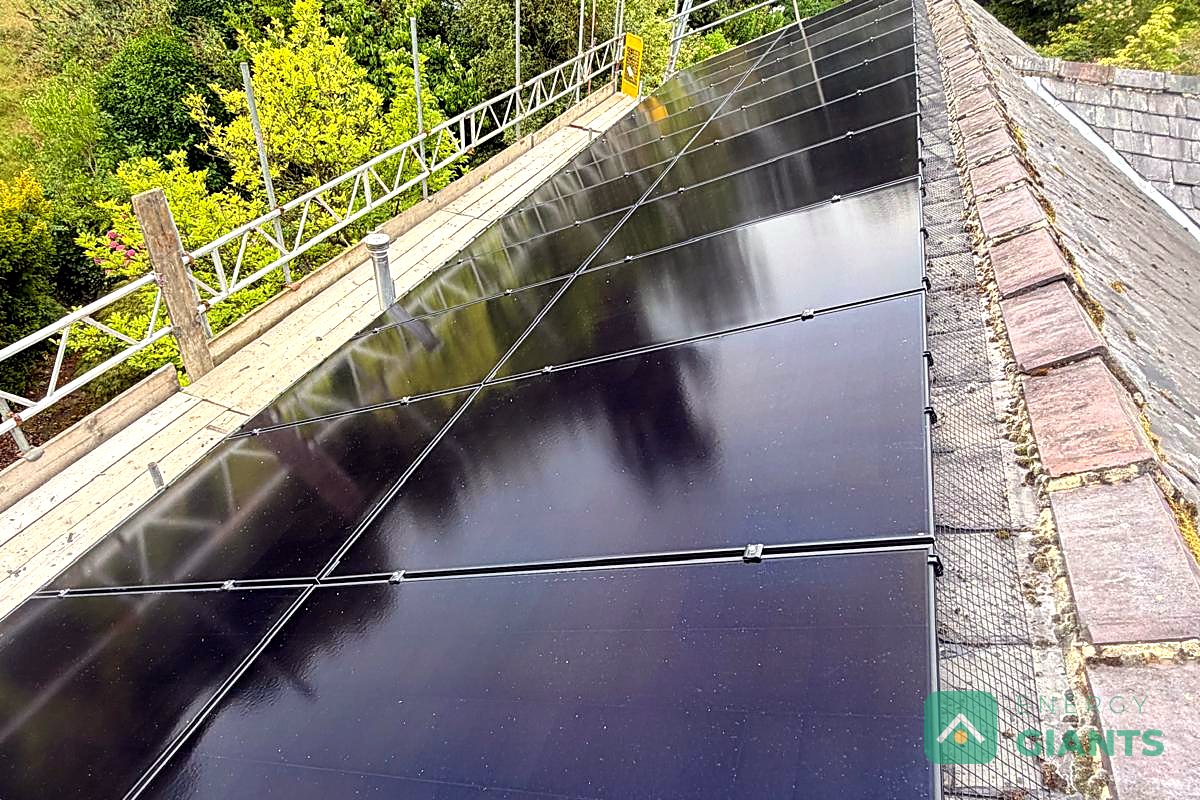
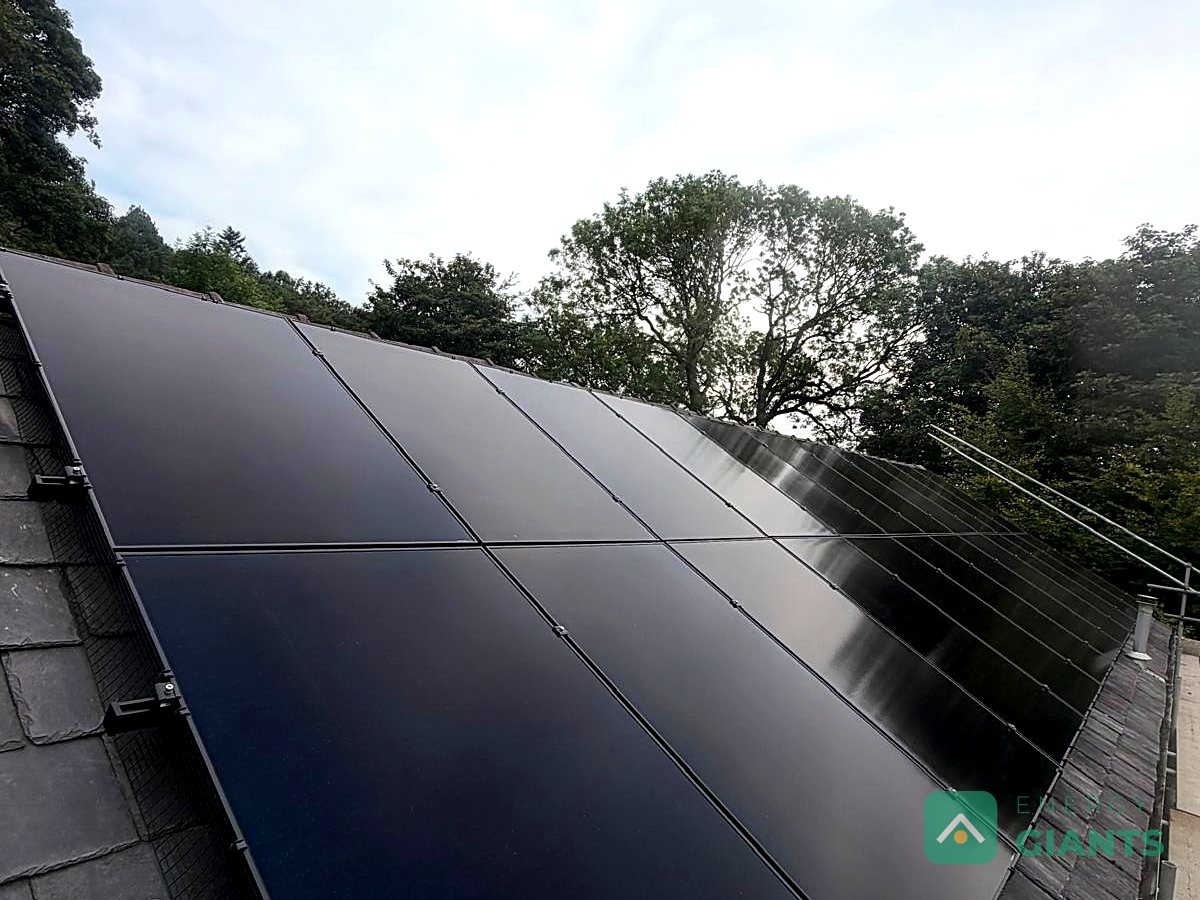
This older property in Great Harwood has a natural slate roof, a stone chimney and mature trees all around. None of that stopped it. Twenty two Aiko panels went on the south facing slope, and a Tesla Powerwall 3 went into the outbuilding. Finished and generating at the end of August 2026.

 Twenty two Aiko panels and a Tesla Powerwall 3, designed, installed and commissioned by Energy Giants.
The job in numbers
10.23kWp
Twenty two Aiko panels
465 W each, all black, on the south facing slate slope at 29 degrees.1
8,618kWh
Expected a year
From the design for the system as built, allowing for the trees around the house.1
13.5kWh
Tesla Powerwall 3
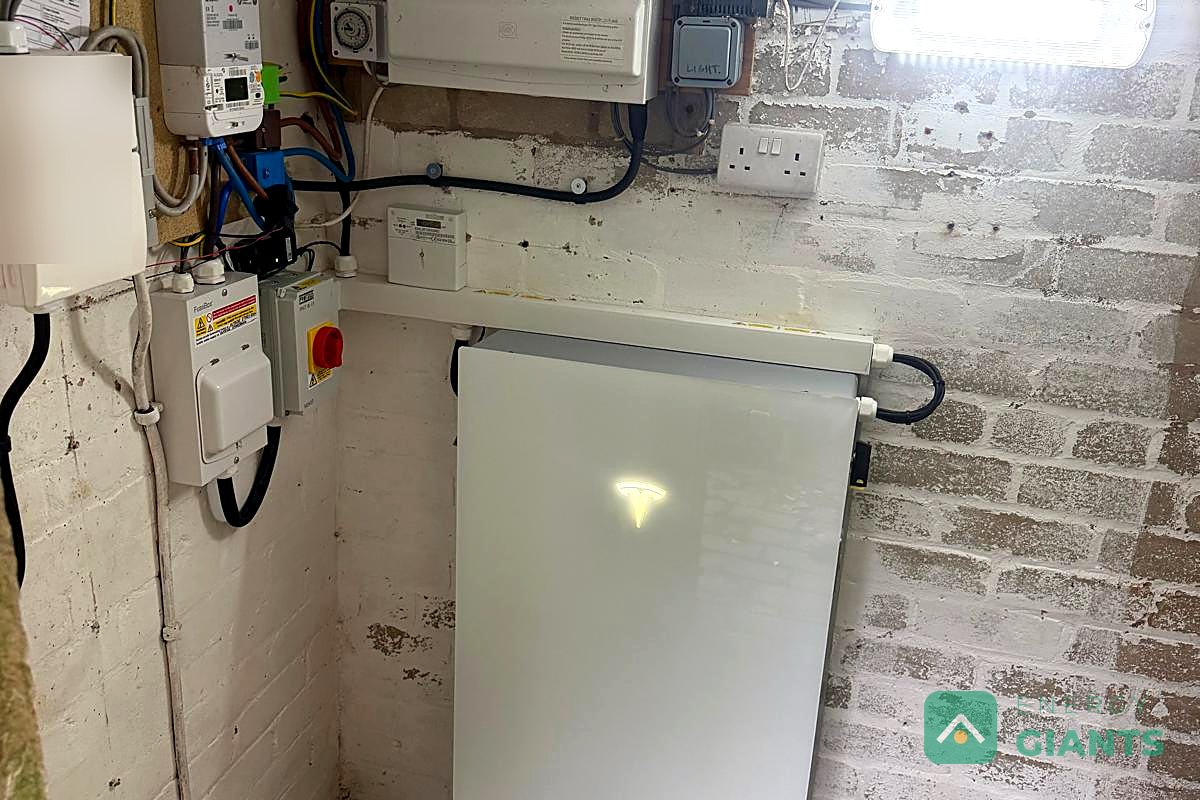
In the outbuilding, doing the job of battery and solar inverter in one unit.1
12%
Lost to the trees
The design allows for shade from the mature trees around the property. A bigger array makes up for it.1
The job
Older houses can take solar too.
Natural slate, stone ridges and a big old chimney can make people think solar is off the table. It isn’t. Slate needs the right fixings and a careful hand, but the roof here is sound and faces south, and that’s what matters most.
The trees are the real challenge. They cast shade for part of the day, and the design allows for that: about 12% of the roof’s potential is lost to shade. The answer was to fit a big array, twenty two panels, so the house still gets plenty on the brightest days.
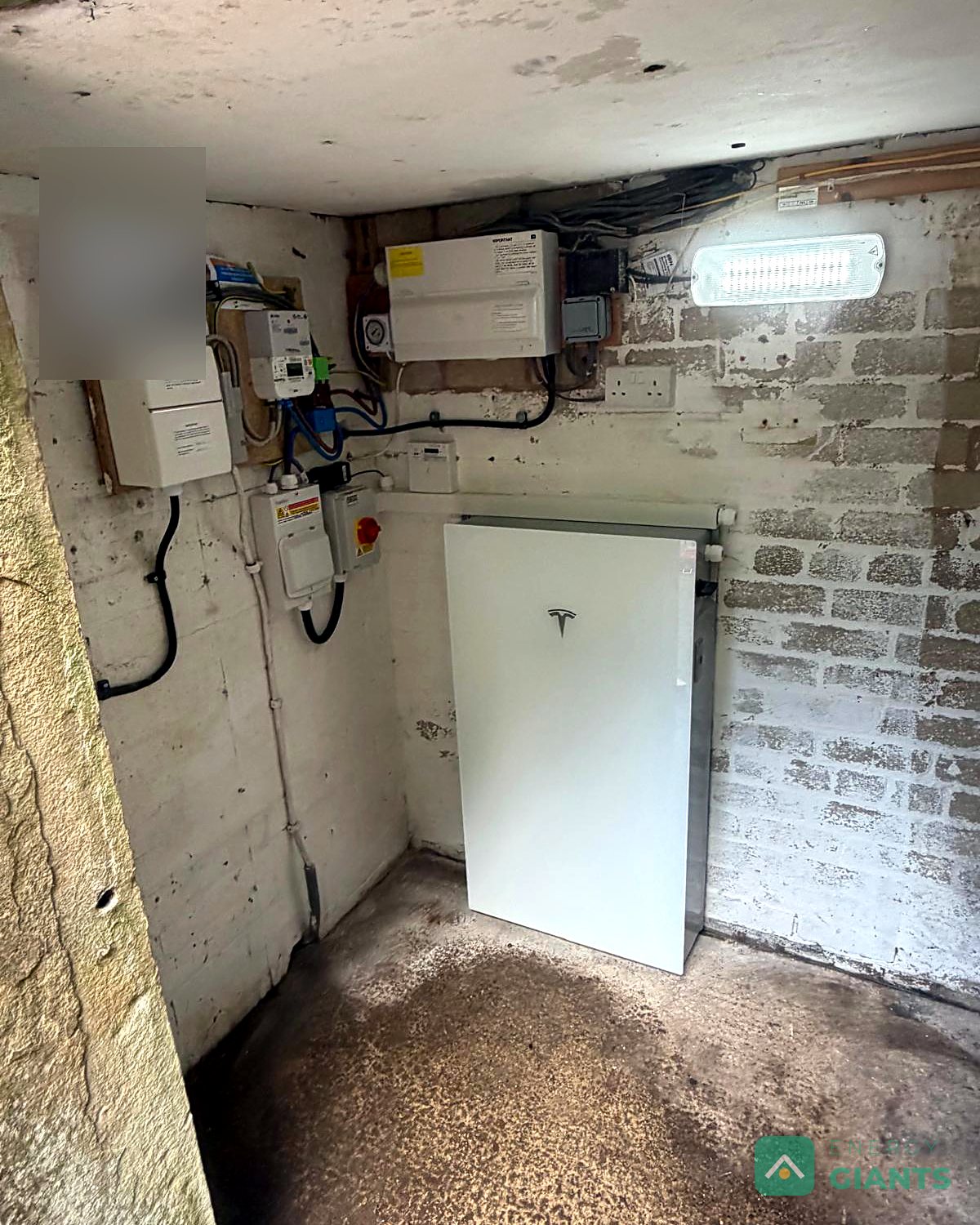
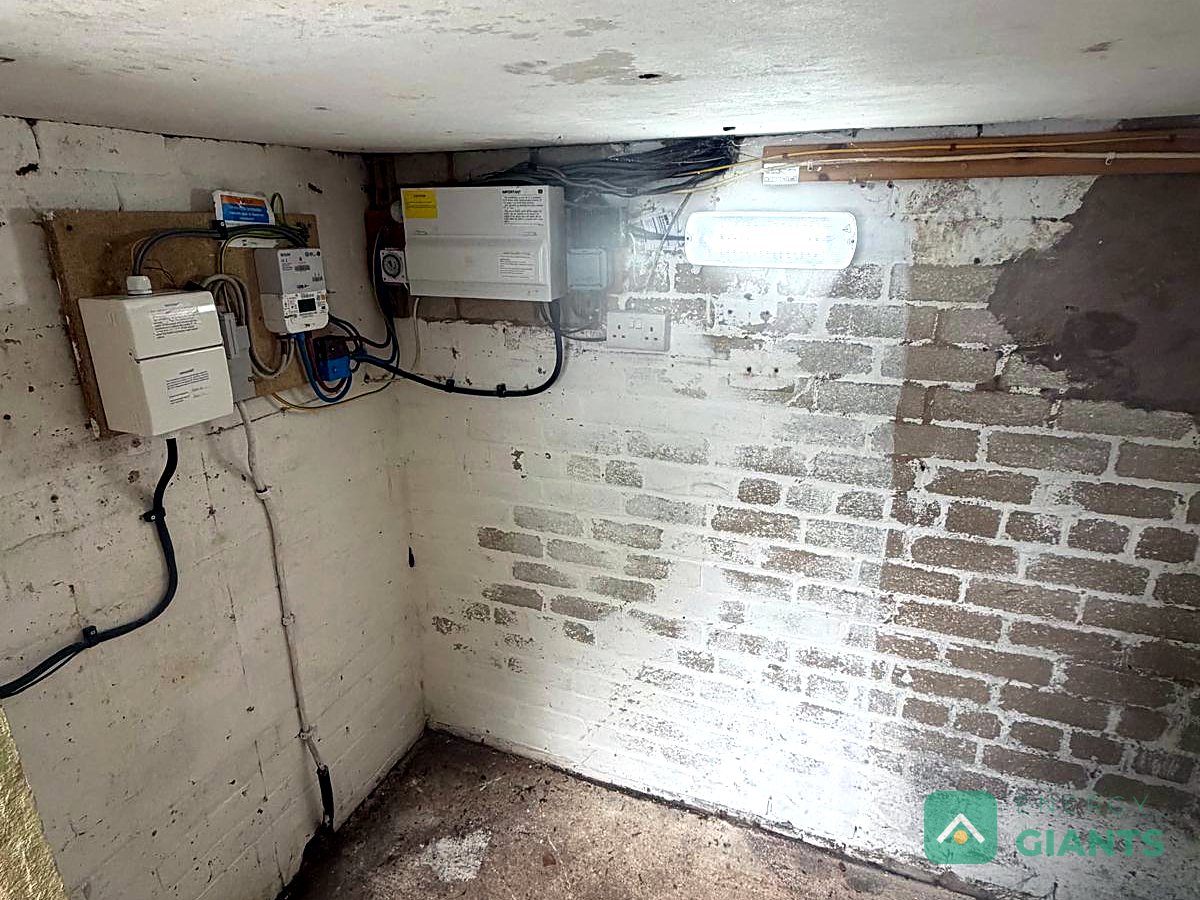
The Powerwall 3 is the battery and the inverter in one box, and it went into a small whitewashed outbuilding with the new meter, isolators and protection. It keeps the house clear of kit, and everything is in one place for servicing.
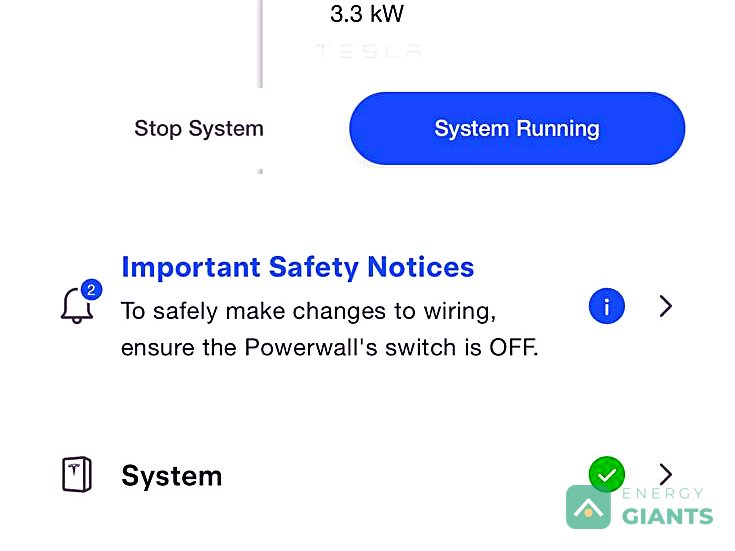
We fitted bird mesh round the array before the scaffold came down, and tested every string on the roof before switching on. By the time we left, the Tesla app showed the system running.
How it works
How this system works.
Three pictures: which way it faces, how it fits together, and what the battery does for a big solar array.
What the battery is for
A 10 kW array makes far more than any house can use on a bright day. The Powerwall stores up to 13.5 kWh of that for the evening, rather than sending it all to the grid for a few pence. On a bright day it will fill and still leave plenty over to export.
Which way the panels face
The roof faces a little east of south at 29 degrees. The shaded wedge is where the trees are.
- South facing slate roof 10.23 kWp, 29° pitch
- South east to south west, the sunniest arc
How it fits together
The Powerwall 3 is the inverter and the battery, in the outbuilding with the meter and isolators.
- Panels on the roof22 Aiko panels, 10.23 kWp
- InverterBuilt into the Powerwall 3
- BatteryTesla Powerwall 3, 13.5 kWh
- Your homeLights, kettle, EV, heat pump
- The gridSurplus exported to the grid
What it saves
What a full battery is worth.
With an array this size, the battery earns its keep on every bright day by moving solar from the afternoon to the evening. Here’s what that’s worth, at today’s prices.3
On the day
On the day.
What was installed
The specification.
| Property | Older property with a natural slate roof, stone ridge and stone chimney in Great Harwood, Lancashire |
|---|---|
| Panels | Twenty two Aiko 465 W all black panels, 10.23 kWp |
| Layout | One slope facing a little east of south at 29 degrees, fixed above the slates, about 12% lost to shade from trees1 |
| Inverter and battery | Tesla Powerwall 3, 13.5 kWh, with built in solar inverter, in the outbuilding |
| Extras | Tesla energy meter, generation meter, AC and DC isolation, bird mesh |
| Dates | Installed and switched on in late August 20262 |
| Investment | Between £12,000 and £16,000 for a system of this size and specification, VAT at 0%4 |
Questions people ask
Questions about older roofs.
Can you put solar panels on a slate roof?
Yes. Natural slate needs slate specific fixings and careful handling, but a sound slate roof takes panels well. We check the condition of the slates and battens at survey.
My house has trees around it. Is solar still worth it?
Often. We measure the shade and allow for it in the design. Here the trees cost about 12% of the roof’s potential, and a larger array more than makes up for it.
Why put the battery in an outbuilding?
It keeps kit out of the house, keeps the meter, isolators and battery together, and makes servicing easy. Powerwall 3 can go inside or out.
Keep reading
More like this.
Other Tesla jobs
Older house, trees, slate roof?
Book a survey. We’ll measure the shade, check the roof, and tell you honestly what it will make.
Notes on the figures
- System size, orientation, shading and expected generation are from the design for the system as installed: 10.23 kWp facing a little east of south at 29 degrees, a shade factor of 0.88, and 8,618 kWh a year. They are estimates, not a guarantee.
- Dates are from the site photographs of 27 August 2026, which record string tests, commissioning and the system running.
- Battery values are worked out at today’s prices with no assumed price rises. Electricity used from the battery instead of the grid is valued at 26.32p per kWh, the Ofgem price cap unit rate for 1 October to 31 December 2026 (GB average, Direct Debit). Overnight charging is valued at 8p per kWh, the Intelligent Octopus Go off peak rate from 1 October 2026. Solar that would otherwise be exported is valued at 12p per kWh, the Outgoing Octopus Fixed rate from 1 March 2026. The figures ignore small charging losses. Your tariff and habits will change the result. A full Powerwall of solar used instead of exported: 13.5 kWh at 26.32p less 12p, about £1.93.
- The investment figure is an indicative range for a system of this size and specification; we do not publish the price a customer paid. Case study presented in line with section 5.3.3 of the Renewable Energy Consumer Code. The homeowner is not named, at our discretion.