

Case study · Tesla Powerwall 3 · Clitheroe, Lancashire
A brand new home.
Solar and a Powerwall from day one.
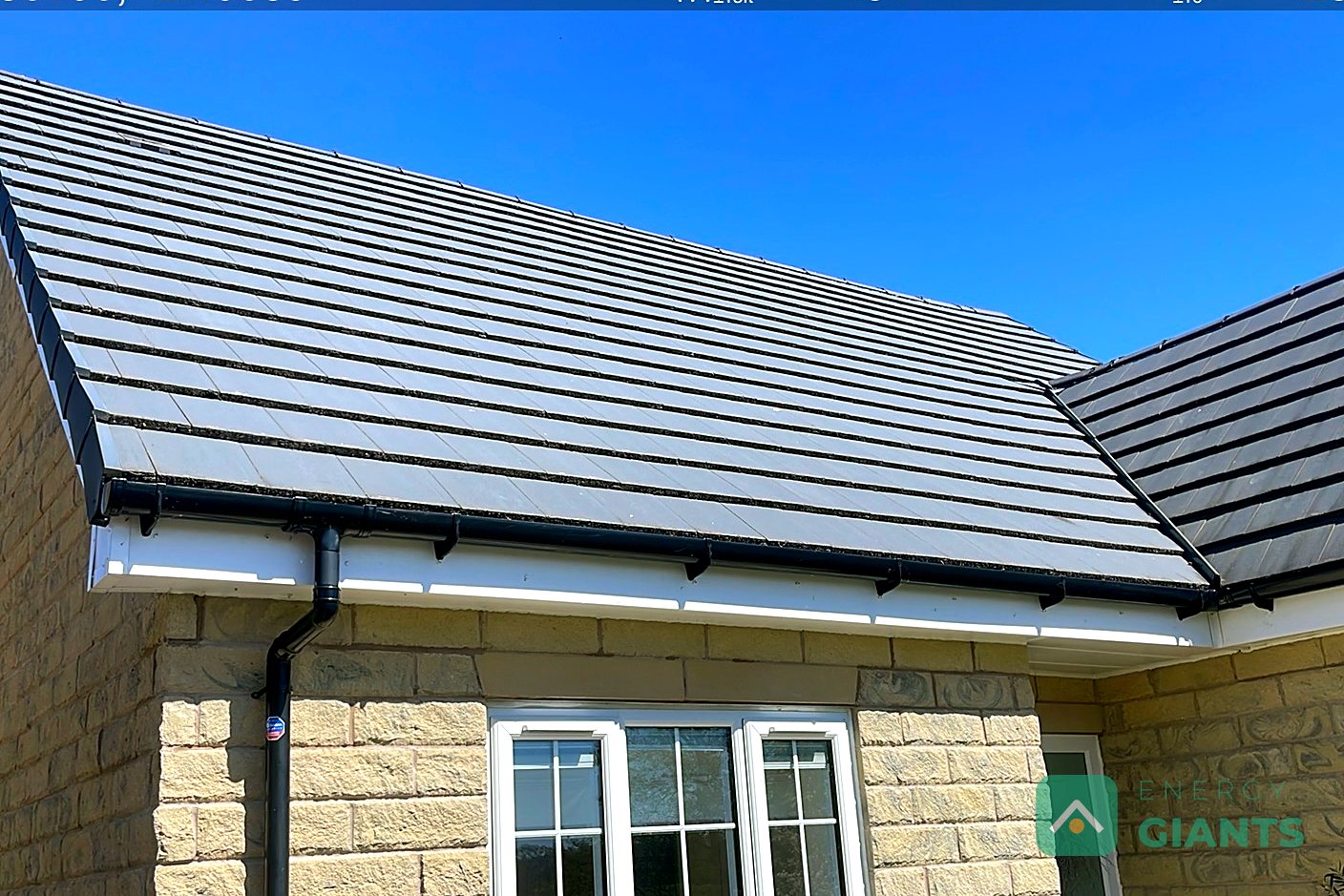
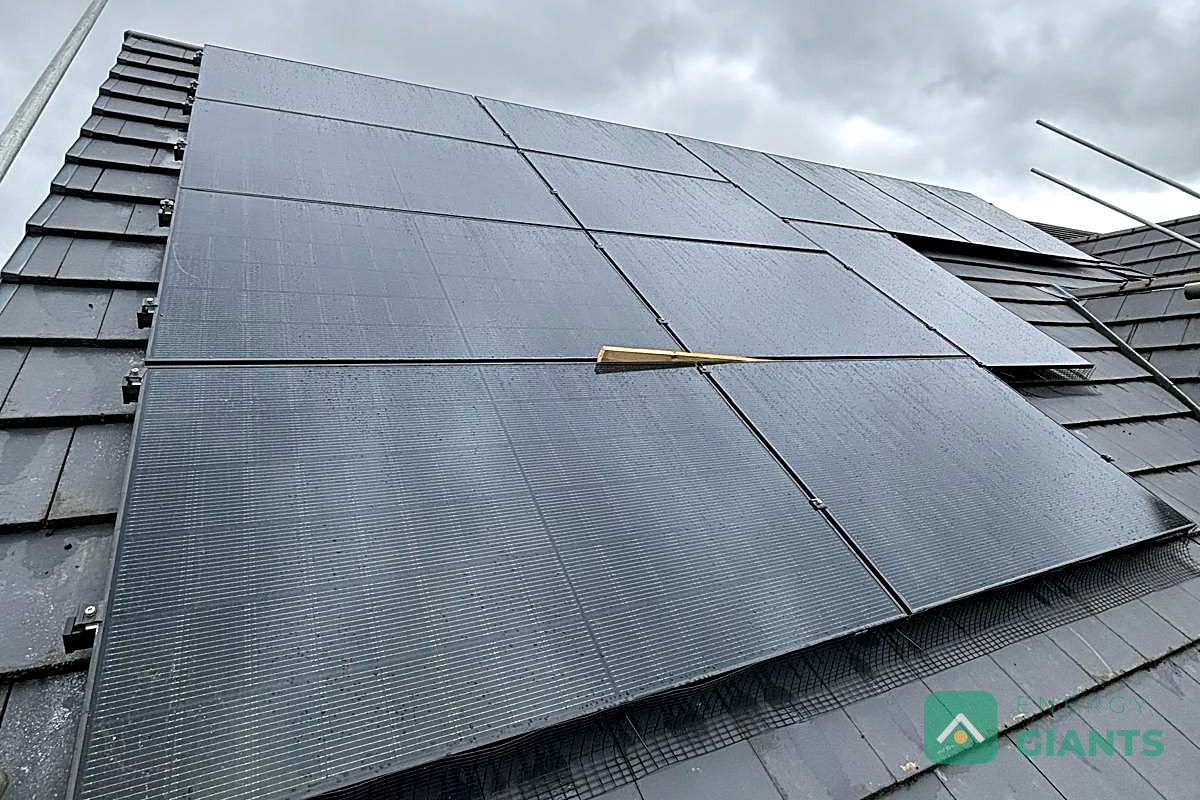
This stone faced house in Clitheroe was so new that the satellite images still showed a building site. We designed the system from the plans and the roof itself, then fitted thirteen Aiko panels and a Tesla Powerwall 3. It went in over a day in June 2026 and was commissioned three days later.

 Thirteen Aiko panels and a Tesla Powerwall 3 with Backup Gateway, designed, installed and commissioned by Energy Giants.
The job in numbers
6.05kWp
Thirteen Aiko panels
465 W each, all black, on the south west roof at 40 degrees.1
4,933kWh
Made a year
Estimated generation. A steep south west roof in Clitheroe makes about 816 kWh for every kWp.1
13.5kWh
Tesla Powerwall 3
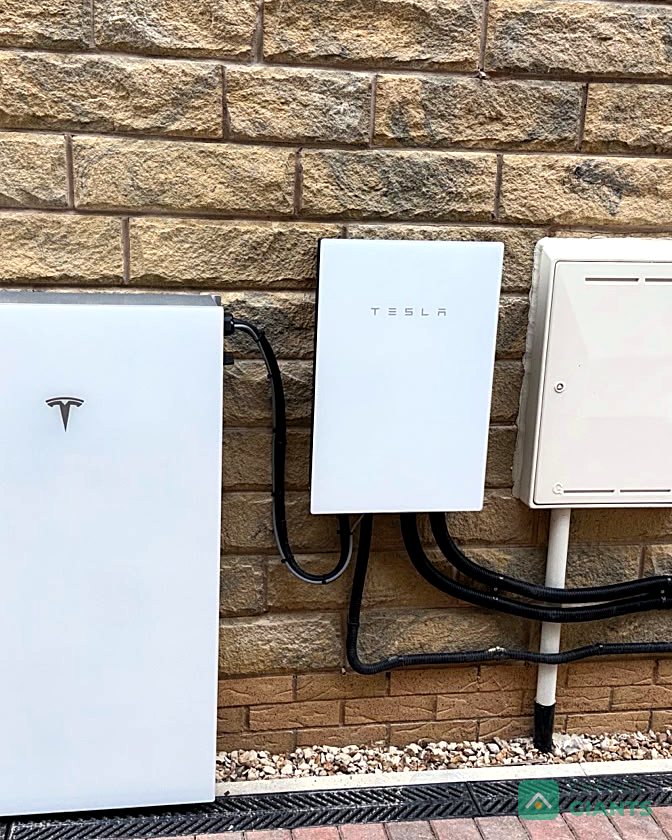
On the outside wall with a Backup Gateway. The Powerwall is also the solar inverter.1
82%
Of the home’s power
Estimated share from the roof and battery, on the design’s assumed usage. Without the battery it would be 27%.1
The job
Designing for a house the map didn’t know about yet.
We usually start a solar design with satellite images of the roof. For this house there weren’t any: the images still showed an empty plot. So the design was done from the building’s own details and checked on site, with the roof measured, the pitch confirmed at 40 degrees, and the direction set at south west.
A new build is a good time to add solar. The roof is sound, the wiring is new, and there’s a clean wall for the battery. We fitted thirteen Aiko panels above the tiles and a Tesla Powerwall 3 with its Backup Gateway on the stone wall outside.
The Powerwall 3 does two jobs in one box. It’s the battery, and it’s also the inverter the panels plug into. That keeps the wall tidy and means one app for everything.
The design assumed about 3,350 kWh a year of use, which is typical for a new home of this size. Homes that add an electric car or a heat pump use more, and that tends to make a battery more useful, because a Powerwall can also top up on a cheap overnight rate.
How it works
What the panels make, and where it goes.
How this system works, in four pictures. The numbers are the estimates from the design for this house.1
Where the power goes, over a year
Top bar: every kWh the panels make in a year, split by where it ends up. Bottom bar: every kWh the house is expected to use, split by where it comes from.
Where the solar goes 4,933 kWh a year
- 888 kWh used in the home as it is made 18%
- 1,874 kWh stored in the battery, used later 38%
- 2,171 kWh sent to the grid and paid for 44%
Where the home’s electricity comes from 3,352 kWh a year
- 888 kWh straight from the panels 26%
- 1,874 kWh from the battery 56%
- 590 kWh still bought from the grid 18%
Which way the panels face
South west means the panels are strongest in the afternoon, which lines up well with when a family gets home.
- South west roof 6.05 kWp, 40° pitch
- South east to south west, the sunniest arc
How it fits together
The Powerwall 3 is the inverter and the battery. The Backup Gateway sits beside it.
- Panels on the roof13 Aiko panels, 6.05 kWp
- InverterBuilt into the Powerwall 3
- BatteryTesla Powerwall 3, 13.5 kWh
- Your homeLights, kettle, EV, heat pump
- The gridExport up to 5 kW agreed
What it saves
About £990 a year, at today’s prices.
That’s solar used in the home instead of bought, plus what’s paid for the rest, on the design’s assumed usage. Worked out at today’s prices, with no guesses about prices going up.3
On the day
On the day.
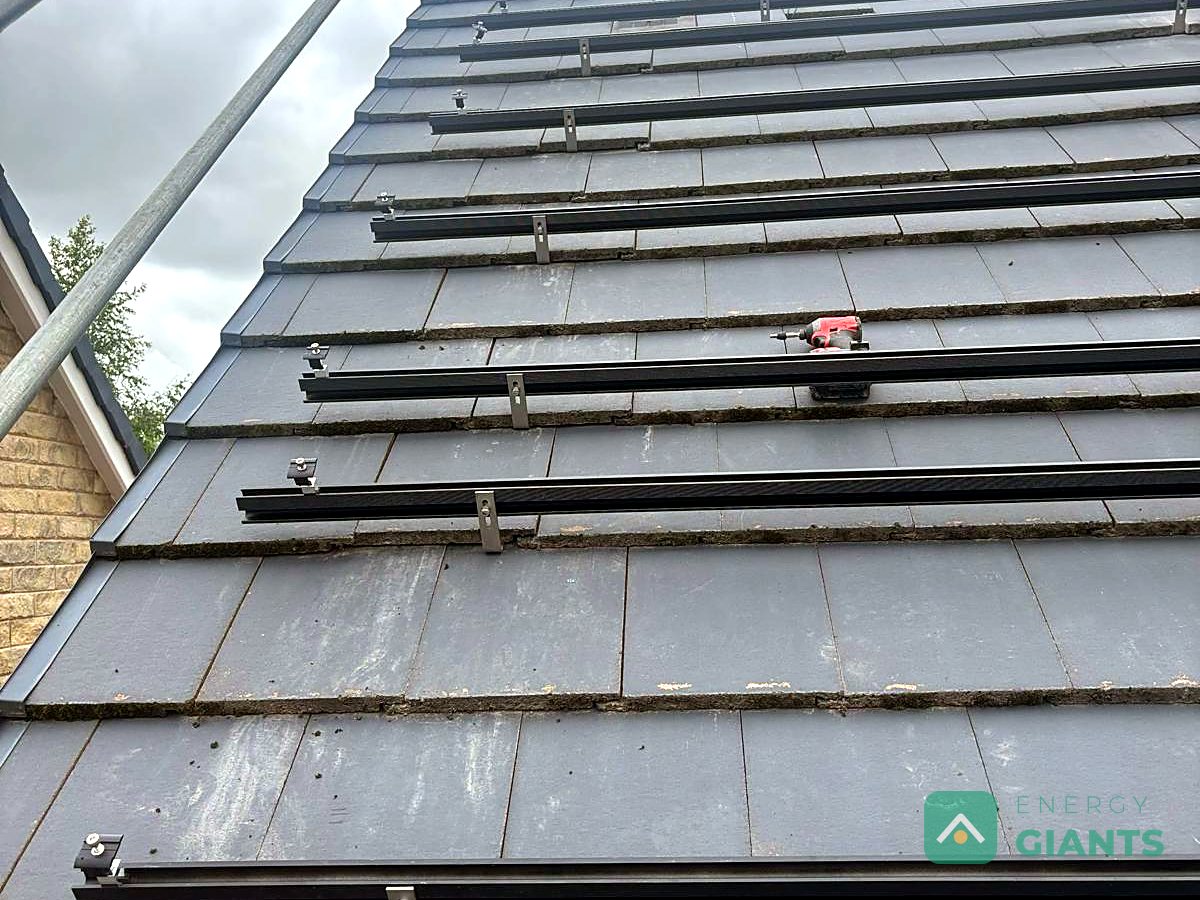
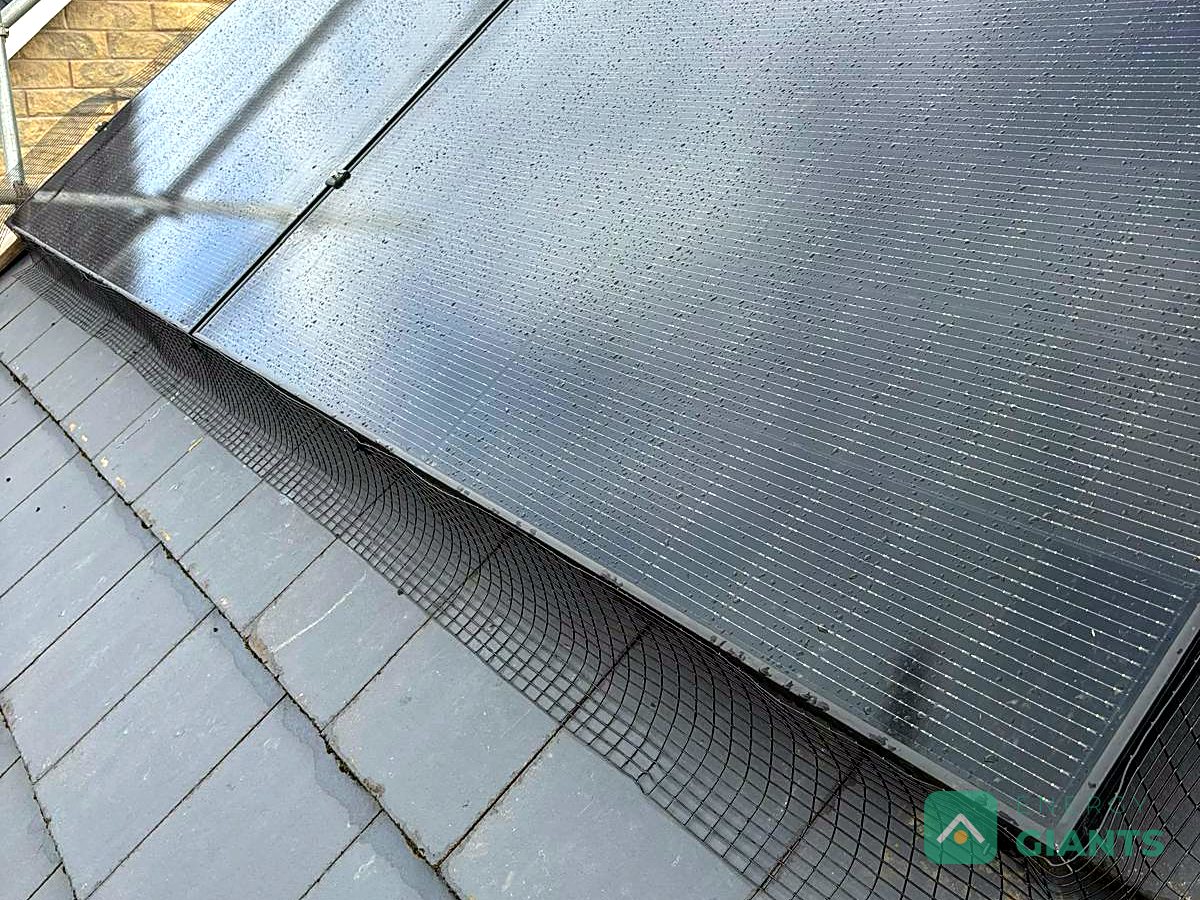
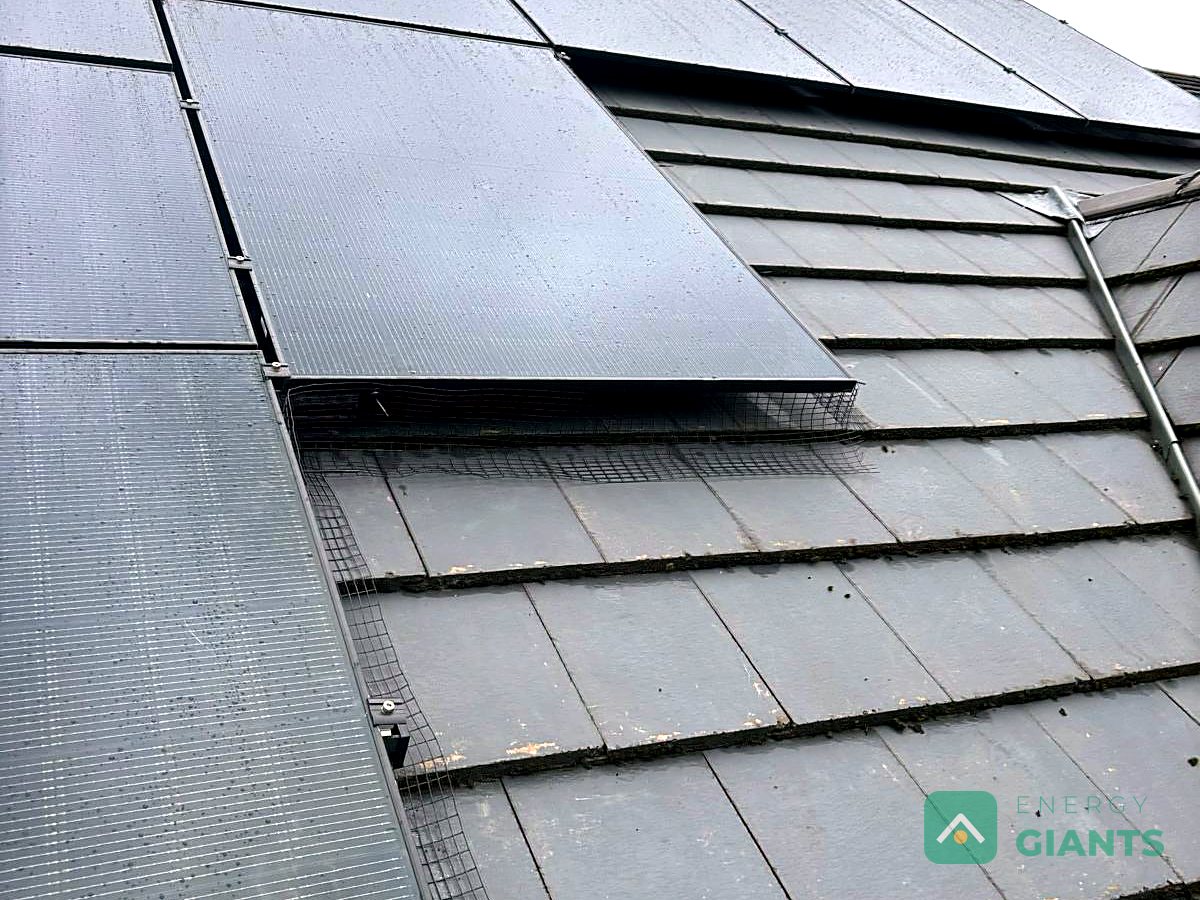
What was installed
The specification.
| Property | New build detached house with stone faced walls in Clitheroe, Lancashire |
|---|---|
| Panels | Thirteen Aiko 465 W all black panels, 6.05 kWp |
| Layout | One roof facing south west at 40 degrees, fixed above the tiles1 |
| Inverter and battery | Tesla Powerwall 3, 13.5 kWh, with built in solar inverter |
| Extras | Tesla Backup Gateway, generation meter, bird mesh |
| Grid | Approved by the local network operator before install, export up to 5 kW2 |
| Dates | Installed 2 June 2026, commissioned 5 June 20262 |
| Investment | Between £12,000 and £15,000 for a system of this size and specification, VAT at 0%4 |
Questions people ask
Questions about solar on a new build.
Can you fit solar to a house that’s just been built?
Yes. New builds are often easier: the roof is sound and the electrics are new. If satellite images are out of date, as they were here, we design from the plans and measure on site.
Why a Tesla Powerwall 3?
It’s a battery and a solar inverter in one unit, so there’s less kit on the wall and one app for everything. It suits homes that use a lot of electricity in the evening or overnight.
What if I get an electric car later?
A battery gets more useful, not less. On a cheap overnight tariff the Powerwall can top up at night as well as from the roof by day. We’d look at your tariff and usage and adjust the settings.
Keep reading
More like this.
Other Tesla jobs
Building or buying a new home?
It’s the easiest time to add solar and a battery. We’ll design around the roof and the way you’ll live in it.
Notes on the figures
- Generation, self consumption and the share of the home’s power are from the performance estimate in the quote: 4,933 kWh a year from a south west roof at 40 degrees, an assumed 3,352 kWh a year of household use and 13.5 kWh of storage. Because the house did not yet show on satellite imagery, orientation and pitch were confirmed on site. They are estimates, not a guarantee.
- Dates and grid are from the project file: network operator acceptance 13 May 2026 with 5 kW export, installation 2 June 2026 and commissioning 5 June 2026.
- Savings are worked out at today’s prices with no assumed price rises: solar used in the home is valued at 26.32p per kWh, the Ofgem price cap unit rate for 1 October to 31 December 2026 (GB average, Direct Debit), and exported electricity at 12.0p per kWh, the Outgoing Octopus Fixed rate from 1 March 2026. Your tariff, usage and export deal will change the figure. Standing charges are not affected by solar.
- The investment figure is an indicative range for a system of this size and specification; we do not publish the price a customer paid. Case study presented in line with section 5.3.3 of the Renewable Energy Consumer Code. The homeowner is not named, at our discretion.