


Case study · Solar and battery · Clitheroe, Lancashire
A small system for a small bill.
93% of it covered.
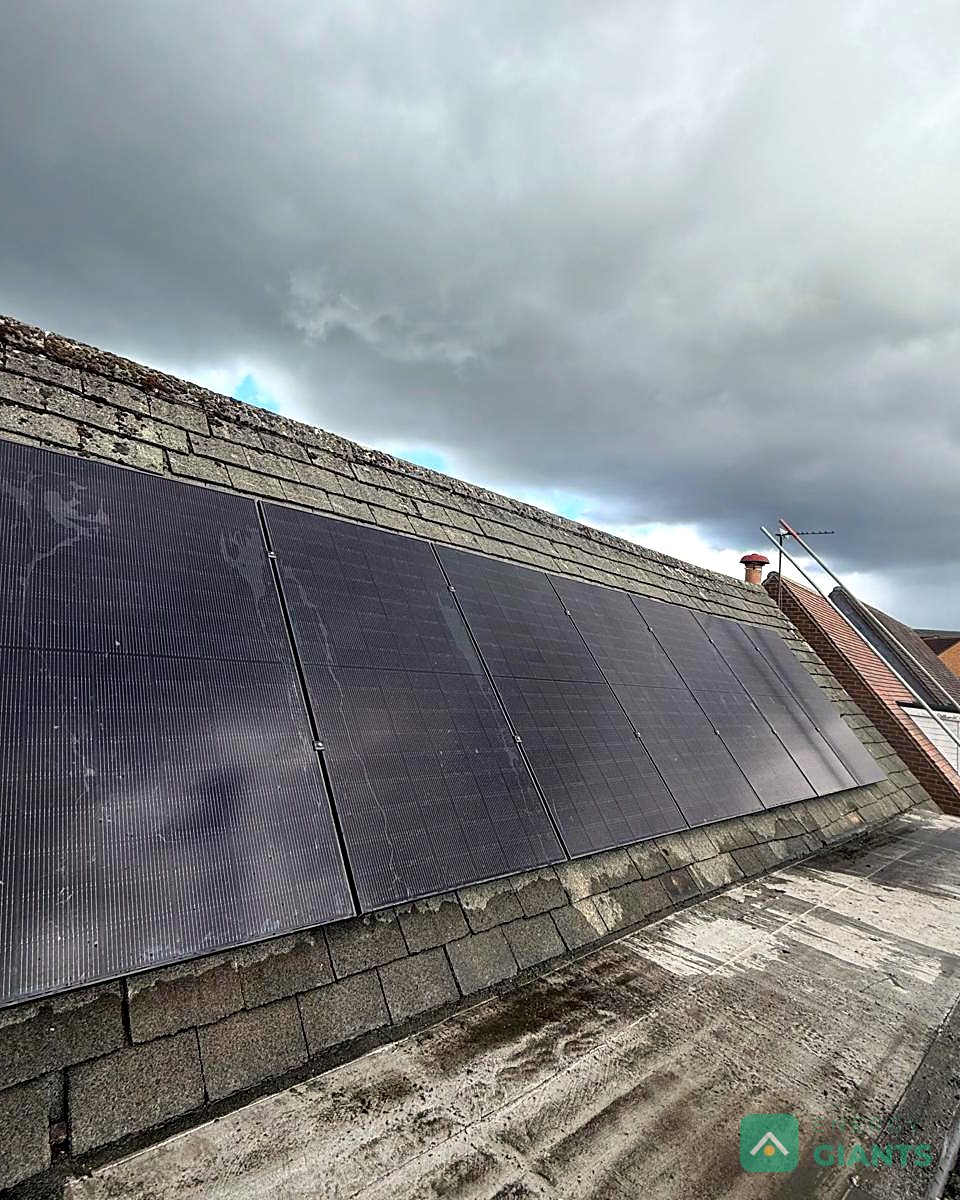
Not everyone needs a big system. This detached house in Clitheroe uses much less electricity than most, so seven panels in one neat row were plenty. Add a battery in the garage and, on paper, the house now makes almost all of its own power. Installed in two days in May 2026.
The job in numbers
3.5kWp
Seven panels
JA Solar 500 W all black panels in a single row above the dormers, facing south west.1
2,922kWh
Made a year
Estimated generation. That’s nearly twice what the house uses in a year.1
93%
Of the home’s power
Estimated share from the roof and battery. Without the battery it would be 30%.1
2days
On site
Panels, inverter and battery fitted on 12 and 13 May, commissioned on 14 May 2026.2
The job
Right sized, not supersized.
A bigger system isn’t always a better one. This household uses about 1,600 kWh of electricity a year, well below the 2,700 kWh Ofgem uses for a typical home. Seven panels make nearly twice that over a year, so there was no point covering the whole roof.
The catch with a small home is timing. The panels make most of their power in the middle of the day, and without a battery most of it would go straight to the grid. The battery holds it for the evening and overnight, which takes the share of electricity from the roof from under a third to more than nine tenths.
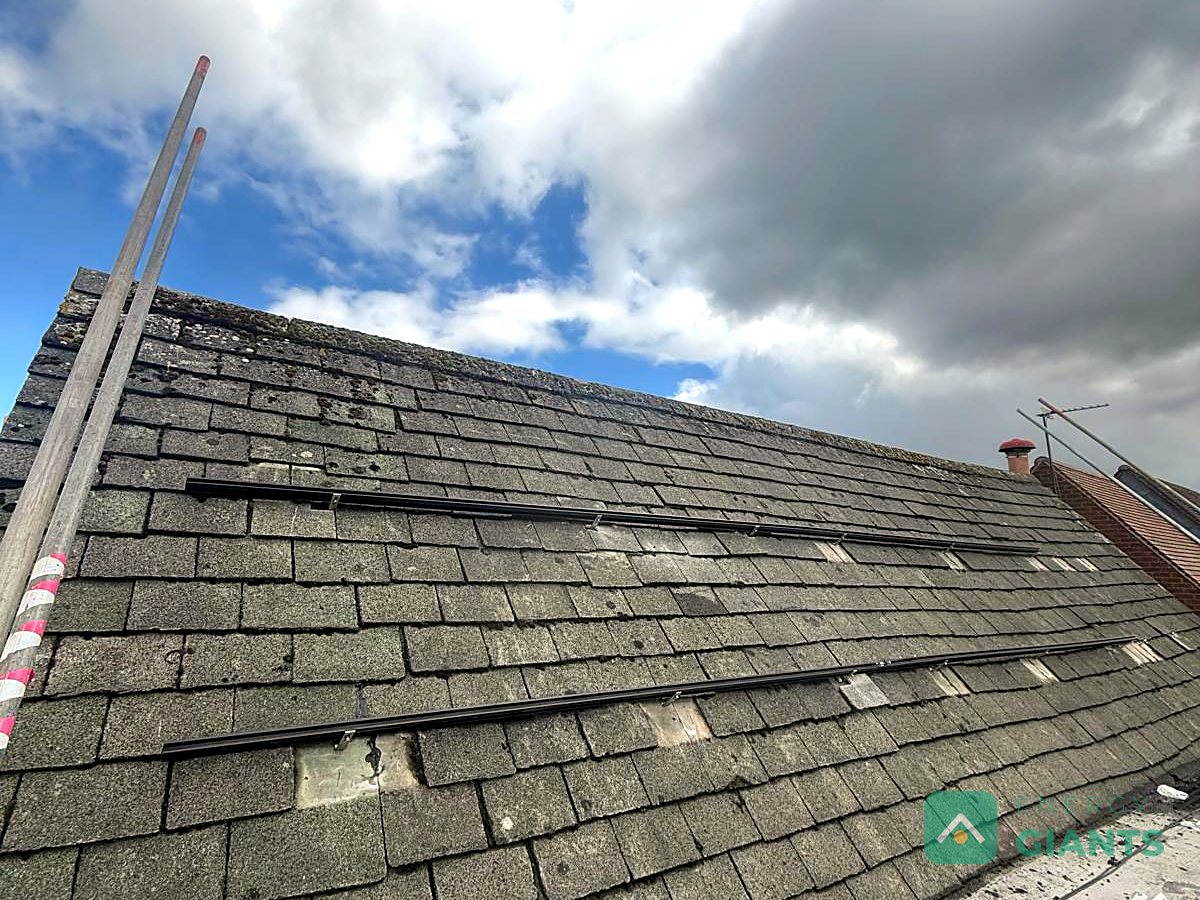
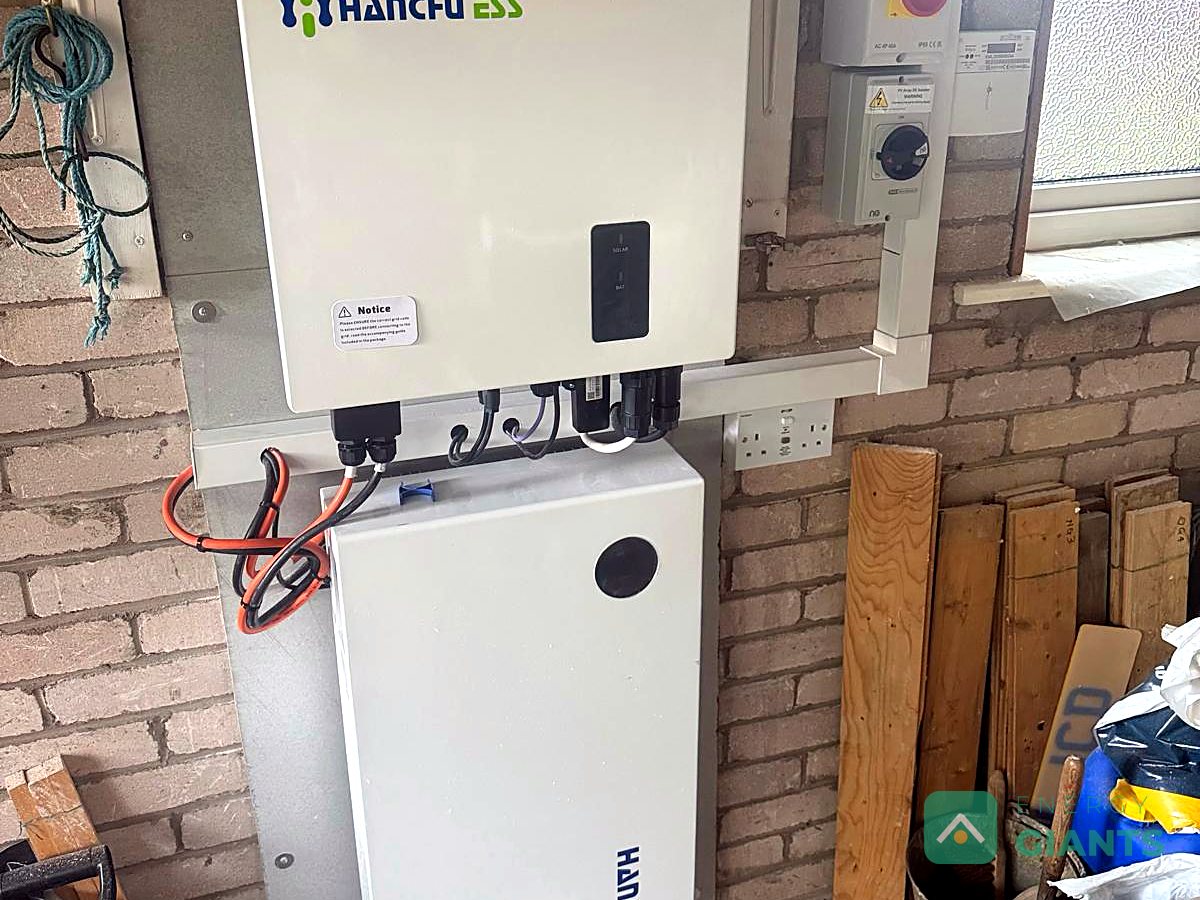
The panels sit in one tidy row above the dormers, facing south west at 40 degrees. We checked the rafters first; they were comfortably strong enough. The hybrid inverter and battery went in the garage, out of the way.
How it works
What the panels make, and where it goes.
How this system works, in four pictures. The numbers are the estimates from the design for this house.1
Where the power goes, over a year
Top bar: every kWh the panels make in a year. Bottom bar: every kWh the house uses. The panels make far more than the house needs, so plenty still goes to the grid.
Where the solar goes 2,922 kWh a year
- 497 kWh used in the home as it is made 17%
- 1,022 kWh stored in the battery, used later 35%
- 1,403 kWh sent to the grid and paid for 48%
Where the home’s electricity comes from 1,637 kWh a year
- 497 kWh straight from the panels 30%
- 1,022 kWh from the battery 62%
- 118 kWh still bought from the grid 7%
Which way the panels face
South west, and steep. It catches the afternoon and evening sun, which suits the battery well.
- Main roof 3.5 kWp, 40° pitch
- South east to south west, the sunniest arc
How it fits together
One hybrid inverter runs the panels and the battery, both in the garage.
- Panels on the roof7 JA Solar panels, 3.5 kWp
- InverterHanchu 3.68 kW hybrid, in the garage
- BatteryHanchu battery, 8.93 kWh usable
- Your homeLights, kettle, EV, heat pump
- The gridThe surplus is exported and paid for
What it saves
About £570 a year, at today’s prices.
For a small home that’s a big share of the bill. It’s solar used in the house instead of bought, plus what’s paid for the rest. Worked out at today’s prices, with no guesses about prices going up.3
On the day
On the day.
What was installed
The specification.
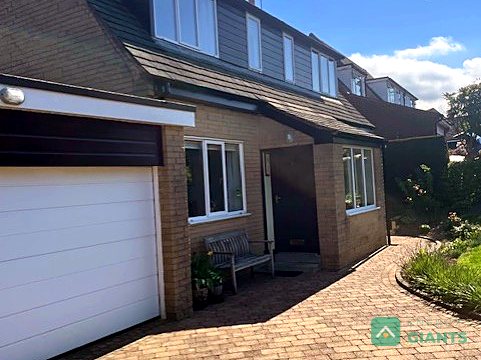
| Property | Detached one and a half storey house with dormers and an integral garage, Clitheroe |
|---|---|
| Panels | Seven JA Solar 500 W all black panels, 3.5 kWp |
| Layout | One row facing south west at 40 degrees, fixed above the tiles, no shading1 |
| Structure | Rafters checked before install and within limits, no strengthening needed |
| Inverter | Hanchu 3.68 kW hybrid, in the garage |
| Battery | Hanchu 9.4 kWh, 8.93 kWh usable, in the garage |
| Grid | Network operator told when it was switched on2 |
| Dates | Installed 12 to 13 May 2026, commissioned 14 May 20262 |
| Investment | Between £6,500 and £8,500 for a system of this size and specification, VAT at 0%4 |
Questions people ask
Questions about small systems.
Is solar worth it if I don’t use much electricity?
It can be, as long as the system is sized to match. Here seven panels make nearly twice what the house uses in a year, and the battery means most of the house’s own use is covered.
Why not fill the whole roof?
Because the extra panels would mostly produce electricity to export, which earns less than the electricity you avoid buying. We size to your usage first.
Does 93% mean no more bills?
No. It’s an estimate of the share of electricity from the roof and battery over a year. Winter is thin everywhere, the standing charge stays, and real use varies.
Keep reading
More like this.
Similar jobs
Small house, small bill?
We’ll size a system to what you actually use, not to the size of your roof.
Notes on the figures
- Generation, self consumption and the share of the home’s power are from the performance estimate in the quote: 2,922 kWh a year from a south west roof at 40 degrees with no shading, an assumed 1,637 kWh a year of household use, and 8.93 kWh of usable storage. They are estimates, not a guarantee. Ofgem’s typical domestic consumption value for a medium electricity user is 2,700 kWh a year.
- Dates and grid are from the project file: installation 12 to 13 May 2026, commissioning 14 May 2026, notification to the network operator. The structural check found the rafters spanning 2.6 m against 3.15 m allowed.
- Savings are worked out at today’s prices with no assumed price rises: solar used in the home is valued at 26.32p per kWh, the Ofgem price cap unit rate for 1 October to 31 December 2026 (GB average, Direct Debit), and exported electricity at 12.0p per kWh, the Outgoing Octopus Fixed rate from 1 March 2026. Your tariff, usage and export deal will change the figure. Standing charges are not affected by solar.
- The investment figure is an indicative range for a system of this size and specification; we do not publish the price a customer paid. Case study presented in line with section 5.3.3 of the Renewable Energy Consumer Code. The homeowner is not named, at our discretion.