

If you already have solar panels, the electricity you export is being bought off you at somewhere between 1p and 25p a unit depending entirely on which tariff you happen to be on. That is a twenty five fold difference for exactly the same electricity.
Most people set up an export tariff when their panels went in and have not looked at it since. Given the spread, that is worth ten minutes of anybody's time.
Which? published a comparison of the rates available in April 2026, and there are two things in it worth pulling out. One is the size of the gap. The other is what the top of the table has in common.
The gap, in one line
Same panels, same roof, same electricity. Twenty five times the difference in what somebody pays you for it.
The pattern nobody points out
Look at the top of the table and one thing becomes obvious very quickly.
Every single rate above 15p requires you to have a battery.
Not just solar. Solar and storage. And in most cases, installed by the supplier or one of their partners.
| Supplier and tariff | Rate | What it requires |
|---|---|---|
| Good Energy, Solar Savings Exclusive | 25p | Be a Good Energy customer, and have had solar and a battery installed by Good Energy Solar |
| Octopus, Intelligent Octopus Flux | 23p | Be an Octopus customer with solar and a battery. Any battery is accepted, which makes this the most reachable of the high rates |
| Ovo, SEG Install Exclusive | 20p | Bought solar and a battery through Ovo. Drops to 15p if you only had panels |
| So Energy, So Bright | 20p | Installed solar and a battery through So Energy. You do not need to be a customer |
| EDF, Export Exclusive 12m | 18p | EDF customer with solar or a battery installed through EDF |
| Eon Next, Next Export Premium v3 | 17.5p | Solar or storage installed by Eon's own installation service after 10 November 2025 |
| British Gas, Export and Earn Plus | 15.1p | Be a British Gas customer. No install condition |
| Scottish Power, SmartGen | 6p | Anyone. The best rate available with no conditions at all |
Selected rows from the Which? comparison, April 2026. Some of the higher rates are fixed for twelve months. Their full table runs to around thirty tariffs, including several paying under 5p.
We survey every roof in person, from our HQ in Clitheroe and our Manchester and London offices, and tell you honestly whether it is worth doing.
What this actually means for you
Three quite different situations, and the right move is different in each.
But exporting is still the consolation prize
Worth keeping in proportion, because the headline rates are seductive.
Even the best export rate on that list, at 25p, is roughly what a unit costs to buy under the current price cap. Most people are being paid a good deal less than they pay.
Which means the unit you generate at one in the afternoon and use at one in the afternoon is still worth more to you than the same unit exported. Every time.
Why a battery changes the maths twice
This is the bit that makes the whole picture click.
A battery does the obvious thing: it holds your midday generation until the evening, so you use it rather than sell it. That is the main saving and it has nothing to do with export rates.
But it also unlocks the top half of that table. The 20p and 23p tariffs simply are not available to a solar only household.
And on a tariff like Intelligent Octopus Flux, the battery starts doing something cleverer still. It is a two rate tariff with matching import and export prices, and the peak window between four and seven in the evening is when export is worth most. The system schedules charging and discharging to suit, so the battery is not only storing your own generation, it is deciding when to sell.
That is a genuinely different proposition to a battery bolted on without a thought about tariff.
Three things to check on your own setup
What rate are you actually on?
Most people do not know. It will be on your export statement or in your supplier account. If it starts with a 1, a 2 or a 3, there is money on the table.
Do you have a meter that can measure export?
Export tariffs need a smart meter capable of half hourly readings. Your supplier can tell you whether yours qualifies. Without one, you cannot be paid for what you actually export.
Are you still on the old feed in tariff?
If your panels went in before 2019 you may be. Those rates are index linked and often generous, and the general advice is to stay on them. You can, however, opt out of the export element of a feed in tariff and take a metered export tariff instead while keeping your generation payments. Whether that is worth doing depends on your own figures, so check your agreement and speak to your tariff administrator rather than taking general guidance as advice.
The short version
Find out what you are being paid. If it is under 5p, you are almost certainly leaving money behind, and switching costs you nothing but an afternoon. Have your MCS certificate to hand when you do: for solar PV, energy suppliers usually ask for it before they pay you for the electricity you send back to the grid under the Smart Export Guarantee.
If you have panels and no battery, understand that the best rates are closed to you and will stay closed. That is one more argument in a list that already includes the bigger one: what you use yourself is worth more than what you sell, whatever the rate.
Export rates and eligibility conditions as published by Which? in April 2026, drawn from suppliers' own published tariffs. Rates, availability and qualifying conditions are set by the supplier and change regularly, so confirm current terms directly before switching. Export tariff eligibility also depends on your installation meeting the scheme's certification requirements and on having a suitable smart meter. We install solar and battery systems. We are not an energy supplier or a comparison service, and nothing here is a recommendation of any particular tariff.
Exclusive offers
Solar and battery offers from Energy Giants
The same offers as on our home page, supplied and installed by our own team.
 Our recommendationSigenergyOne system for solar, battery and EV chargingExplore Sigenergy →
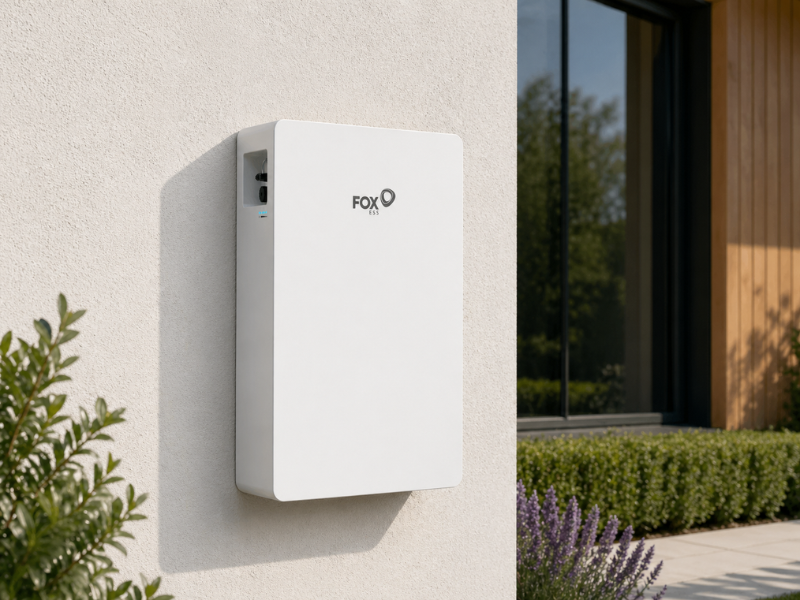 Exclusive bundleFox ESS12 Aiko all-black panels, Fox ESS battery and inverterInstalled from £6,995Get a Fox ESS quote →
 Exclusive bundleDuracell Energy5 all-black 450W panels and a 5kWh batterySupplied and fitted from £6,470Get a Duracell quote →
 Exclusive offerTeslaPowerwall 3, fully installed with a complete solar systemFrom £6,499Get a Powerwall 3 quote →
All offers are subject to eligibility, survey and availability. See the offers on our home page.
Miles has spent two decades in retrofit and has worked at scale across the UK, with long-standing relationships with local authorities including Kirklees Council, Durham County Council and Ribble Valley Borough Council. He has project-directed programmes for housing associations and delivery partners including Aspire Housing, Sureserve, LivGreen and BroadOak, and for energy suppliers including E.ON Next, Utilita, British Gas, Octopus and UKEM.