South Ribble is mostly twentieth century housing, and that shapes the flat roofs we see. Leyland grew up around the Leyland Motors works and its inter-war and post-war semis, then the Central Lancashire New Town programme of the 1970s and 80s added estates across Leyland, Bamber Bridge, Lostock Hall and Penwortham with integral garages, flat porch roofs and side extensions built in. Longton, Hutton and Much Hoole add bungalows with felt dormers.
The common thread is a felt roof over a timber deck, forty years old, with next to no insulation. The bedroom over the garage is the cold one, the kitchen extension is the hot one in July, and the felt is patched and holding water. The fix is a warm roof: strip to the deck, vapour control layer, over 100 mm of PIR above the joists, a new deck and a single sheet of EPDM, with the edges and outlets formed properly.
The works-town semis and the New Town estates between the A49 and the M6 have flat roofs over integral garages, porches and side extensions in their thousands. Access is straightforward, the roofs are simple rectangles, and most are stripped, insulated and finished in a day.
A mix of 1930s semis with later garage and porch roofs, post-war estates and bungalows with dormers. The rear kitchen extension with a felt roof is the most common job here, done from the garden without blocking the road.
Bungalows and dormer bungalows on the flat land towards the Ribble estuary, exposed to the wind off the marsh. The membrane is fully bonded and the edges mechanically fixed and trimmed, so uplift is not a worry.
Flat roof insulation is a PAS 2030 measure, so it can sit inside funded retrofit programmes such as Warm Homes: Local Grant and the Social Housing Fund. For South Ribble’s housing associations and their contractors we survey and price roof by roof, deliver with residents at home, and hand over a photographic record of every layer.
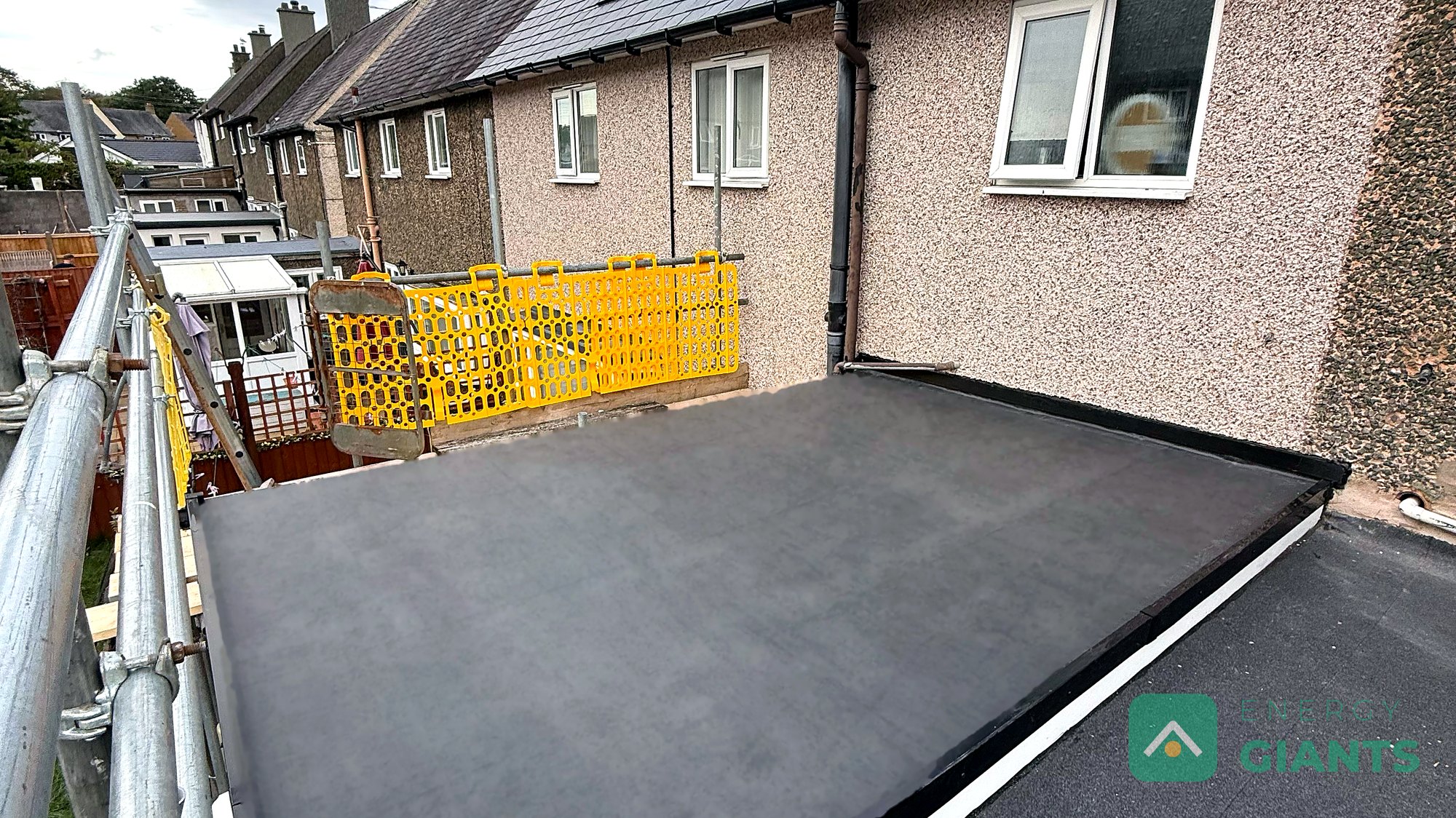
The same warm roof build up on three very different roofs: a garage, a rear extension and an L shaped wraparound. Every layer photographed on the day. These three are in North Wales and Merseyside; the roofs we do in South Ribble are built the same way.
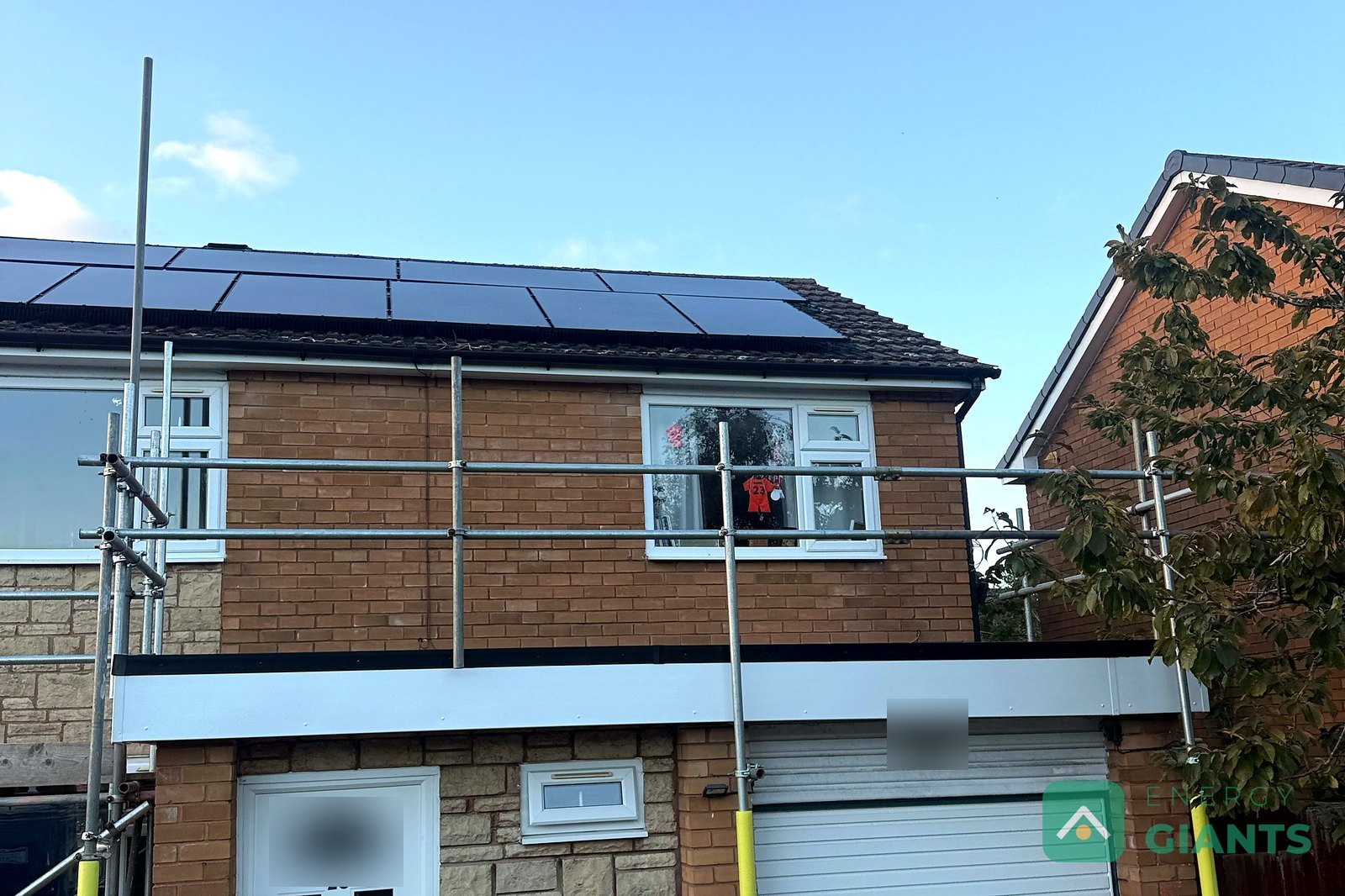
Old felt stripped to the deck, vapour control layer, over 100 mm of PIR, new OSB, EPDM and new fascias, between lunchtime and teatime.
Read the case study →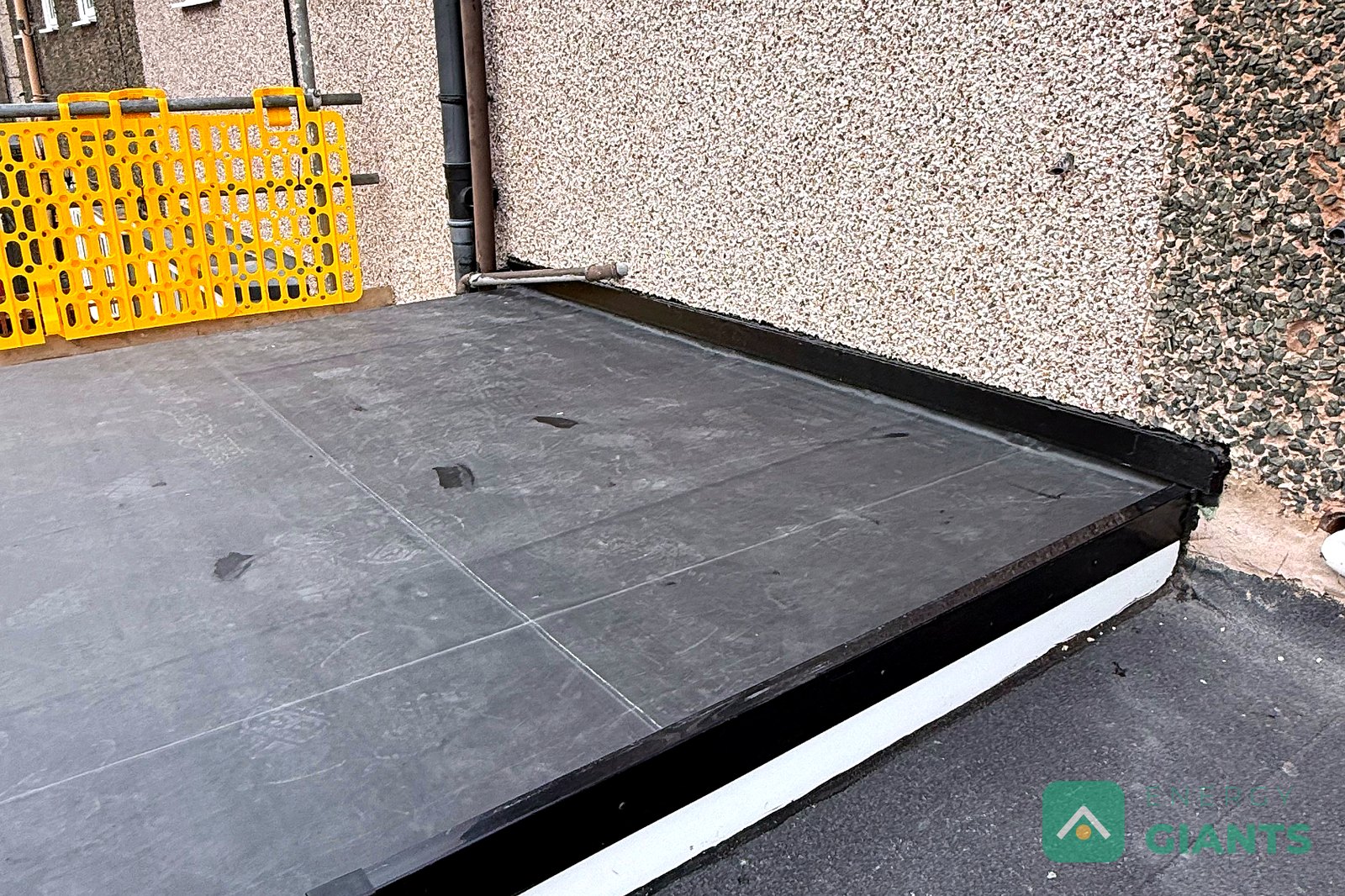
A stained, ponding kitchen extension roof rebuilt as a warm roof with the insulation above the joists, edges and abutment formed properly.
Read the case study →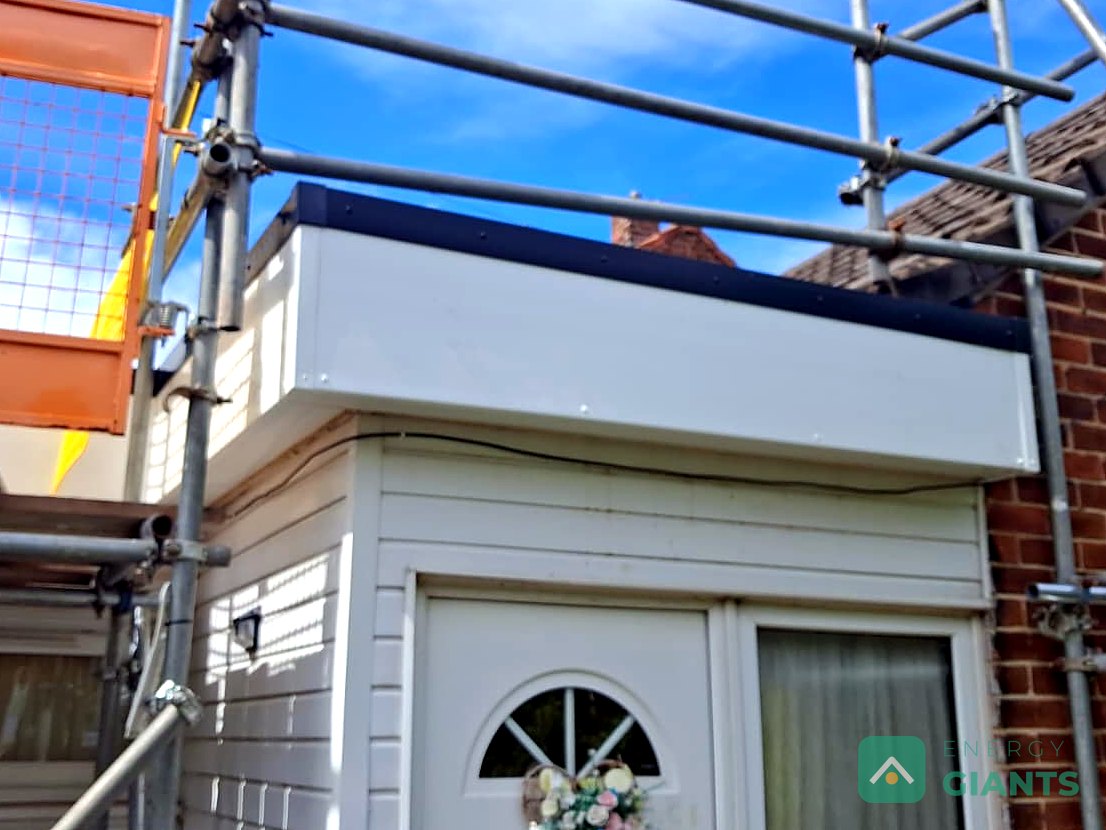
Surveyed in July, rebuilt over two days in August: over 100 mm of PIR, new deck, EPDM, and new white fascias to match the cladding.
Read the case study →Running a programme? Torentum Court, Fleetwood: fifteen flat roofs and 179 m of tiles reinstated on an occupied independent living scheme, delivered under our PAS 2030 certification for flat roof insulation. All case studies →
Garage, porch, extension and dormer roofs from Penwortham to Longton. The rooms under them are the cold ones in winter and the hot ones in summer, and a warm roof fixes both.
The same crews and the same paperwork across a street or a scheme, for the housing associations working in South Ribble and the main contractors delivering their programmes.
How a warm roof is built, what it costs to run and the full FAQ are on our flat roof insulation page. Pitched roofs, repairs and re-roofing are on roofing.
A garage, porch or single extension roof is usually stripped, insulated and finished in one working day. An L shaped or wraparound roof takes two. We never strip more than we can make weathertight the same day, so nothing is left open overnight.
For an existing house, yes. A warm roof puts the insulation above the deck with a vapour control layer beneath and the membrane on top, so the joists stay on the warm side and condensation has nowhere to form. A cold roof, with insulation pushed between the joists, needs ventilation to stay dry and rarely gets it on a retrofit.
Sometimes, but it does nothing for the insulation and hides whatever the old covering is sitting on. If the roof is at the end of its life we take it back to the deck, check the timber and rebuild it as a warm roof, then photograph every layer so you can see what you paid for.
Insulation is zero rated for VAT on residential property until 31 March 2027, and that includes the insulation in a warm roof. If you are a social housing tenant, ask your landlord: flat roof insulation is a PAS 2030 measure, so it can be delivered inside funded retrofit programmes such as Warm Homes: Local Grant and the Social Housing Fund, and we are certified to install it.
All of South Ribble: Leyland, Farington, Penwortham, Lostock Hall, Bamber Bridge, Walton-le-Dale, Longton, Hutton, Much Hoole and the villages between, across the PR1, PR4, PR5, PR25 and PR26 postcodes, plus Chorley, Buckshaw Village and Preston next door. We also cover East Lancashire and Greater Manchester.
Homeowners get a free, no obligation survey and a straight answer. Housing providers and contractors get a measured package from a PAS 2030 certified installer of flat roof insulation.