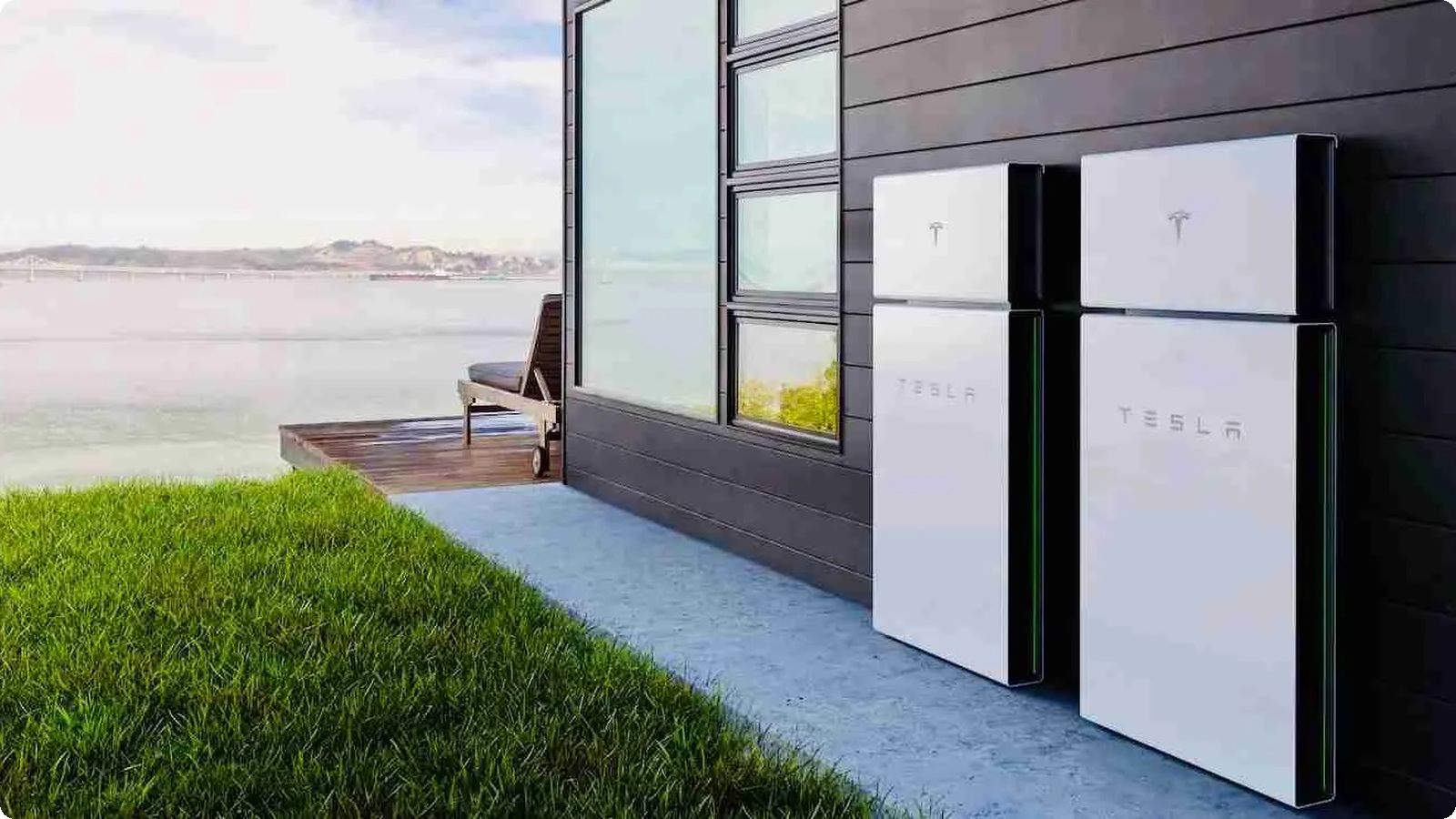

We still install Tesla Powerwall 3. For most homes we now recommend Sigenergy first: modular storage from 6 to 54 kWh, backup with no interruption and car charging in the same system. We are registered Sigenergy installers.
Most home batteries are a battery. Powerwall 3 is a battery with the solar inverter built into it, which sounds like a detail and turns out to change almost everything about how the system is designed, installed, warranted and expanded. We have now fitted it on roofs from Lancashire to the west coast of Wales, and this is the long version of what we tell people at the kitchen table: what it does well, what it needs adding, and how to tell whether it is the right choice for your house.
If you would rather skip straight to a quote, tell us about your home and we will survey it in person.
Building Powerwall 3, Tesla’s one minute film. Tap to play.
The inverter lives inside the battery
On a conventional system the panels feed an inverter, the inverter feeds the house, and a separate battery with its own inverter sits alongside, from a different maker, with a different app and a different warranty. Powerwall 3 collapses that into one box. The solar strings connect directly to it through three independent maximum power point trackers, so an east roof and a west roof, or a main array and a garage roof, can each be tracked on their own. Tesla rates the solar input at up to 20 kW DC per unit, far more than a normal UK house would ever put on it.
Why that matters to you rather than to the electrician: fewer boxes on the wall, one company to ring if anything goes wrong, one app that sees solar, battery, home and grid together, and a simpler installation that takes less of a day. Tesla quotes 97.5% solar to grid efficiency for the built in inverter, which is as good as the standalone inverters we would otherwise fit.

13.5 kWh, and what that covers in a real house
A single Powerwall 3 stores 13.5 kWh, all of it usable. To put that in context, Ofgem’s typical medium household uses around 2,700 kWh of electricity a year, roughly 7.5 kWh a day, so one unit will carry an average house from dusk to dawn with room to spare, and a house with an electric car or a heat pump will use most of it every night in winter. That is the point of storage: your panels make most of their energy in the middle of the day, and most families use most of theirs in the evening. Without a battery the surplus is exported for a few pence a unit and bought back later at full price.
Our Aberystwyth case study shows the arithmetic on a bigger house. Eighteen panels on an east facing roof, a Powerwall 3 plus an expansion unit for 27 kWh, and a grid connection that would only accept 4 kW of export. The design model took the household from 34% to 64% self sufficient, and at today’s prices the first year benefit works out at about £1,560, with payback in roughly 11 to 13 years. Almost none of that would have been possible with solar alone, because the surplus could not have left the house.
We look at your real usage, not a national average, and size the battery to it. A free survey from our Clitheroe HQ or our Manchester office, and a straight answer if one unit is enough.
Power, not just capacity
Capacity is how much a battery holds. Power is how fast it can give it back, and this is where most home batteries quietly disappoint. Plenty of them are limited to three to five kilowatts, so when the oven, the kettle and the shower run together the battery gives what it can and the grid tops up the rest, at full price, at the worst time. Powerwall 3 delivers up to 11.04 kW continuously on a single unit, and can start heavy motor loads rated up to 185 A locked rotor, which in plain terms means a heat pump compressor or a workshop machine starting without a flicker.
In practice that means the whole house runs from the battery in the evening, not just the lights and the television. If you charge a car at 7 kW from stored solar, the battery keeps up. If you add a heat pump later, the battery keeps up.
It grows when your life does
The unit we install first is the one with the inverter. If you need more storage later, a Powerwall 3 Expansion adds another 13.5 kWh and sits beside it with no second inverter, no second app and no second warranty to track. Each Powerwall 3 takes up to three expansions, so one inverter can carry 54 kWh, which is more than any house we have surveyed needs. Tesla’s datasheet talks about multi unit systems up to 94.5 kWh, which is territory for farms and small commercial sites rather than homes.
We often design for one unit now and leave the wall space and the cabling for a second. The Aberystwyth house went straight to two because the export cap made the second battery pay; a house with a normal grid connection often starts with one.
Built to live outside
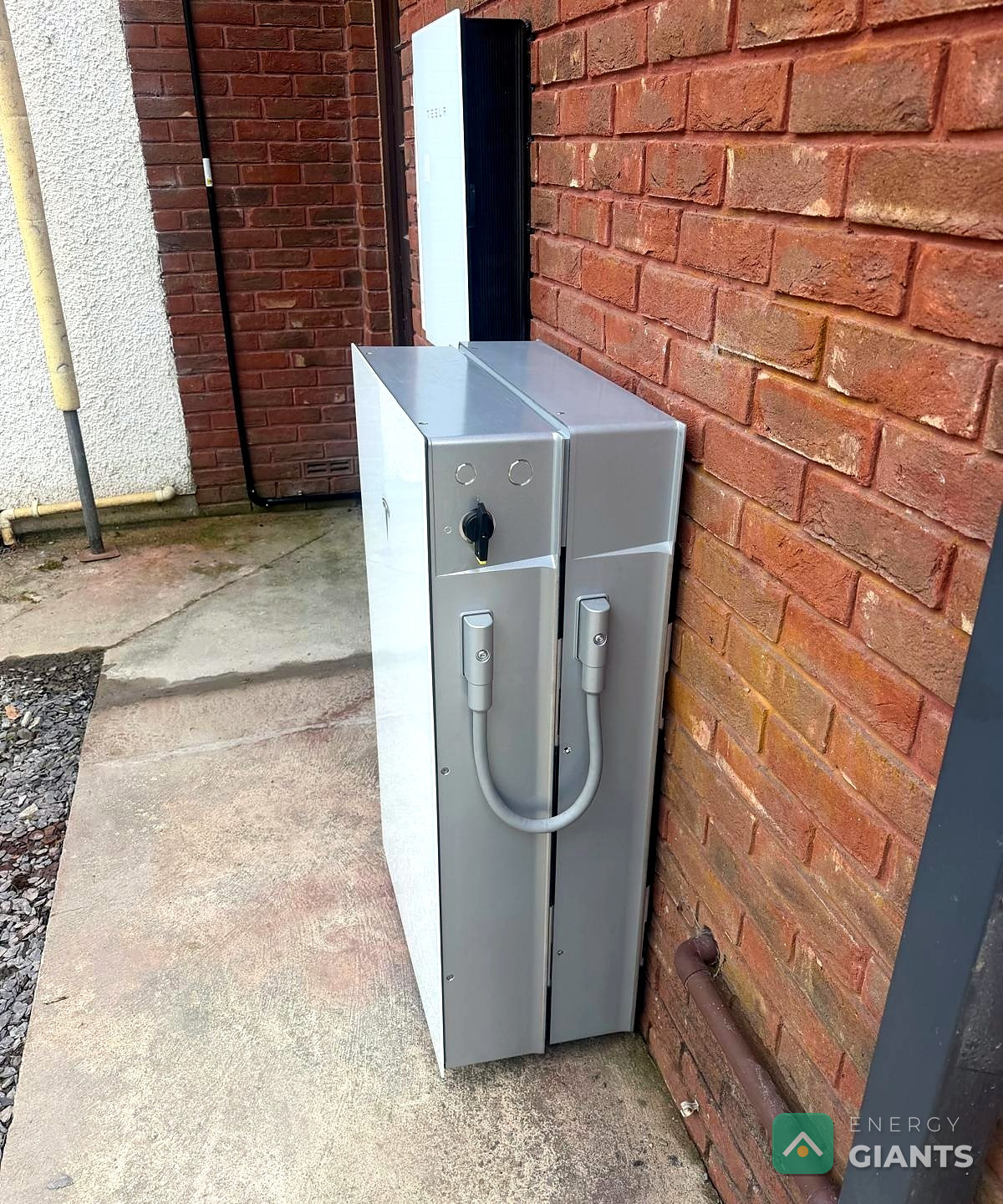
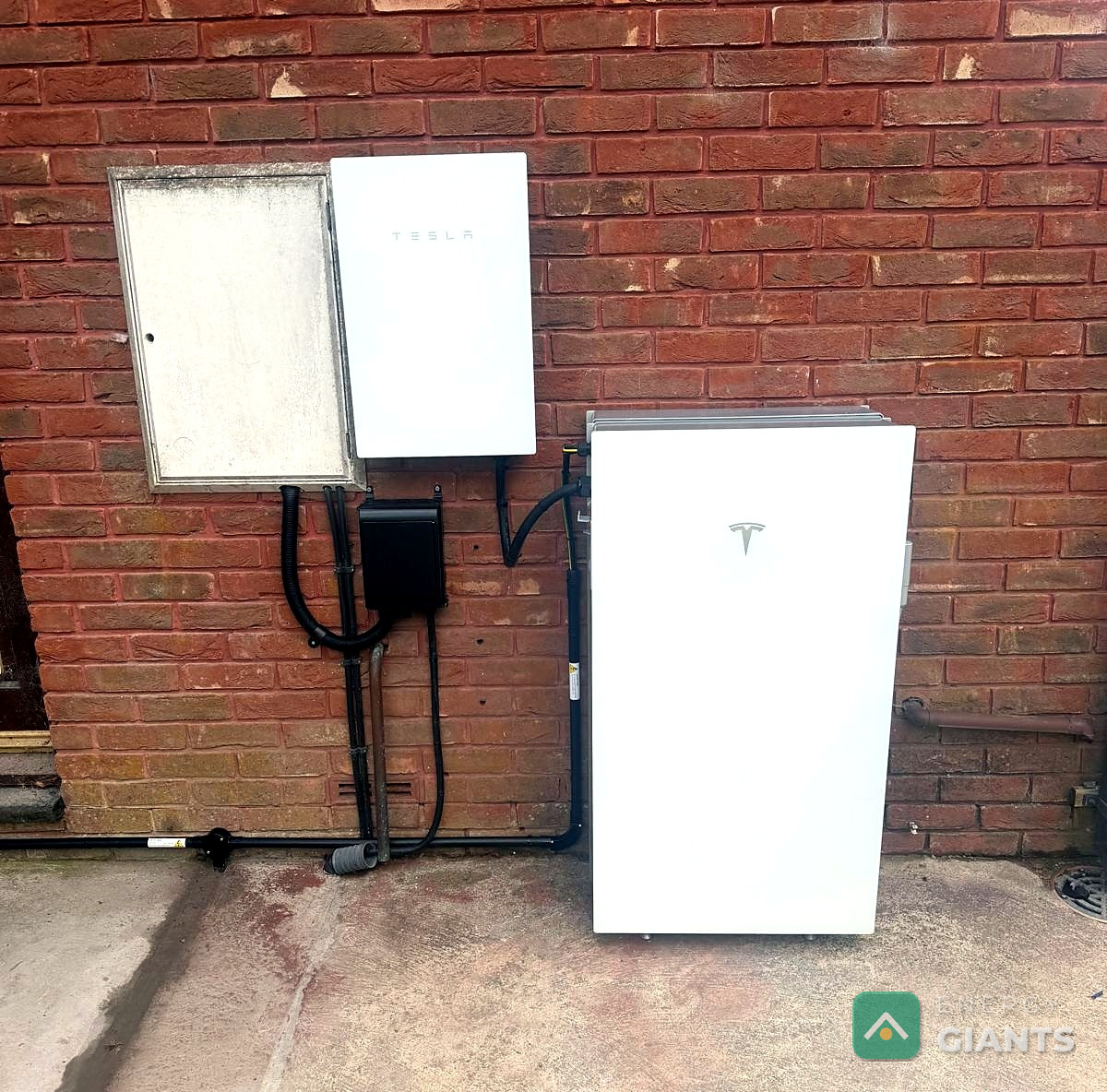
The battery and power electronics are rated IP67, and Tesla states the unit will withstand extreme weather, cold, high humidity and up to 0.6 metres of water. That is not marketing colour, it decides where the thing goes. A garage or a utility room is fine if you have one, but many houses do not have a spare wall inside, and a Powerwall on the outside wall next to the meter position is often the neatest and cheapest install. It also keeps the battery cool, which is good for its life.
The app, the tariffs and the export limit
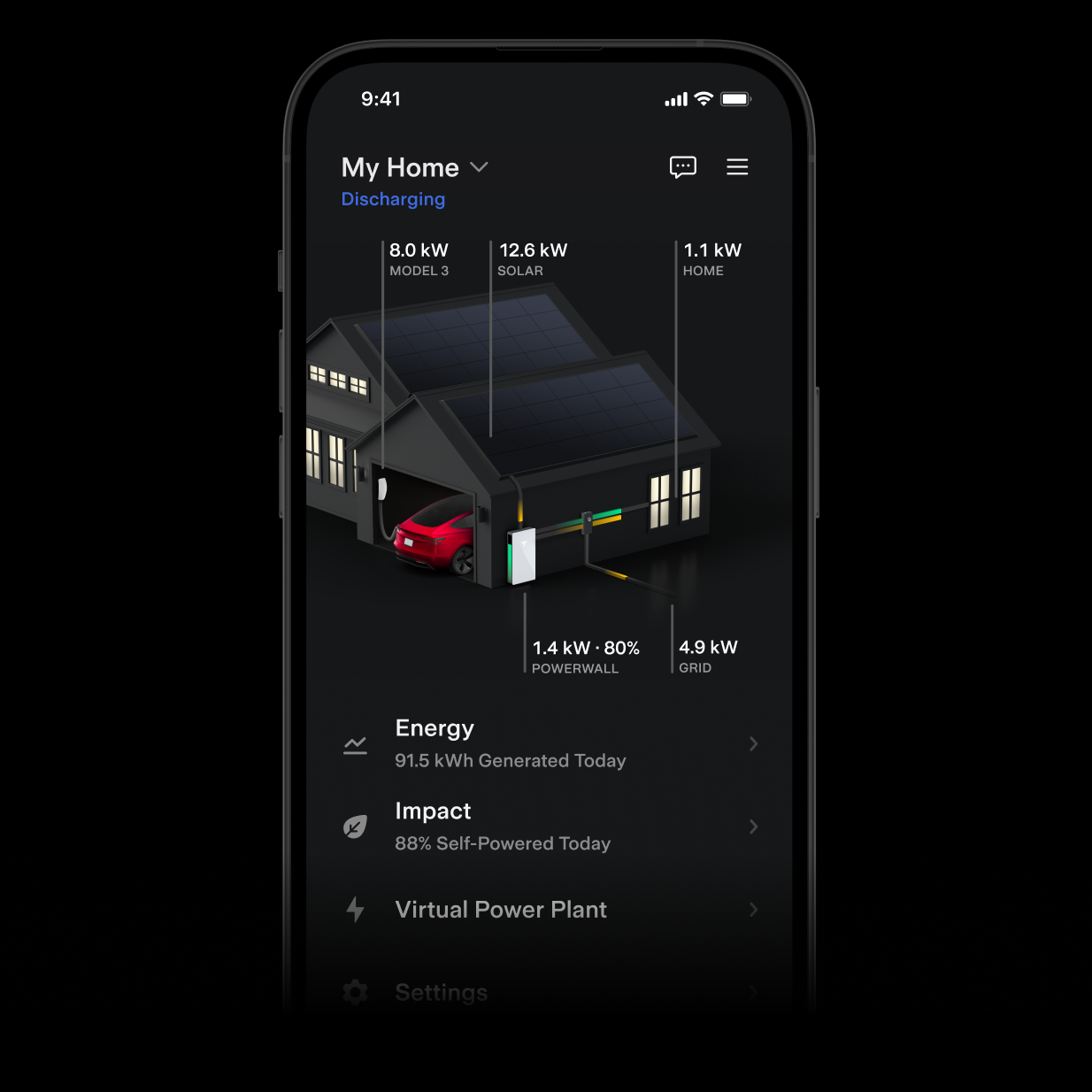
Everything is run from the Tesla app. Solar production, house consumption, battery state and grid flow are shown live and as history, and you set how the system behaves. Self powered mode keeps as much of your own solar at home as possible. Time based control uses a cheap overnight tariff to fill the battery when electricity is cheapest and run the house from it when it is dearest, which is how a Powerwall keeps earning in December when the roof is doing very little.
Storm Watch is a small feature that people come to value. In the UK it listens for Met Office amber and red weather warnings that mention a risk of power cuts, and charges the battery to full ahead of them. And if your network operator limits how much you can export, as SP Manweb did at Aberystwyth with a 4 kW G100 cap, the Powerwall enforces that limit itself and diverts the surplus into the battery instead of throwing it away.
Backup: what it does and does not do out of the box
This is the part we are most careful to explain. A standard Powerwall 3 installation stores your solar and runs the house from it, but when the grid fails the system shuts down with it, like every grid tied inverter must. To keep the house running through a power cut you need Tesla’s Backup Gateway 2 fitted between the meter and the house. It watches the supply, disconnects from the grid in a fault, and lets the Powerwall run the house as an island, then reconnects when the grid comes back. It is an extra piece of kit and an extra cost, and for many households it is not worth it; for a rural house on an overhead line, or a home with medical equipment, it often is. We quote it separately so you can decide.
The warranty, in one sentence
Ten years, unlimited cycles for solar self consumption and backup use, with Tesla guaranteeing at least 70% of the original capacity at the end of it, and the built in inverter covered under the same warranty. That last clause is the one to compare against a separate inverter and battery, where the inverter is usually the first thing to fail and the first thing to fall out of warranty.
What it costs, and what comes back
We do not publish what any customer paid, but we do publish the return. On the Aberystwyth system the first year works out at about £1,560 at today’s prices, with no assumed price rises, and payback in roughly 11 to 13 years, with the battery doing the heavy lifting because the export cap made surplus solar worthless without it. VAT on solar panels and batteries is 0% until 31 March 2027, which takes a fifth off the price compared with the years before the relief. Our current Powerwall 3 offer is on the home page, and our cost guide sets out indicative ranges for whole systems.
What the Powerwall is not is a cheap battery. If your house uses little electricity in the evening and your network will take unlimited export, a smaller battery or none at all may pay back faster, and we will say so at the survey. Read our battery storage guide for the sizing method we use.
Is it right for your house? A short checklist
- You use a lot of electricity in the evening. Cooking, an EV, a heat pump, a home office: the more you use after dark, the more a battery earns.
- Your roof can carry 4 kWp or more. Below that a single Powerwall will rarely fill in winter, though time based charging still makes it work.
- Your export is limited, or your supply is single phase and rural. The battery turns a restriction into a benefit.
- You want one system, one app, one warranty. The integration is the point.
- You may add a car or a heat pump. Powerwall has the power and the expansion path for both.
Questions we get asked
Can Powerwall 3 be added to my existing solar panels?
Yes. It can take the strings directly, replacing an older inverter, or sit alongside an existing inverter on the AC side. Which is better depends on the age and size of the inverter, and we check that at the survey.
Does it need to be inside?
No. It is rated IP67 and Tesla specifies it for outdoor mounting. Most of our recent installs are on an outside wall near the meter.
How long does the installation take?
Usually a day for the battery alongside a solar installation, sometimes less for a retrofit to existing panels. Commissioning and the network operator paperwork follow.
Will it keep the lights on in a power cut?
Only with a Backup Gateway 2 fitted. Without it the system shuts down with the grid, as the regulations require. We quote the gateway as an option.
Can I charge it from the grid on a cheap tariff?
Yes. Time based control in the Tesla app charges from the grid in the cheap window and runs the house from the battery when prices are high. Storm Watch also grid charges ahead of weather warnings.
Is Energy Giants a Tesla installer?
We design, install and commission Powerwall 3 systems with a competent, compliant workforce, and we are MCS certified for solar PV and battery storage. Ask us about the current Tesla offer when you enquire.
Powerwall 3 at a glance
| Usable energy | 13.5 kWh per unit |
|---|---|
| Continuous power | Up to 11.04 kW per unit (Tesla) |
| Motor start | Loads rated up to 185 A LRA |
| Solar input | Up to 20 kW DC, 3 MPPTs |
| Solar to grid efficiency | 97.5% |
| Expansion | Up to 3 expansion units per Powerwall, 13.5 kWh each |
| Enclosure | IP67 battery and electronics; withstands up to 0.6 m of water |
| Backup | Requires Backup Gateway 2 for islanding |
| Warranty | 10 years, unlimited cycles, 70% capacity retained |
| Certification | Installed by Energy Giants |
Figures from Tesla’s UK Powerwall 3 datasheet and product page; the expansion limit and warranty terms from Tesla’s published warranty. Specifications change, so we confirm them on the quote.
Tell us about your home and how you use electricity. We survey in person, design around your roof and your network connection, and install with a competent, compliant workforce, from Lancashire to West Wales.
Exclusive offers
Solar and battery offers from Energy Giants
The same offers as on our home page, supplied and installed by a competent, compliant workforce.
 Our recommendationSigenergyOne system for solar, battery and EV chargingExplore Sigenergy →
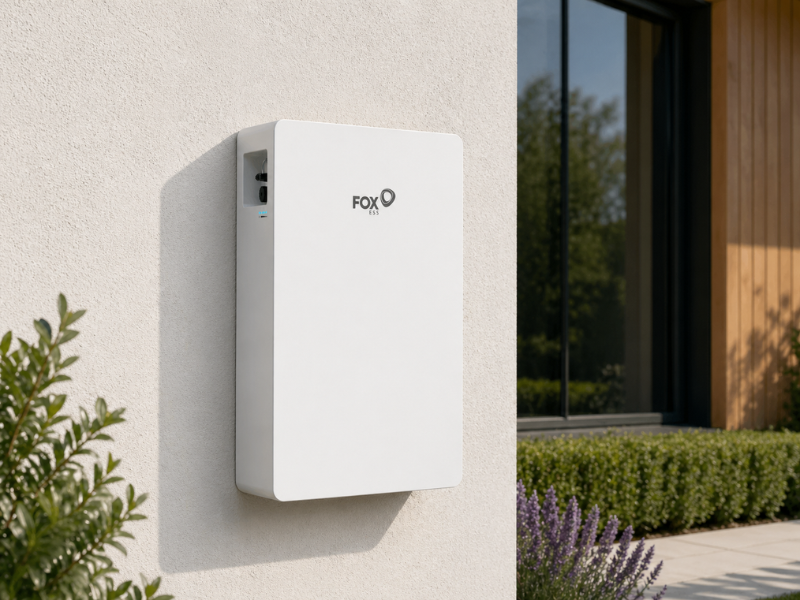 Exclusive bundleFox ESS12 Aiko all-black panels, Fox ESS battery and inverterInstalled from £6,995Get a Fox ESS quote →
 Exclusive bundleDuracell Energy5 all-black 450W panels and a 5kWh batterySupplied and fitted from £6,470Get a Duracell quote →
 Exclusive offerTeslaPowerwall 3, fully installed with a complete solar systemFrom £6,499Get a Powerwall 3 quote →
All offers are subject to eligibility, survey and availability. See the offers on our home page.
Miles has led retrofit programmes at scale across the UK, with long-standing relationships with local authorities including Kirklees Council, Durham County Council and Ribble Valley Borough Council. He has project-directed programmes for housing associations and delivery partners including Sureserve, LivGreen and BroadOak, and for energy suppliers including E.ON Next, Utilita, British Gas, Octopus and UKEM.