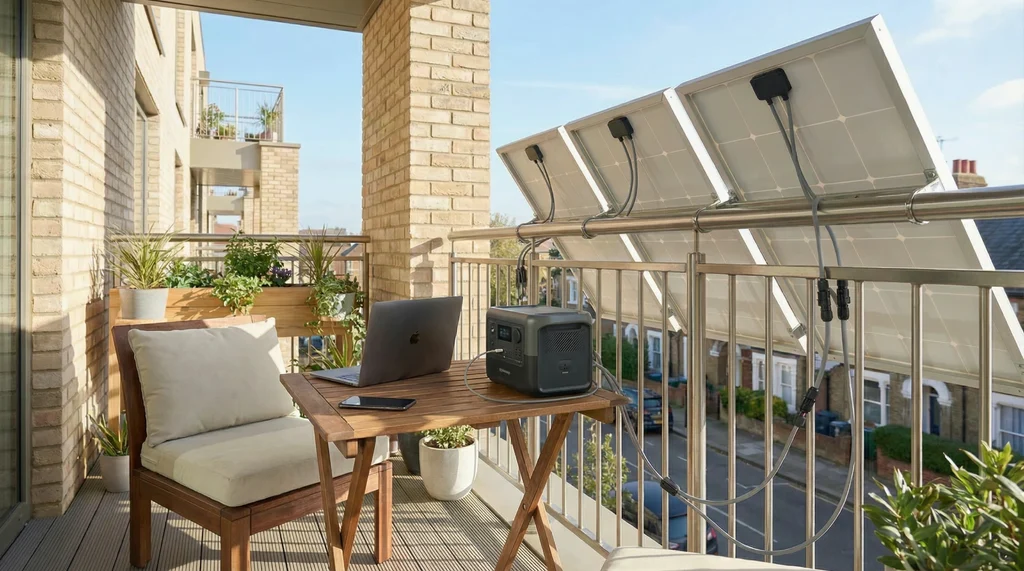

From 27 August 2026 you can buy a solar kit off a shelf, stand it on your balcony or fix it to your fence, plug it into a normal socket and start generating your own electricity. No scaffolding. No electrician. No install date three months out.
That is a genuinely good thing, and we will say so plainly even though we fit solar on roofs for a living. A large slice of households in this country have never had a realistic route into solar because they rent, or they are in a flat, or the roof is not theirs to touch. Plug in solar opens that door.
But there is a lot of noise about it at the minute, and quite a bit of it is wrong. So here is the version we would give you if you rang us up and asked.
What the law actually changed
The rules sit in SI 2026/848, made on 16 July 2026 and coming into force on 27 August.
Before this, the problem was not that plug in solar was banned as such. It is that it could not comply with BS 7671, the wiring regulations, because those were written around fixed installations put in by a qualified electrician. A panel plugged into a ring main could never satisfy that, no matter how well built it was.
Rather than rewrite BS 7671, the government went round it. The new regulations amend the Plugs and Sockets etc. (Safety) Regulations 1994 so a standard three pin plug can lawfully be supplied with a microgenerator, and they amend the Electricity Safety, Quality and Continuity Regulations 2002 so a plug in generator complies with a new government product specification instead of with BS 7671.
That is the whole unlock, in a sentence. The kit has to meet the specification. If it does not, it is still not legal, whatever the listing says.
The four numbers that matter
Everything a compliant kit has to do comes down to four limits and one rule about where the plug goes.
The panel headroom sounds odd until you realise it is deliberate. More panel than inverter means you reach full output earlier in the morning, later in the afternoon, and on grey days. In Lancashire, that headroom is worth having.
We survey every roof in person, from our HQ in Clitheroe and our Manchester and London offices, and tell you honestly whether it is worth doing.
The extension lead is the bit that gets warm
The socket rule is where we expect most of the trouble. A fence at the bottom of the garden is nowhere near a fixed socket, and the temptation to run an extension out to it will be enormous.
Do not do it. The extension lead is the component that heats up, and it sits outside the rules for good reason.
The bit nobody is mentioning: you still have to tell your network operator
A lot of people buying a boxed product from a high street retailer will have no idea this exists. Some kit suppliers will handle it for you. Check whether yours does before you buy, because if they do not, it falls to you.
No batteries. Not yet.
The rules are specific. The device has to generate from sunlight, operate in parallel with the grid, and must not import electricity to store for later. That rules out plug in battery storage entirely in this first phase.
It matters more than it sounds, and this is the single most important thing to understand before you buy one.
A plug in system only saves you money on electricity you are using at the moment the sun is on it. Whatever you do not use gets exported, and you are not being paid for it. No battery means no shifting that generation to six o'clock, when most households actually use their power.
Storage will almost certainly follow. It has not yet.
So what will it actually save you?
Small plug-in systems can provide modest annual savings, depending on how much of the generation you use in the house and on your tariff. Entry level kits are reported at around £400.
Take that with a pinch of salt in either direction, because the spread is enormous and it depends almost entirely on two things.
Where it points, and what is in the way
A pair of panels on a sunny south facing fence in Clitheroe is a completely different proposition to the same pair on a shaded east facing balcony. Plug in kits usually sit vertical or near vertical, which costs you output against a pitched roof but flattens the daily curve and helps a little in winter.
Whether anyone is home
If the house is empty from eight until six and everything runs on a timer at night, you will export most of it and save very little. If someone is home during the day, or you can move the washing, the dishwasher and the immersion into the middle of the day, the numbers improve considerably.
Two panels will not run your house. They will take a bite out of your standing daytime load. Fridge, freezer, router, standby, kettle now and then. That is a real saving. It is just a modest one, and anyone telling you otherwise is selling something.
Where it works, and where it does not
Our honest position, as people who fit roofs
We would rather you started somewhere than nowhere.
Plug in solar is the cheapest, lowest commitment way to find out what solar actually behaves like at your address. You will watch your import drop on a bright afternoon. You will notice it doing nothing at seven in the evening. You will start moving your washing to lunchtime without anybody telling you to. That is a solar education for a few hundred quid, and everybody who has had it makes better decisions afterwards.
What it is not is a substitute for a roof system, and it is not marketed as one. Different scale, different job.
The yes on export payments has a piece of paper behind it. For solar PV, energy suppliers usually ask for the MCS certificate before they pay you for the electricity you send back to the grid under the Smart Export Guarantee. So it pays to have a roof system fitted by an MCS certified installer.
How to know you have outgrown a plug in kit
You have probably outgrown it when:
- You are exporting most of what you make and getting nothing for it
- You have usable, unshaded roof and you are not using it
- You have bought or you are thinking about an EV, or a heat pump, or both
- You have started wondering whether a battery would help. It would, and you cannot have one on a plug in system.
That is the point to have a proper conversation about a roof. Our Lancashire house type guide is the place to start, because what your roof will take depends far more on which of six house types you have got than on anything else.
Six things to check before you buy anything
There will be a wave of cheap imported kits on the marketplaces from late August that meet none of the above. The rules exist because plugging a generator into a ring main is a genuinely tricky thing to do safely, and the certified products have gone to the trouble of doing it properly. That is worth paying for.
Last thing
27 August is when compliant products can legally be sold and connected. It is not a starting gun for stock hitting shelves, and it is not a deadline for you. Take your time, get a kit that is genuinely certified, and put it somewhere the sun goes.
And if you are stood in your garden reading this while looking at a perfectly good south facing roof, you might be solving a smaller problem than the one you have got.
Exclusive offers
Solar and battery offers from Energy Giants
The same offers as on our home page, supplied and installed by our own team.
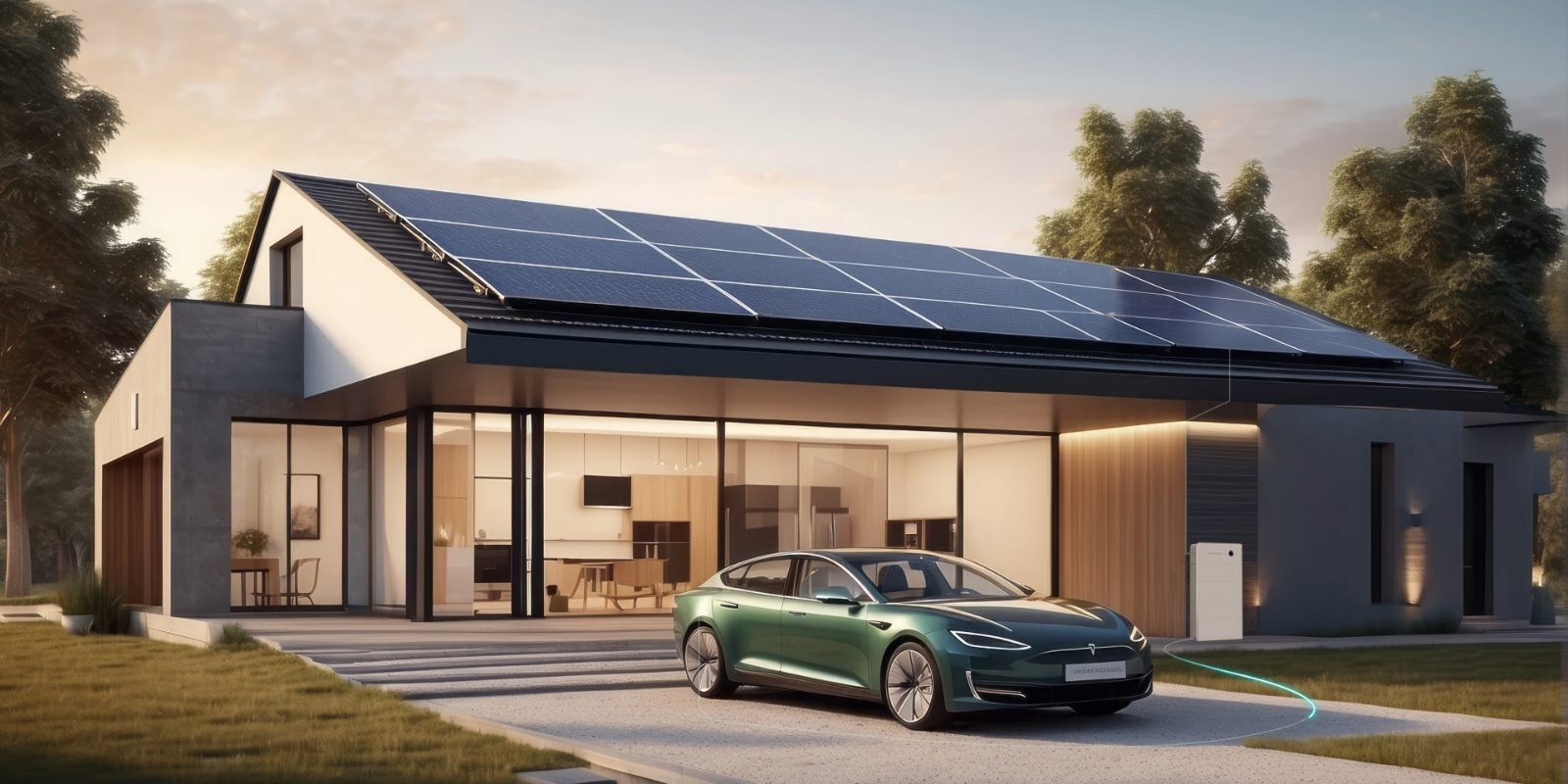 Our recommendationSigenergyOne system for solar, battery and EV chargingExplore Sigenergy →
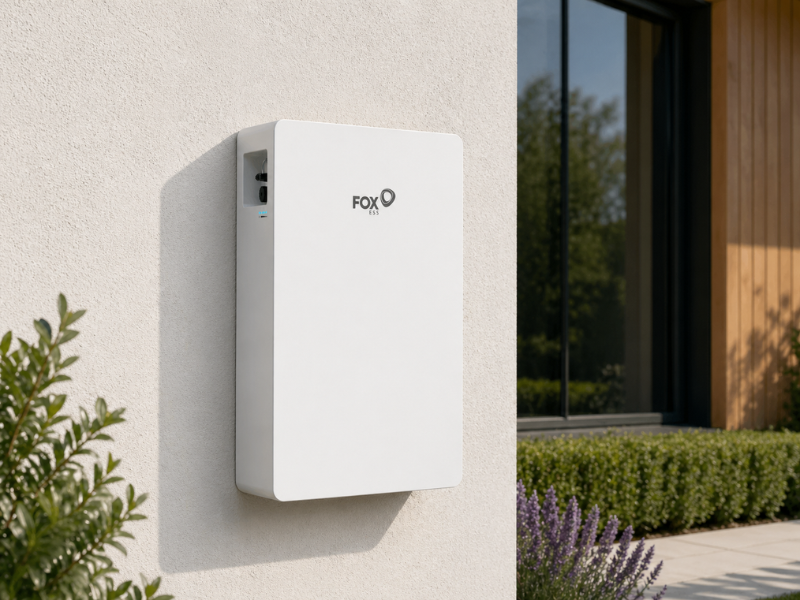 Exclusive bundleFox ESS12 Aiko all-black panels, Fox ESS battery and inverterInstalled from £6,995Get a Fox ESS quote →
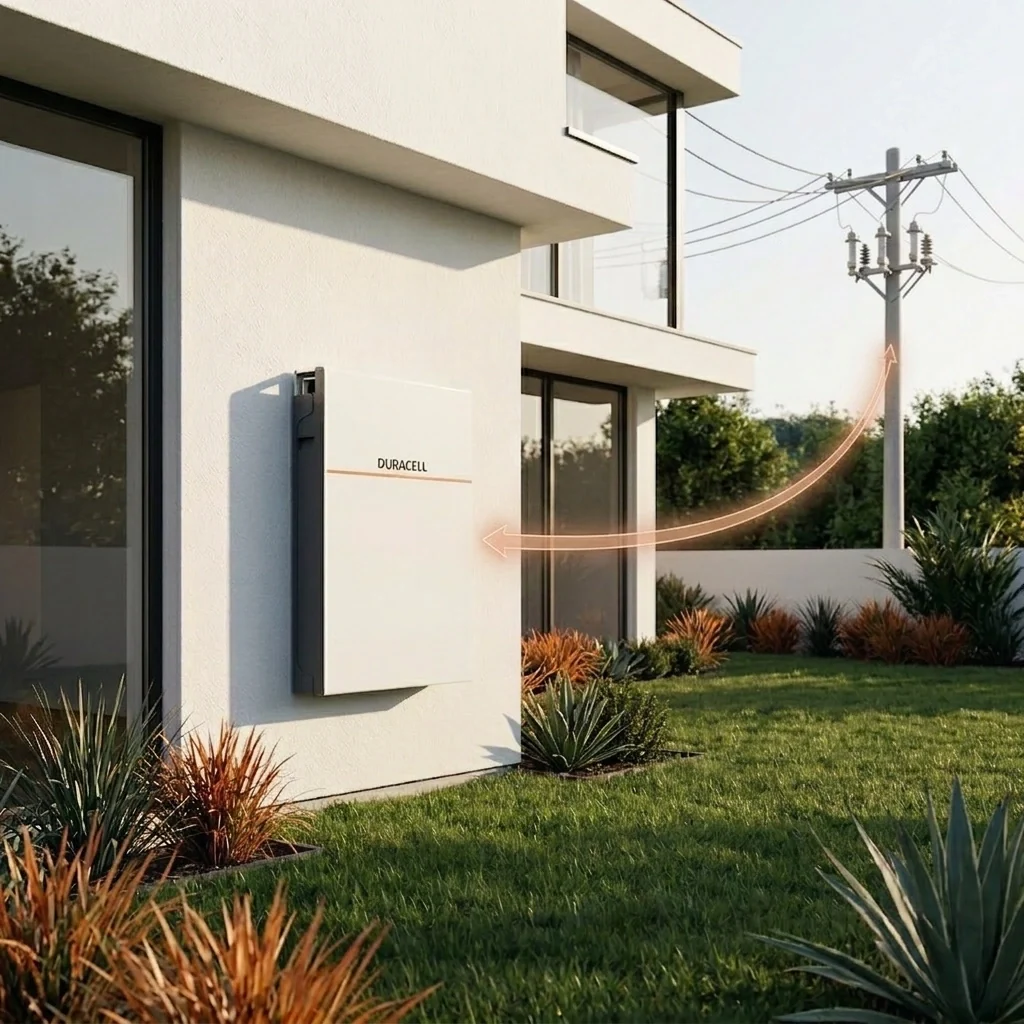 Exclusive bundleDuracell Energy5 all-black 450W panels and a 5kWh batterySupplied and fitted from £6,470Get a Duracell quote →
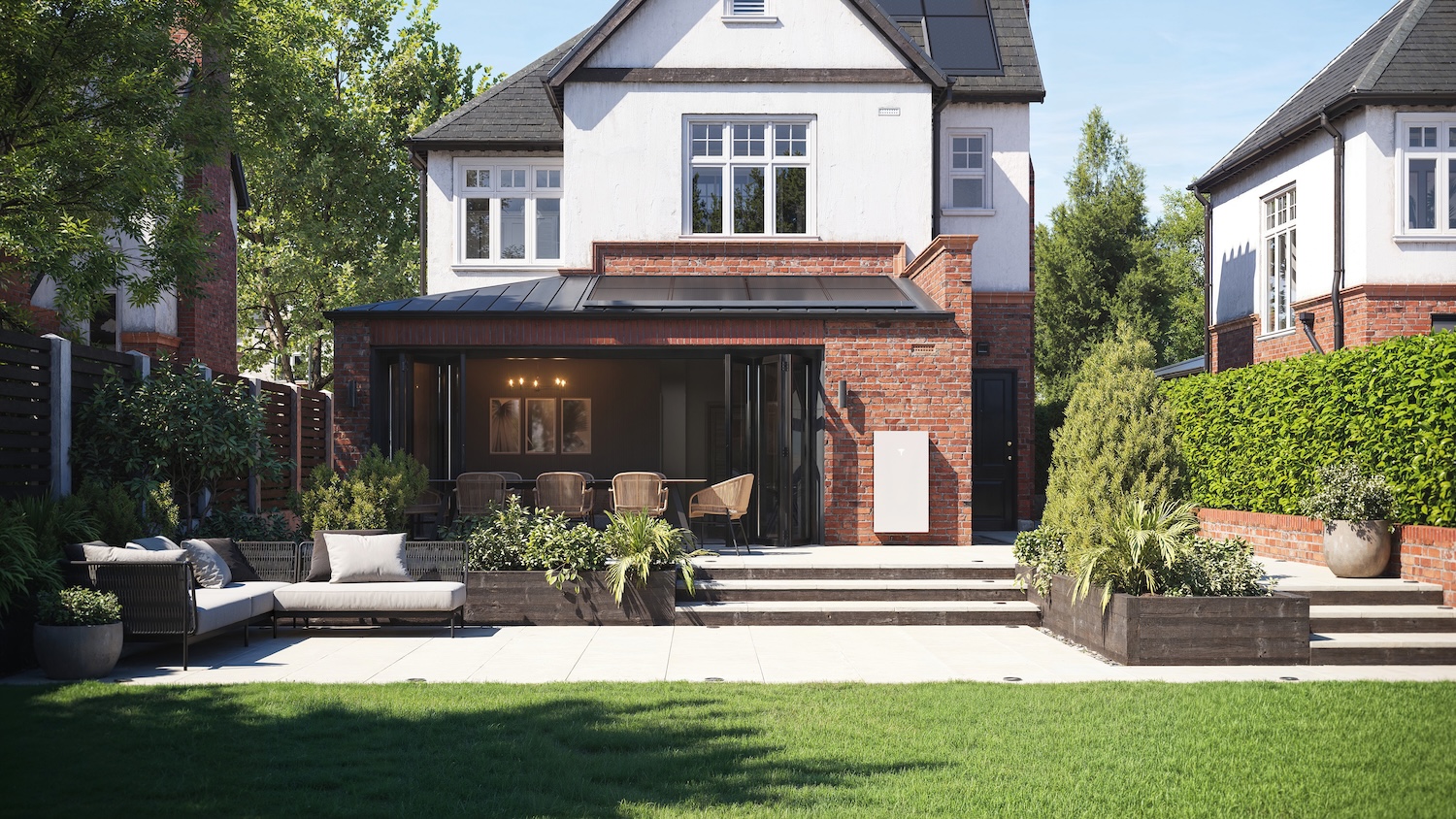 Exclusive offerTeslaPowerwall 3, fully installed with a complete solar systemFrom £6,499Get a Powerwall 3 quote →
All offers are subject to eligibility, survey and availability. See the offers on our home page.
Miles has spent two decades in retrofit and has worked at scale across the UK, with long-standing relationships with local authorities including Kirklees Council, Durham County Council and Ribble Valley Borough Council. He has project-directed programmes for housing associations and delivery partners including Aspire Housing, Sureserve, LivGreen and BroadOak, and for energy suppliers including E.ON Next, Utilita, British Gas, Octopus and UKEM.