

Most high street lenders now attach some kind of financial reward to an energy efficient home. The rewards are real, the rules are fiddly, and almost nobody finds out about them until after the work is done.
The phrase "green mortgage" covers three quite different things, which is the first source of confusion. One rewards you for already owning an efficient house. One pays you for improving it. One lends you the money to do the improving. They have different rules, different lenders and different amounts, and you can sometimes use more than one in sequence.
This page sets out what is on offer, who from, and what the qualifying conditions actually are. It is general information rather than advice, and every figure below should be checked against the lender's current terms before you rely on it.
The market has grown quickly
This was a niche product five years ago and it is now mainstream. According to the Green Finance Institute, there were four green mortgage products available in the UK in 2019. By 2024 there were 61, and by 2026 more than 90.
The reason is not sentiment. Lenders have their own emissions targets, and a large share of UK emissions comes from housing. Rewarding efficient homes is one of the few levers a bank actually has.
The catch, and it is a big one
Most of these products need an EPC rating of A or B. Most British houses are nowhere near that.
This matters a great deal in Lancashire, where a large part of the housing stock is Victorian stone terrace, interwar semi and post war estate. Very little of it starts at A or B. Which is why the improvement routes below are usually more relevant here than the rate discounts.
We survey every roof in person, from our HQ in Clitheroe and our Manchester and London offices, and tell you honestly whether it is worth doing.
Three routes, and they work differently
Who offers what
As reported in mid 2026. Terms change often, so treat this as a starting point for your own checking rather than a live comparison.
| Lender | Scheme | Reported amount | Key conditions |
|---|---|---|---|
| Halifax | Green Living Reward | Up to £1,000 solar or battery. Up to £2,000 heat pump. | Halifax mortgage. First illustration on or after 31 July 2024. Install within a year of completion. Certified installer required. One reward per mortgage product. Free EPC after a successful claim. |
| Lloyds Bank | Eco Home Reward | Up to £1,000 solar or battery. Up to £2,000 heat pump. | Mirrors the Halifax scheme closely. A Club Lloyds current account is reported as required at the point of claiming. |
| Barclays | Greener Home Reward | Up to £1,000, reduced from £2,000 in January 2026. | Existing Barclays residential mortgage. Certified installer required. No additional borrowing from Barclays needed to qualify. Claim within three months of the invoice date. |
| Santander | Energy improvement cashback | Up to £500 reported. | Existing mortgage customers taking additional borrowing to fund improvements. Availability has varied, so check directly. |
| Virgin Money | Green Reward, Retrofit Boost | £250 reported on Green Reward. | Retrofit Boost is a separate product including cashback that must be spent on eligible improvements. |
| Lender | Benefit | Typically requires |
|---|---|---|
| Barclays | Rate discount reported at roughly 0.10 to 0.20 per cent below the equivalent standard product, built into the rate rather than paid as cashback. | EPC A or B. Purchase and remortgage. Weighted towards new build purchases direct from a developer. |
| NatWest | Reduced rate on selected products. | EPC A or B. Also runs a separate green additional borrowing product. |
| HSBC | Energy Efficient Homes cashback, reported at up to £750. | EPC A or B. |
| Nationwide | £500 cashback where the EPC score is 92 or above, £250 for a score of 86 to 91. | New mortgage customers purchasing. Scored on SAP points rather than the letter band alone. |
| Co-operative Bank | Rate reductions or cashback reported for efficient properties. | EPC A or B. |
The most interesting one, if you need to fund the work
The Co-operative Bank, Coventry Building Society and Skipton Building Society have also offered additional borrowing routes for energy improvements. Terms and availability vary.
The newer route: the Warm Homes Loan Scheme
From September 2026 there is a government backed alternative that sits outside the mortgage system. The Warm Homes Loan Scheme cuts the interest on loans for low carbon improvements, and you do not need a mortgage with anyone to use it.
From the published scheme rules: up to £15,000 for solar PV and a separate £15,000 for battery storage, and £20,000 to £35,000 for a heat pump depending on type. Terms of three to ten years. Rates are expected to sit between 0% and 3%, because the government pays participating lenders a grant of up to 20% of the loan to bring the rate down; the exact figure depends on the lender and the product. No income threshold, no minimum EPC, no property type restriction, so a house at band E qualifies as readily as one at C. Owner occupiers and private landlords borrowing personally are both in.
You apply to an FCA regulated bank or building society taking part, not to the government, and normal affordability checks apply. For most households the obstacle was never the rate afterwards. It was the money up front. This scheme is aimed squarely at that. We have a dedicated page on the Warm Homes Loan Scheme: caps by measure, who qualifies, how to apply, and how to get a quote a lender will accept.
Where solar fits
Solar PV contributes to a property's SAP score, which is what produces the EPC letter band. So installing it can move a house up the scale, and on a property already sitting near a band boundary it can be the thing that tips it over.
How far it moves you depends on where you started, the size of the system, and the orientation and pitch of the roof, so nobody can tell you the answer without looking at your actual EPC and your actual roof. Anyone who quotes you a band improvement before seeing either is guessing.
The sequence that tends to make sense, where it applies:
Five things people get caught out by
A green rate is not automatically the cheapest rate
The installer certification requirement is not optional
The claim windows are short and they are strict
One reward per mortgage product
Your EPC does not update on its own
What we would do
If you have a mortgage and you are thinking about solar, spend twenty minutes on this before you get quotes. Find out who your lender is, look up what their green scheme currently offers, and read the eligibility conditions rather than the headline. The difference between qualifying and not qualifying is usually a detail like a date, an account type or a certification requirement, and all of them are easier to satisfy before the work than after it.
Then talk to a mortgage adviser, because the interaction between additional borrowing, cashback and your next remortgage is genuinely their territory rather than ours.
Information correct as reported in August 2026 and compiled from publicly available lender and industry sources. Product terms, amounts and availability change frequently and are set by the lender, not by us. Always confirm current terms directly with the lender or a qualified mortgage adviser before acting.
Exclusive offers
Solar and battery offers from Energy Giants
The same offers as on our home page, supplied and installed by our own team.
 Our recommendationSigenergyOne system for solar, battery and EV chargingExplore Sigenergy →
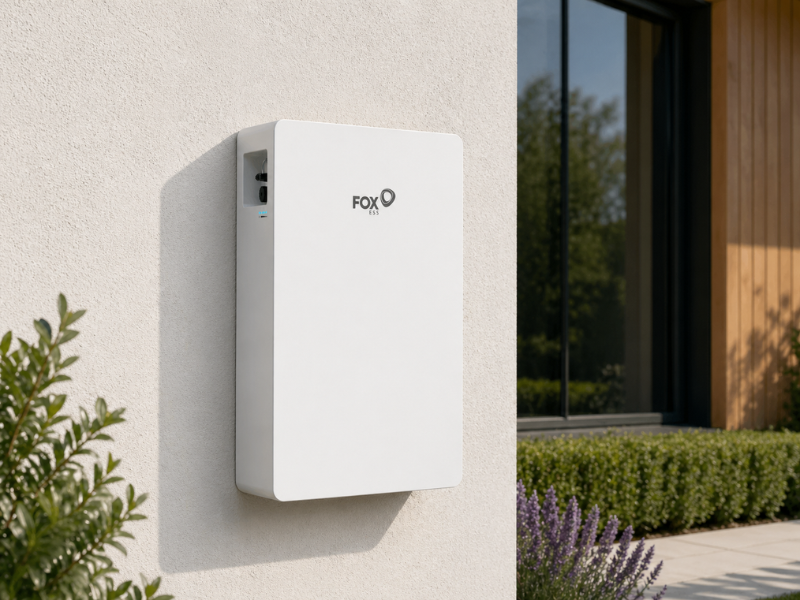 Exclusive bundleFox ESS12 Aiko all-black panels, Fox ESS battery and inverterInstalled from £6,995Get a Fox ESS quote →
 Exclusive bundleDuracell Energy5 all-black 450W panels and a 5kWh batterySupplied and fitted from £6,470Get a Duracell quote →
 Exclusive offerTeslaPowerwall 3, fully installed with a complete solar systemFrom £6,499Get a Powerwall 3 quote →
All offers are subject to eligibility, survey and availability. See the offers on our home page.
Miles has spent two decades in retrofit and has worked at scale across the UK, with long-standing relationships with local authorities including Kirklees Council, Durham County Council and Ribble Valley Borough Council. He has project-directed programmes for housing associations and delivery partners including Aspire Housing, Sureserve, LivGreen and BroadOak, and for energy suppliers including E.ON Next, Utilita, British Gas, Octopus and UKEM.