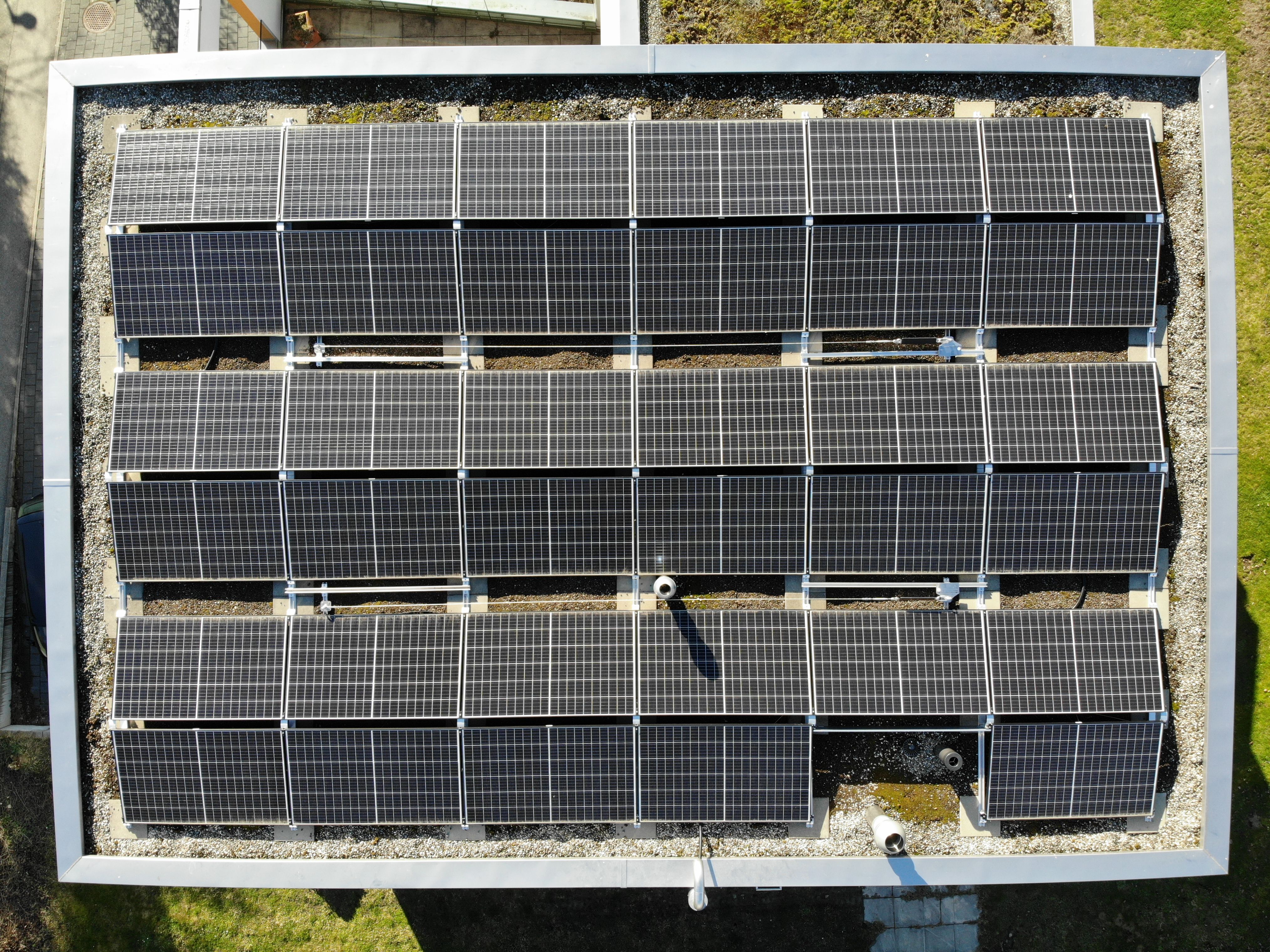

A school does not ring three solar installers. Neither does a council, an NHS trust or a fire service. Public sector solar is bought through frameworks, funded through named programmes, and delivered against a plan of work most installers have never read. Here is how it actually happens.
We write this for the people on the other side of it: school business managers, estates leads, facilities managers and anyone at a local authority who has been handed decarbonisation on top of an existing job.
The technology is the easy part. The process is where projects stall, and almost nothing written about solar explains it.
The five stages, in the order they actually happen
Note where funding sits. Fourth, not first. Chasing a grant before you have a prioritised estate and a feasibility assessment is the commonest way a public sector project falls over, because the application asks questions the organisation has not yet answered.
Start with the free help, because it exists
The North West Net Zero Hub has a dedicated public buildings team offering free, impartial support to public sector organisations across Cumbria, Lancashire, Greater Manchester, the Liverpool City Region and Cheshire and Warrington.
They will help with the heat decarbonisation strategy, the portfolio assessment and prioritisation, a high level solar PV feasibility assessment, and identifying and applying for funding. At no cost.
Multi academy trusts and schools
Higher education institutions
NHS trusts
Emergency blue light services
Central government departments
Public corporations
Private sector organisations
If you are eligible and have not spoken to them, that is the first call rather than the third.
Our commercial team designs, installs and maintains solar and storage for businesses, public bodies and housing providers, and will tell you honestly whether a site stacks up.
The funding routes, and what each is for
| Route | What it suits |
|---|---|
| Public Sector Decarbonisation Scheme, via Salix | The main route for heat decarbonisation and associated measures on public estates. Competitive, with fixed windows, and it rewards organisations that already have a strategy and a prioritised list. |
| Low Carbon Skills Fund, via Salix | Pays for the expertise to produce the plan rather than the plant. If you do not yet have a heat decarbonisation strategy, this is often the honest starting point. |
| National Wealth Fund | Advice, lending and blended finance for larger clean energy and infrastructure projects. Suits capital programmes rather than a single roof. |
| Electricity North West, Powering Our Communities | Grants of £1,000 to £15,000 for local energy projects. Small, but well suited to feasibility work, community buildings and getting something moving. |
| GB Energy Community Fund | For community organisations and charities rather than the public sector proper. Grants for feasibility and business planning. |
| Power Purchase Agreement | Not a grant. A third party funds and owns the system and you buy the electricity it generates under contract. No capital outlay, a long commitment, and it needs proper scrutiny of the term and the rate. |
The PPA route is worth understanding properly, because it removes the objection most organisations start with. Preston North End used one to put solar and a combined heat and power engine into Deepdale with no capital outlay, and they report saving around £84,000 in year one. A stadium is not a school, but the mechanism is identical.
Procurement: the part that catches people out
Here is the thing most installers do not tell you, and the reason a friendly local quote often goes nowhere.
Public sector organisations generally cannot simply accept a quote. They have to demonstrate transparency, value for money and compliance. In practice that means either running a compliant tender, or calling off an existing framework where that work has already been done.
The frameworks that come up most often in this sector:
Energy Performance Contracting, previously Refit
Run through Local Partnerships. Designed around guaranteed performance rather than installed capacity, so the contractor carries risk on whether the savings materialise. Suits whole estate programmes rather than single buildings.
Crown Commercial Service
The central government commercial function. Their decarbonisation agreements are widely used across the public sector and are usually the default reference point for a procurement team that has not done this before.
Pagabo Decarbonisation Solutions Framework
Widely used by local authorities, education and health. Often the quickest route to a compliant appointment where the scope is reasonably well defined.
NHS Shared Business Services, Decarbonisation of Estates
The route most NHS trusts will use. Structured around the particular constraints of healthcare estates, including working around live clinical operations.
Two practical consequences follow from all this.
Your supplier options are narrower than the market. Whoever you appoint has to be on the relevant framework, or win a compliant tender. That is a smaller field than the list of companies who would like the work.
The brief matters more than usual. Once a framework is called off, the specification is what you get. Getting the scope right beforehand, particularly around structural survey, grid connection and long term maintenance, is where an organisation either protects itself or does not.
Three technical things to settle before anyone designs anything
Will the grid connection take it?
Electricity North West publish a heatmap tool showing available network capacity by area. It is free, it takes minutes, and it can save a great deal of wasted design work. On larger arrays, capacity rather than roof space is frequently the binding constraint, and it is far better established at the start than after a scheme has been costed.
Does your demand profile match your generation?
This is the question that separates a good public sector array from a disappointing one. A school generates most in July and August and is empty. An office generates most at lunchtime and is full. A leisure centre and a crematorium have entirely different shapes again. Solar pays best on electricity consumed as it is generated, so the building's occupancy pattern should drive the system size rather than the available roof area.
Who maintains it, and under what specification?
The least glamorous question and the one that determines whether the asset still performs in year eight. The North West Net Zero Hub issued a PV Maintenance Specification and Guidance document in August 2026, and it is worth reading before a maintenance schedule is written into a contract rather than after. An array with no monitoring and no maintenance regime quietly underperforms, and nobody notices until somebody audits the meter.
Where we fit
We are a Lancashire installer working across domestic, commercial and social housing. We deliver solar PV, battery storage, EV charging and insulation for housing associations, local authorities and community organisations as well as for private homeowners and businesses, and we are set up for the paperwork that comes with public money: we are MCS certified for solar PV and battery storage, TrustMark registered, PAS 2030 certified, and accredited to issue insurance backed guarantees on our installations.
On estate and stock programmes we work with housing associations on the survey, design and installation of solar and storage across their properties, including the tenant communication, the access planning and the handover records that make those programmes run smoothly. On single buildings we give you a structural and shading view of a specific roof, a system size that reflects the real demand profile rather than the roof area, and an honest read on whether the grid connection will be the constraint before anyone designs anything.
If you are at the feasibility stage, that is the right time to talk to us. A half-hour conversation about the building, the demand and the funding route usually saves a great deal of redesign later, and our commercial team handles public sector and housing association enquiries directly.
Useful links
- North West Net Zero Hub, public building decarbonisation
- Public Sector Decarbonisation Scheme, Salix
- Low Carbon Skills Fund, Salix
- Electricity North West network heatmap tool
- North West Schools Guide to Solar PV
- Find a Grant, UK government
Programme names, eligibility and framework details are as published by the North West Net Zero Hub and the relevant scheme operators in August 2026. Funding windows, eligibility criteria and framework arrangements change regularly, so confirm current terms directly before relying on any of this. We are an installer and not a procurement adviser.
Miles has spent two decades in retrofit and has worked at scale across the UK, with long-standing relationships with local authorities including Kirklees Council, Durham County Council and Ribble Valley Borough Council. He has project-directed programmes for housing associations and delivery partners including Aspire Housing, Sureserve, LivGreen and BroadOak, and for energy suppliers including E.ON Next, Utilita, British Gas, Octopus and UKEM.