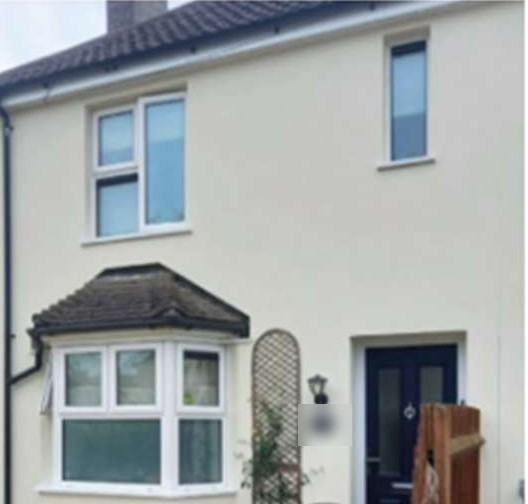
External wall insulation. Image from the scheme case study documents, house name blurred.

Durham County Council, North Star Housing in Darlington and City of York Council paid for their retrofit programmes from three different government schemes, for three different kinds of household. On the ground, the delivery looked much the same. These are the habits the three shared, and how a council can write them into its next contract.
Three programmes ran on three funding schemes
All three programmes were led by Miles Sharples, project lead, now Managing Director of Energy Giants, with a skilled, accredited workforce. The programme figures below come from the published case studies.
| Programme | Funding | Homes |
|---|---|---|
| Durham County Council | Green Homes Grant Local Authority Delivery phase 2 (LAD2), alongside the council's own funding | 250 privately owned homes in Ferryhill, Shildon and Evenwood, 690 measures |
| North Star Housing, Darlington | Social Housing Decarbonisation Fund, wave 2 | 100 social rented homes on three terraces in central Darlington |
| City of York Council | Home Upgrade Grant phase 2 (HUG2) | 60 privately owned homes off the gas grid |
The schemes were built for different households. LAD2 gave £300 million to five Local Net Zero Hubs, which worked with local authorities in their regions to upgrade up to 30,000 low income homes. Delivery was extended to September 2022, and installers had to be TrustMark registered, certified to PAS 2030:2019 for energy efficiency measures and compliant with PAS 2035 (DESNZ evaluation report). HUG2 offered councils up to £630 million for low income households in off gas homes rated EPC D to G, delivered from April 2023 to March 2025 (GOV.UK). The Social Housing Decarbonisation Fund paid social landlords to bring homes below EPC band C up to that standard; its Wave 2.1 competition offered up to £800 million.
Two schemes for owner occupiers and one for tenants, so the eligibility checks and the paperwork all differed. The way the work was run did not.
Every home got a package, not a single measure
None of the three dropped one measure into a house and moved on. Durham County Council wanted each home to get the combination that would lift its SAP score as far as it would go and cut the household's bills: wall and flat roof insulation and loft top ups where needed, ventilation upgrades, and solar PV on the roofs that suited it, with roof repairs and new fascias and soffits where the old ones would not take the detailing.
In Darlington, brick effect external wall insulation went on together with new windows and doors, so the frames and the insulation were detailed as one at the reveals, before the heat pumps went in. In York the rule was insulation first, then a heat pump sized for the house it would heat, not the leaky one that was there before.
The common thread is ventilation. All three included ventilation upgrades alongside the insulation, so homes that were now warmer and tighter stayed dry. PAS 2035, the whole house standard all three were delivered to, requires the retrofit design to take account of the existing ventilation and any need to upgrade it, and to manage moisture in line with BS 5250 (PAS 2035:2023, clauses 8.2.8 and 8.2.10).
Send us the homes, the measures and the funding route. We come back within one working day with questions and a view on sequencing.
Assessment, installation and lodgement sat in one package
On all three, one package ran from the first visit to the last form: a pre-installation building inspection, retrofit assessment and design, installation, sign off, warranties and TrustMark lodgement, delivered to PAS 2030 and PAS 2035 on the programme. On Durham and York, qualifying the households sat in the package too. The programme records show every home meeting the PAS requirements, and on Durham and Darlington the grant claims were successful.
Lodgement is where funded programmes most often stall at the end. The HUG2 delivery guidance asked councils to make sure a TrustMark PAS 2035 project was created for each household within four weeks of batch approval and closed within six weeks of the work finishing. It warned that lodging in bulk at the end of a scheme leaves non-compliant measures flagged too late to put right. The Warm Homes: Local Grant carries the same four and six week rules.
The client saw progress every week
Each programme reported to its client weekly. In Durham a single named project manager handled every conversation with the council and its agent. Survey, design and installation ran to one programme, with delivery KPIs on a shared dashboard and a weekly meeting to deal with problems while they were still small. North Star Housing had weekly progress meetings, terrace by terrace. In York the delivery team met the council's contract administrator every week to report progress and settle issues.
The HUG2 guidance also suggested what to track: lead times between each stage, the share of measures lodged within 20 days (it suggested 95% or more), the share of homes needing remedial work (under 5%), households dropping out at each stage, and homes completed each month.
Residents had a named person and local help
Resident liaison and retrofit coordination sat with dedicated officers, not with whoever was on site that day, so households knew who to ring and the paperwork matched the work. On the Darlington terraces, tenants were at home throughout, and tenant engagement ran from first contact to sign off.
The two homeowner schemes borrowed trust from the community. In Durham, the Durham Energy Friends charity trained residents in Ferryhill and Evenwood as Energy Champions: neighbours who mentored neighbours and helped reach hard to reach and vulnerable homeowners. In York, where each owner decided for themselves whether to take part, sign up events at community venues were run with the Energy Friends charity and the Fairer Warmth team, with energy advice and one to one appointments on the day.
Finding households is fundable work. Under the Warm Homes: Local Grant policy guidance, councils can spend up to 15% of project spend on administrative and ancillary costs, which include searching for eligible homes and signing up households.
What a council can write into its next contract
None of this needs a new scheme. It needs the tender to ask for it. A checklist drawn from the three programmes:
| Write into the contract | Ask for as evidence |
|---|---|
| A PAS 2035 assessment and design for every home, with ventilation assessed before measures are fixed | A sample assessment and design, and the name of the retrofit coordinator |
| Certification for every measure, held by whoever installs it | TrustMark registration, and certificate numbers with scope and expiry for each measure |
| Lodgement as each home completes, not in a batch at the end | A lodgement KPI, for example 95% within 20 days |
| One named project manager and a weekly progress meeting | A KPI dashboard covering sign up, survey, installation, lodgement and remedials |
| A named resident liaison officer and a plan for reaching households | Community partners, sign up events and how vulnerable residents will be supported |
The Warm Homes: Local Grant that councils are delivering now sets the same kind of rules: £500 million through councils from April 2025 to March 2028, for low income households in owner occupied and privately rented homes rated EPC D to G, with every upgrade to PAS 2035:2023 and every measure lodged with TrustMark. Our supplier information page lists our certificates with their scopes and expiry dates. To talk through a programme, send us the homes, the measures and the funding route.
The Durham, Darlington and York programmes are shown as the track record of Miles Sharples, who led them as project lead, and of the skilled, accredited team now at Energy Giants.
- GOV.UK: Green Homes Grant Local Authority Delivery scheme, successful local authorities (read 21 October 2026)
- DESNZ: Green Homes Grant Local Authority Delivery Scheme Phases 1 and 2, final evaluation report (December 2024) (read 21 October 2026)
- GOV.UK: Home Upgrade Grant Phase 2 (read 21 October 2026)
- DESNZ: Home Upgrade Grant Phase 2, Delivery Guidance for Local Authorities (April 2023) (read 21 October 2026)
- GOV.UK: Social Housing Decarbonisation Fund Wave 2.1 (read 21 October 2026)
- DESNZ: Warm Homes: Local Grant, Policy Guidance for Local Authorities (updated June 2026) (read 21 October 2026)
- GOV.UK: Warm Homes: Local Grant (read 21 October 2026)
- BSI: PAS 2035:2023 Retrofitting dwellings for improved energy efficiency (read 21 October 2026)
Miles has led retrofit programmes at scale across the UK, with long-standing relationships with local authorities including Kirklees Council, Durham County Council and Ribble Valley Borough Council. He has project-directed programmes for housing associations and delivery partners including Aspire Housing, Sureserve, LivGreen and BroadOak, and for energy suppliers including E.ON Next, Utilita, British Gas and Octopus, and for tier one contractors including UKEM.